



Hazmat Shipping Boxes Built Around Defined Requirements
Hazardous-material packaging cannot be selected from appearance or strength claims alone. The contents, concentration, physical form, hazard class, packing group where applicable, inner receptacles, quantity, mode, route, and governing rules determine what may be used. Wow Custom Boxes can support specified fiberboard packaging projects, but classification and legal package selection must come from the shipper’s trained dangerous-goods professionals, competent authority, carrier requirements, and current regulations.
In the United States, relevant transport requirements appear in the Hazardous Materials Regulations within 49 CFR Parts 171–180. Air shipments may also be prepared under current international and operator requirements. Rules change, exceptions are conditional, and carriers may impose additional restrictions. This page provides general packaging information, not a compliance determination. A box should never be represented as approved, certified, or suitable for a hazardous material unless the complete design and its use genuinely meet the applicable requirements.
Ordinary Boxes and UN Specification Packaging Are Different
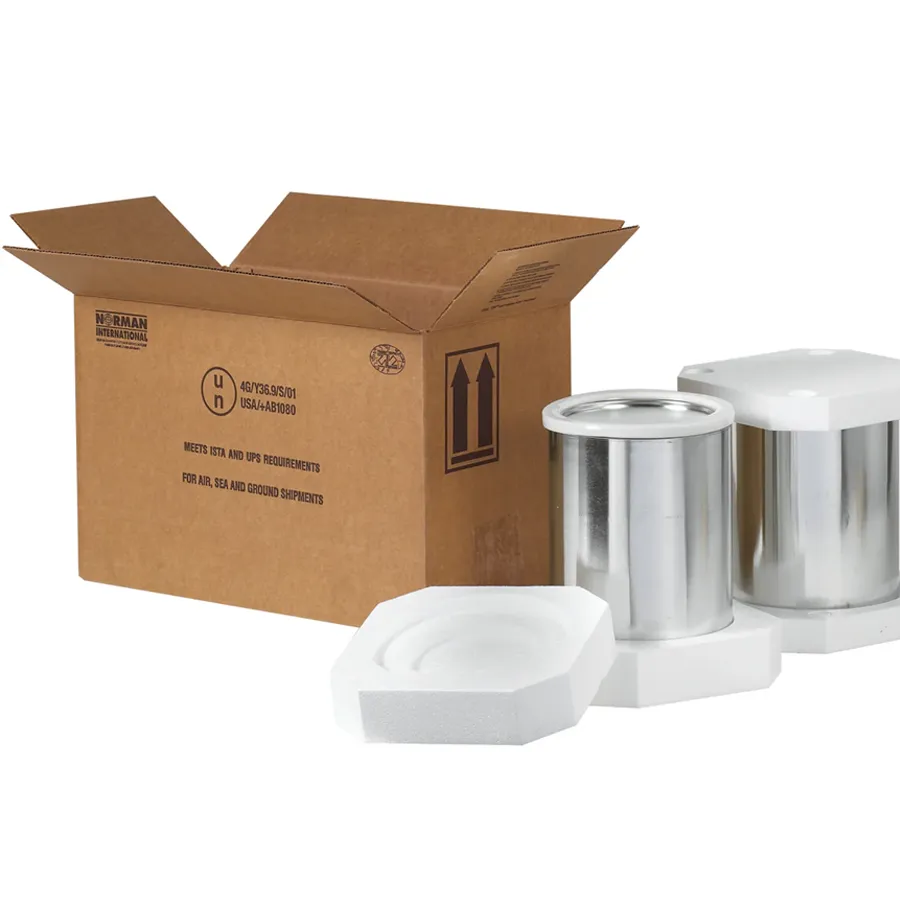
A strong corrugated box may be useful as non-regulated packaging or where a specific provision permits a strong outer package. That does not make it a UN specification package. A UN 4G fiberboard box is associated with a tested packaging design and prescribed performance level. Its marking, manufacturing controls, authorized configuration, test record, and closure instructions matter. The user must confirm that the exact packaging is permitted for the material and quantity being shipped.
Combination packaging performance depends on more than the outer case. Inner containers, caps, bags, dividers, absorbent, cushioning, orientation, gross mass, and closure method can be part of the tested arrangement. Substituting a bottle, changing foam, removing a partition, exceeding a limit, or using different tape can affect conformity. The completed package should be assembled exactly as required by the applicable design and manufacturer’s closure instructions.
Define the Material Before the Box
The shipper is responsible for correct classification. Start with authoritative product and transport information, then determine the proper shipping name, identification number, hazard class or division, subsidiary risks, packing group, quantity limits, special provisions, and mode-specific packing instruction. Safety data sheets can be a starting point but may not provide every transport answer. Manufacturers, qualified laboratories, dangerous-goods specialists, and competent authorities may need to be consulted.
| Project input | Why it matters | Who should confirm it |
|---|---|---|
| Classification and UN number | Directs applicable packaging rules | Trained shipper or qualified specialist |
| Inner packaging | Forms part of many combination designs | Packaging designer and compliance team |
| Mode and destination | Changes limits, instructions, and variations | Shipper and carrier |
| Gross mass and quantity | Affects authorized design and performance level | Shipper and packing operation |
| Closure method | Must match required preparation instructions | Packaging supplier and trained packer |
Fiberboard Construction and Performance
Hazmat fiberboard boxes may use specified corrugated materials, seams, dimensions, and closures. The construction must be consistent with its authorized design and quality controls. Generic descriptions such as “double wall” or “heavy duty” are not substitutes for a formal specification. Where standard non-hazmat applications are involved, cardboard packaging can still be customized for protection and identification, but it should remain clearly separated from regulated UN packaging claims.
Performance-oriented dangerous-goods systems may undergo drop, stacking, leakproofness, hydrostatic pressure, or other tests as applicable to packaging type. Successful testing relates to the design and conditions evaluated; it does not authorize arbitrary contents or modifications. Production units must remain consistent with the qualified design. Users should retain current reports, certificates where applicable, closure instructions, supplier information, and pack-out records according to their regulatory and quality procedures.
Inner Containers, Cushioning, and Absorbent
Liquid combination packaging may require compatible, securely closed inner receptacles, separation, cushioning, leak containment, absorbent, and orientation controls according to the relevant instruction. Solids, articles, batteries, infectious substances, and aerosols can have very different requirements. Components prevent contact, limit movement, protect closures, or contain leakage. They must not be improvised from a visual example. The exact material and quantity should follow the approved design and current packing instruction.
Retail presentation packs such as perfume boxes or fragrance packaging do not automatically satisfy dangerous-goods transport requirements for flammable formulations. They may serve as inner retail cartons within a compliant combination package if the authorized system permits that arrangement. Similarly, a premium rigid box is a presentation format, not a substitute for regulated outer packaging.
Marks, Labels, and Printed Panels
Corrugated surfaces can provide areas for required package specification marks, proper shipping information, hazard labels, handling marks, orientation arrows, addresses, and logistics labels when applicable. The shipper must determine exact content, size, color, durability, placement, and visibility. Never print a UN specification mark on packaging that is not entitled to bear it. Preprinted decorative graphics must not obscure required communication or create a false indication that hazardous material is present.
Closure Instructions Matter
Tape type, width, application pattern, number of strips, staple method, adhesive, and flap sequence may be specified. Packers should have current closure instructions at the work area and receive function-specific training. The packaging must be inspected for damage, contamination, moisture, incorrect components, and printing errors before use. Employees should not “improve” or change an approved pack-out without formal review, because even a seemingly minor cushioning or closure change can create a different packaging design.
Parcel and Air Networks
Branded ecommerce boxes and mailer boxes are suitable for many ordinary goods, but regulated hazardous materials require a separate eligibility decision. Ground, air, vessel, rail, postal, and courier networks have differing requirements and acceptance policies. Air transport is frequently more restrictive, and operators may refuse a shipment even when a shipper believes regulatory steps are complete. Carrier approval should be confirmed before tendering the package.
Prototype, Test, and Control Production
Development may begin with drawings and samples, but a regulated performance package requires testing through appropriate channels and documentation tied to the exact design. Production controls should cover materials, dimensions, joints, print, and inspection. Pack-out validation should use the authorized inner components and closure. When a product, supplier, route, or component changes, the compliance team should evaluate whether retesting, variation testing, reclassification, new approval, or another packing instruction is required.
Ordering with Responsible Specifications
Provide the formal packaging specification, product classification, applicable packing instruction or authorization, inner-container details, quantities, gross mass, test requirements, marks, artwork, closure instructions, mode, destination, and order quantity. If those inputs are not yet available, engage a qualified dangerous-goods professional before requesting claims of compliance. A packaging supplier can manufacture to an agreed design, but the shipper remains responsible for selecting, preparing, marking, labeling, documenting, and offering the completed shipment correctly.
Avoid Ambiguous Compliance Claims
Clear language protects both buyer and supplier. “Heavy-duty,” “hazmat-style,” and “UN box” should not be used as interchangeable terms. A non-specification carton can be excellent packaging for ordinary goods and still be inappropriate for a regulated shipment. Conversely, a tested specification package is only compliant when used within its authorization and instructions. Matching the exact package to the exact material is the foundation of responsible hazardous-goods transportation.
Maintain Training and Change Control
People who classify, select packaging, pack, mark, label, document, inspect, or offer dangerous goods need training appropriate to their functions and jurisdiction. Procedures should identify current regulatory references, approved suppliers, authorized components, closure instructions, and escalation contacts. A formal change-control process can catch alterations to bottles, caps, cushioning, tape, labels, product formulation, quantities, carriers, or routes before shipment. Periodic audits and pack-out records help demonstrate that daily operations follow the approved system.
Frequently Asked Questions
What is a hazmat shipping box?
It is packaging used within a hazardous-material transport system selected for a specific classified material, quantity, mode, and instruction.
Is every corrugated box suitable for hazmat?
No. Ordinary strength or appearance does not establish compliance with dangerous-goods packaging requirements.
What is a UN 4G box?
It is a fiberboard box associated with a UN specification packaging design that meets applicable performance and marking requirements.
Can inner containers be changed?
Changes may affect the authorized or tested design and require review by qualified packaging and compliance professionals.
Why are closure instructions important?
They define how the package must be assembled and closed to remain consistent with its required design.
Can custom graphics be printed on hazmat boxes?
Graphics may be possible if they do not obscure required marks or labels, misrepresent contents, or conflict with specifications.
Who classifies the hazardous material?
The shipper is responsible and should use trained personnel, authoritative information, and qualified assistance where necessary.
Are air-shipping requirements different?
They may be more restrictive and can include state, operator, quantity, packaging, marking, labeling, and documentation variations.
Can a retail carton replace the outer package?
Only when the applicable rules specifically authorize that completed configuration; decorative retail packaging alone is not enough.
What is needed before requesting a quote?
Provide classification, packing instruction, inner packaging, quantity, gross mass, mode, destination, specification, tests, closure, and markings.


