Protein powder packaging does much more than hold a product. It helps protect the powder from moisture, supports convenient storage, communicates important product information and gives customers their first impression of a brand. Whether you sell whey protein, plant-based protein, meal replacement powders or sports nutrition supplements, choosing the right packaging can make a meaningful difference to the customer experience.
But which packaging option should you choose? Are resealable pouches better than tubs? When should you consider single-serving sachets? And which materials can help maintain product quality? Let’s explore the options and discover how to create protein powder packaging that works for your product, your customers and your business.
Protein powders need packaging that suits their physical properties, expected shelf life, distribution conditions and intended use. Fine powders can create dust during filling, while moisture exposure may affect their texture and handling. Frequent opening can also introduce air and humidity. Well-planned packaging helps address these practical challenges while supporting your brand’s presentation.
Protein powder packaging should provide an appropriate barrier against moisture and other environmental factors. The required protection depends on the formulation, ingredients, shelf-life target and storage conditions. For example, products containing sensitive ingredients may need a higher-barrier structure than products with less demanding protection requirements. A packaging supplier can help assess suitable material combinations, closures and sealing methods.
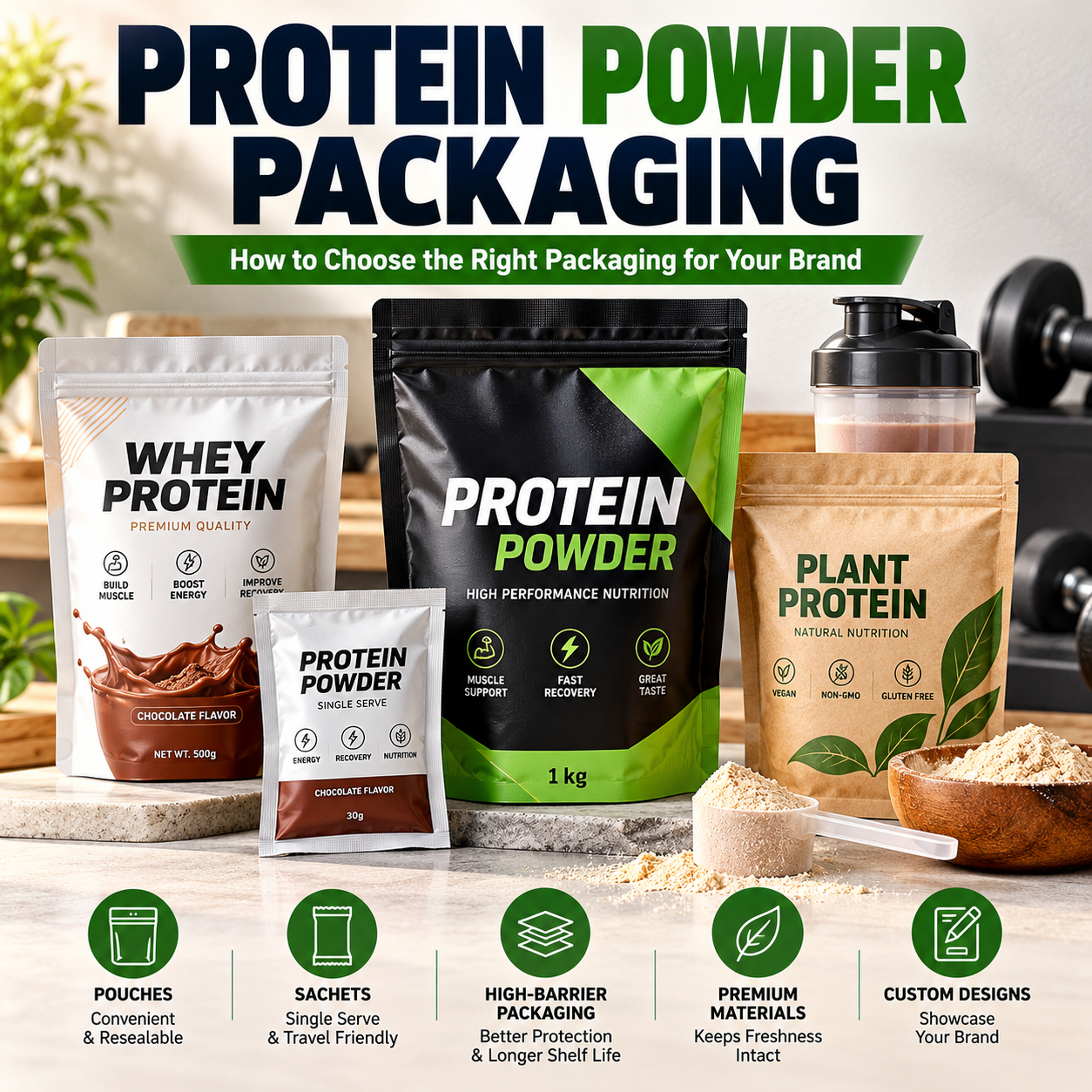
Customers want packaging that fits naturally into their routines. A resealable pouch can be convenient for people who prepare protein shakes at home or at the gym, while individual servings are useful for travel and portion control.
Easy-open features, secure closures and practical pack sizes can improve the overall experience without making the packaging unnecessarily complicated.
Packaging communicates your product’s identity before a customer reads the full description. Clear typography, a consistent colour palette and professional product information help create a recognisable appearance. For businesses developing a new supplement line, investing in thoughtful custom packaging solutions can help create a consistent visual identity across different flavours, sizes and product variations.
There is no single packaging format that suits every protein powder. The best choice depends on order quantity, serving size, shipping requirements, budget and customer preferences.
Flexible pouches are a popular option for products that need convenient storage without the bulk of rigid containers. They can be designed with resealable zippers, tear notches and different opening styles.
Depending on the material structure, flexible pouches can also offer useful barrier properties while providing space for product information and branding.
Consider resealable pouches if you want:
For certain powder products, custom Mylar bags may be worth evaluating. However, the exact material structure must be selected according to the product’s protection requirements rather than appearance alone.
Not every customer wants to carry a large pack of protein powder. Some prefer a single serving they can keep in a gym bag, office drawer or travel case. Single-serving sachets offer a compact format that can simplify portioning and make sampling programmes easier to manage. They may also suit promotional packs, subscription boxes and multipacks. Explore powder sachets when considering compact packaging formats for powdered products. Before choosing sachets, consider the powder’s flow properties, the required fill weight, sealing performance and the ease of opening. The packaging must also suit the filling equipment and production volume.
Protein powders are part of the wider sports nutrition and nutraceutical market. Brands selling specialised nutritional formulations may benefit from packaging that supports clear product identification and consistent presentation.
Nutraceutical sachets are another format to explore when planning packaging for powdered nutritional products. Think carefully about the information customers need to see. Depending on the product and applicable regulations, this may include serving size, ingredients, allergen declarations, directions for use and relevant nutrition information.
Some formulations require more protection than a basic packaging structure can provide. In these cases, the barrier performance of the complete package becomes especially important. High-barrier food sachets may be relevant when assessing compact formats for products that need additional protection from moisture, oxygen or other environmental factors. Do not assume that every high-barrier material is suitable for every protein powder. Ask your supplier about barrier specifications, seal integrity, compatibility with the product and evidence supporting the intended shelf life.
Protein powders can sit alongside meal replacement blends, nutritional drink mixes and other powdered food products. If your business sells several product types, a coordinated packaging approach can help maintain consistency across the range. Custom food packaging is worth exploring when you need to consider different packaging formats and presentation requirements for a broader product range. Remember that packaging designed for one food product may not automatically suit another. Each formulation needs its own assessment.
Choosing a packaging format is only half the decision. The material structure determines how the pack performs during filling, transport, storage and use.
Multilayer laminated films can combine different properties in one structure. Depending on the construction, they may provide moisture or oxygen barriers, durability and suitable sealing characteristics. They are commonly considered for flexible pouches and sachets. Your supplier should recommend a structure based on the product’s actual requirements.
Metalised films and aluminium-foil laminates can provide useful barrier properties when correctly designed. They may be appropriate for products that require stronger protection from light, moisture or oxygen. However, foil-based and metalised materials are not identical. Their performance, flexibility, recyclability and compatibility with existing filling lines can differ.
Sustainability is an increasingly important consideration for many brands. Depending on the packaging format and local recycling infrastructure, you may be able to explore mono-material structures or other designs intended to improve recyclability. Ask whether the proposed material is accepted by recycling systems in your target market. Also check whether changing the structure affects the barrier performance required for your product.
Good packaging balances shelf appeal with practical information. A striking design can attract attention, but customers should still be able to understand the product quickly.
Use a clear product name and distinguish between flavours or formulations. Strong typography and a logical layout make the pack easier to scan, whether customers are shopping online or in-store.
Different colours can help distinguish product lines. For example, a brand might use one colour family for whey protein and another for plant-based blends. The important thing is to maintain consistency across the range.
Plan space for the information required by your market and product category. This may include net weight, ingredients, allergens, serving directions, storage instructions and nutrition information.
Avoid overcrowding the design with unnecessary claims. Any statements about protein content, health benefits or performance must be accurate and compliant with applicable regulations.
A pack should look professional while remaining easy to handle. Check whether customers can open it without difficulty, reseal it securely and store it conveniently after opening.
For online orders, consider how the packaging will hold up during shipping and whether additional protective packaging is needed.
Before placing a packaging order, work through these five questions.
1. What type of powder are you selling?
Whey protein, plant-based blends, meal replacements and specialised formulations may have different protection and handling requirements.
2. What pack size do customers need?
Large resealable pouches may suit regular users, while sachets can work well for samples, travel and individual servings.
3. How long must the product remain in good condition?
Your target shelf life, distribution environment and storage conditions should guide material selection. Use appropriate testing to validate the final packaging.
4. How will the packaging be filled and sealed?
Confirm that the chosen format is compatible with your production equipment, fill weight, powder characteristics and sealing process.
5. What quantity can your business order?
Minimum order quantities, printing costs, lead times and storage space all affect the final decision. Request a quotation that clearly separates setup costs, unit pricing and any additional charges.
If you are comparing different formats, prepare a brief containing your product type, required pack size, estimated quantity, design preferences and protection requirements. This makes it easier to evaluate suitable options without choosing a material based on price alone.
Even an attractive package can cause problems if practical requirements are overlooked.
Addressing these points before production can help reduce avoidable costs and create a better experience for customers.
The best option depends on the formulation, shelf-life requirements, serving size, distribution conditions and budget. Resealable pouches may suit larger packs, while sachets are useful for single servings and samples.
Some Mylar-style or laminated flexible bags may be suitable, provided their material structure, food-contact suitability, seal performance and barrier properties meet the product’s requirements. The name of the material alone does not guarantee suitability.
Moisture can affect powder flow, texture and storage stability. The level of protection required depends on the formulation, so packaging materials and seals should be selected and tested accordingly.
Yes. Flexible pouches and sachets can be produced with custom artwork, product information and brand colours, subject to the supplier’s printing options and minimum order requirements.
They can be useful for sampling, travel, gym use and portion-controlled servings. Consider the filling cost, material use, production requirements and disposal implications before deciding whether sachets suit your product.
Share the product type, target fill weight, preferred format, estimated order quantity, required barrier performance, printing needs and delivery destination. These details help suppliers assess suitable options and provide a more useful quotation.
Protein powder packaging should do more than make your product look attractive. It needs to protect the formulation, support convenient use, display essential information and fit your production and distribution plans.
Whether you are launching a new supplement, updating an existing product or expanding into single-serving formats, start by understanding your product’s requirements. Then compare pouch and sachet options, review material specifications and test the final pack before committing to a large production run.
At Wow Custom Boxes, the right starting point is a clear understanding of your packaging goals. If you are ready to explore suitable formats, discuss your packaging requirements and prepare your next packaging project with your product, customers and long-term brand plans in mind.