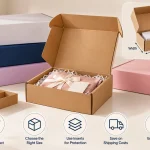
A retail display needs to do more than hold several products together. It should make the range easy to understand, keep packaged items accessible, and allow store staff to refill the display without unnecessary effort. For CBD brands, planning becomes more involved when the collection contains different carton sizes, product formats, or printed variants. A display designed around one bottle carton may not suit a wider cream box or a mixed collection.
Before ordering custom display boxes wholesale, define the products, retail location, layout, and quantity required. These decisions help you develop a display that works with your existing packaging rather than forcing the product range into a generic tray.
This guide explains how to prepare that plan, review samples, and organize a wholesale order.
Start with where the display will be used. A checkout counter, enclosed retail cabinet, and promotional table offer different amounts of space and customer access. Ask the retailer how the display will be positioned. Will customers pick up products directly, or will staff retrieve them? Does the display need to remain inside a designated area? When reviewing custom display boxes, describe the intended location and how shoppers will interact with the products. Include photographs or measurements of the available space where possible. Also decide whether the display introduces a new collection, presents regular stock, or supports a limited promotion. Its structure and printed message should follow that purpose.

Plan around the finished retail packages that will actually enter the display. List every product reference, carton size, packed weight, artwork version, and intended quantity per display. Identify which products share dimensions and which need separate space. For example, three printed variants may use the same carton structure. Those products can potentially share a row layout. A wider jar carton may require a different compartment. Use the approved custom CBD boxes as the measurement reference. Changes to the individual cartons can affect the display’s footprint, capacity, and visibility.
Keep the product list current throughout the project so the display sample matches the packaging used at launch.
Confirm the maximum width, depth, and height permitted by the retailer. Include the header in the overall height. Check nearby fixtures, payment equipment, cabinet doors, and other products. A display that fits an empty counter may obstruct normal work once the surrounding area is in use. Provide these limits to the supplier before choosing a layout. Ask for the proposed external dimensions as well as the product arrangement inside. Avoid relying on photographs alone to judge scale. A compact display and a large unit can appear similar when photographed without a size reference.
Decide how many units the display should hold when full. Then divide that capacity by product variant. A display containing 18 products might allocate six units to each of three variants. Another collection may need more space for its best-selling item. Use retailer feedback and stock expectations to guide the allocation. Equal rows can create a tidy appearance, but they are not always the most practical way to support demand When considering counter display boxes, confirm the capacity using the actual cartons. The layout should accommodate the intended number without forcing products against the walls or making removal difficult.
Rows, columns, and divided compartments can organize a collection in different ways. Consider how customers reach the products at the back. Tall front cartons may hide shorter items, while closely packed rows can make individual boxes difficult to remove. Test the layout with representative packages. Pick up products from the front, middle, and rear positions. Check whether neighboring cartons fall over or become trapped. If dividers are included, confirm their height and spacing. They should guide the products without covering important information or catching the carton edges during refilling. A useful layout supports both presentation and everyday access.
Related CBD products can share branding while requiring different display arrangements. Narrow bottle cartons may suit upright rows. Wider cream cartons may need more shelf depth. Mixed collections can require separate zones so products remain organized. For a bottle-led range, use the dimensions of the finished CBD tincture boxes rather than the bottle alone. The display holds the retail carton, so its folds, closure, and outside dimensions matter.Do not approve a layout using substitute packages unless they accurately represent the final products. Small differences repeated across several rows can change the fit of the complete display.
The front panel provides room for branding and helps retain products, but its height needs careful review. A high front wall can hide product names or variant details. A low wall may expose more artwork while providing less retention in some arrangements. Review the filled display from the customer’s expected viewing angle. Check whether the individual carton fronts remain readable. Consider the display when products are removed too. If the remaining cartons shift forward or lean, the front panel and internal layout may need adjustment. Choose the panel height as part of the complete structure rather than treating it only as a printed branding area.
A header should help shoppers recognize the brand or collection quickly. Keep its main message focused. A brand name, collection title, or concise product-range description is often easier to understand than several competing statements. Leave detailed product information on the appropriate retail packages. Avoid shrinking important text to make room for unnecessary graphics. Review the header at its actual size and viewing distance. Confirm that it remains stable after assembly and does not interfere with access to rear products. Use approved wording for the products being displayed. Decorative claims should not replace accurate product identification.
The display and product packaging should look like parts of the same collection. Use consistent typography, logo treatment, and accent colors. The display can present the overall range while individual cartons identify specific products. Avoid making both surfaces equally busy. If the retail packages already contain detailed artwork, a restrained display design can help the products remain visible. Review all variants together inside the proposed display. Check whether one color disappears against the tray or whether similar packages become difficult to distinguish. Support color coding with clear product names so customers and staff do not need to identify variants by color alone.
Material selection should follow the display dimensions, product weight, assembly method, and expected handling. Ask the supplier to specify the proposed board and construction. A broad description such as “heavy-duty cardboard” does not explain the complete design. Load the sample with the intended number of packaged products. Check the base, corners, walls, dividers, and header for distortion. Move the filled display using the method staff will follow. If it will be shipped prefilled, include that requirement in the brief from the beginning. The empty sample’s appearance cannot establish how the display performs under its actual load.
A display spends much of its time partly empty. Review that condition before approving the design. Remove products from different positions. Check whether the remaining cartons stay upright and whether customers can still identify each variant. Look for gaps that allow products to spread into neighboring sections. Review whether the header remains balanced and the front branding stays visible. This check is especially useful for mixed collections because different carton sizes may behave differently as stock decreases. Ask staff to refill the sample. The design should allow replenishment without dismantling the display or rearranging every remaining product.
Confirm whether the units will arrive flat, assembled, or prefilled. Flat supply introduces assembly work. Assembled supply occupies more space before use. Prefilled displays need an agreed product-loading and transport plan. Ask for clear assembly instructions where required. Trial the process with someone who has not previously handled the structure. Specify how components will be packed together and identified. Headers, dividers, and trays should be easy to match. For wholesale orders sent to several retailers, confirm whether each location receives individual units or cases containing multiple displays.
Organize the project information before requesting pricing.
| Planning detail | What to provide |
|---|---|
| Retail location | Counter, cabinet, promotional table, or another defined area |
| Space limits | Maximum external width, depth, and height |
| Product list | References, carton dimensions, and packed weights |
| Capacity | Total products and allocation by variant |
| Layout | Rows, compartments, dividers, and access requirements |
| Branding | Logo, colors, header message, and artwork |
| Supply format | Flat, assembled, or prefilled |
| Order quantity | Number of displays and printed versions |
| Distribution | Delivery locations and case-packing requirements |
| Approval | Sample, artwork, and filled-load checks |
Distinguish the quantity of display units from the quantity of products they hold. These are separate figures and should be clearly stated in the quotation request.

Compare quotations against the same brief. Check whether headers, dividers, printing, assembly, case packing, and delivery are included. Review the physical sample alongside the artwork proof. Check capacity, access, product visibility, refilling, and the partly empty arrangement. Record the approved structure and artwork revision. Keep photographs of the accepted filled layout so retailers and packing staff have a clear reference. Before approaching WOW Custom Boxes, gather the final retail cartons, available-space measurements, variant allocation, and required quantities. You can contact the packaging team with these details to discuss a product-specific wholesale display.
Provide the finished carton dimensions, packed weights, product variants, capacity, retail-space limits, artwork, display quantity, and delivery requirements.
Yes. A shared display can hold multiple variants when the layout accommodates their carton sizes and keeps each product clearly identifiable.
Yes. Review the display using the finished packages or accurate production-intent samples so its capacity and clearance can be checked.
Yes. Properly planned dividers can separate products and guide refilling. Check that they do not obstruct labels or product removal.
Capacity depends on available space, carton dimensions, packed weight, variant allocation, and retailer requirements. Define it before finalizing the structure.