Product Detailed Description
Custom Cosmetic Display Boxes for Retail Presentation
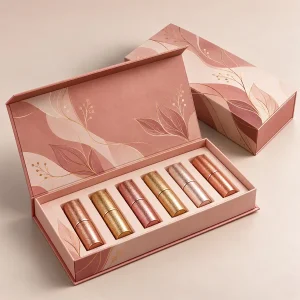
Present makeup and skincare products in an organised retail arrangement with cosmetic display boxes designed around your collection. A suitable display can group shades, separate product types and provide a visible place for your brand message. The layout should make individual items easy to identify, reach and return without disrupting the rest of the range.
Discuss
custom packaging solutions with WOW Custom Boxes using your product dimensions, quantities and available retail space. For beauty brands in the USA, the brief can cover countertop trays, compartment displays and promotional presentations. Start with the actual products and display location so the structure suits both stock organisation and customer access.
Cosmetic Display Box Specifications
| Feature |
Details to Confirm |
| Products |
Lip products, compact makeup, skincare tubes or boxed cosmetics. |
| Capacity |
Units per compartment and total intended display quantity. |
| Footprint |
Available width and depth on the counter or shelf. |
| Height |
Loaded height, product visibility and header clearance. |
| Material |
Paperboard or corrugated construction suited to the load. |
| Interior |
Rows, dividers, slots or inserts as specified. |
| Printing |
Brand logo, product identification and approved messaging. |
| Order scope |
Quantities, artwork versions, assembly and delivery requirements. |
Paperboard and Corrugated Display Materials
Select the material around the loaded weight, display size and expected handling. A small tray for lightweight tubes may need a different construction from a wider arrangement of jars. Consider the base, side walls and internal supports together when developing the specification.
Compare
corrugated displays when planning larger or more demanding arrangements. Discuss the proposed board and assembly details with representative products. Review the loaded sample for support, alignment and stability rather than judging suitability from appearance alone.
For compact displays, discuss paperboard options with the desired print surface and folding layout. Check exposed edges, panel alignment and how components connect. Confirm the complete material specification before making environmental claims about the finished display.
Logo Printing and Clear Product Messaging
Give your brand a visible position on the front panel or header while keeping product access open. Use a clear product name or range message so customers understand the collection quickly. The artwork should remain readable from the expected viewing distance, including when the display is fully stocked.
Coordinate your graphics with the wider
custom cosmetic packaging range. Shared colours, typography and logo proportions can connect the display with individual cartons. Keep shade names and product references consistent across both surfaces so stock remains easy to organise.
Prepare artwork on the approved dieline and identify visible panels correctly. Check where folded tabs, inserted products or adjacent displays may cover the design. Use approved wording for product statements and keep temporary campaign messaging clearly separated from permanent brand artwork.
Finishes and Header Card Design
Discuss surface finishes around the selected stock and intended retail use. Matte or gloss treatments can change how graphics appear under store lighting. Additional decorative effects may suit selected areas, but important product information should remain readable on the assembled display.
A header card can provide extra branding space without using the front product area. Confirm its height, attachment and clearance with the surrounding shelf or counter. Check that it stays in position during ordinary stocking and removal, using the complete assembled sample.
Review colour contrast, surface rubbing and print orientation before approval. A reflective or dark finish may need a different artwork treatment from a plain light surface. Assess the finished display under representative lighting rather than relying only on a digital preview.
Custom Dimensions and Compartment Layouts
Measure the available retail footprint first, then record the dimensions of the products as they will be displayed. Include individual cartons, caps and projecting features. Specify how many units belong in each row or compartment, with enough room for practical stocking and removal.
For narrow tubes, compare
custom lip gloss boxes when planning the complete product presentation. Confirm whether the display holds loose containers or retail cartons because their dimensions and support requirements differ. Trial the layout with the exact version intended for sale.
Check how the arrangement behaves when some products have been removed. Remaining items should still be accessible and identifiable. Discuss dividers or supports where needed, and review customer reach to the rear row without forcing movement of the front products.
Countertop Trays and Retail Display Styles
Explore
custom display boxes for open trays, divided arrangements and other suitable formats. Select the structure around the product collection and retail space.
A stepped layout can place rear products at a different level, depending on the available height and construction. Confirm that the structure supports the loaded arrangement and leaves product names visible.
If you need a pack that converts into a display, discuss the opening and conversion method separately. Confirm which panels are removed or folded, how staff assemble it and whether transport requires an additional outer pack.
Beauty Counters, Product Launches and Shade Collections
Cosmetic displays can organise lip products, makeup compacts, travel skincare and seasonal selections. Group the range in a way that reflects how customers compare items.
When products have individual cartons, coordinate the layout with
cosmetic cardboard boxes. Check carton orientation, front panel visibility and the space needed for removal. Review a loaded display with the final artwork to confirm that packaging and display graphics work together.
For delivery to retail locations, assess
cosmetic shipping boxes alongside the display components. Confirm whether units travel assembled, flat or loaded. Evaluate the transport arrangement separately from the display’s performance on the counter.
Why Choose WOW Custom Boxes for Your Project?
Bring the product range, retail footprint and artwork into one clear brief. Share unit dimensions, loaded weight and intended capacity so the discussion can focus on a suitable structure. Confirm material options, printing scope and sample development before placing an order.
Include assembly and replenishment requirements in the review. Retain the approved dieline, product arrangement and sample specification for future orders. If the range changes, reassess the fit and load before using the same display for new products.
Request a Cosmetic Display Packaging Quote
Share product dimensions, display capacity, available space and artwork to
request a cosmetic display box quote. Include quantities and the delivery destination. Confirm the structure, assembly method, sample process and pricing scope before approving production.
Frequently Asked Questions
1. Can I print my logo on cosmetic display boxes?
Yes. Supply approved artwork and identify the visible panels. Check readability with the products loaded.
2. Can the display have separate shade compartments?
Yes. Share unit dimensions and quantities per shade. Review divider spacing and product removal with actual items.
3. Can I request a printed header card?
Yes. Discuss its size, attachment and clearance. Check visibility and stability on the complete assembled display.
4. Which material should I choose?
Discuss the loaded weight, footprint and intended use. Assess support and assembly using a representative sample.
5. Can the display hold boxed cosmetic products?
Yes. Provide the final carton dimensions. Confirm orientation, visible information and removal clearance before approval.
6. Can I request a stepped product arrangement?
Yes. Discuss available height and capacity. Check product visibility and support in the proposed construction.
7. What measurements are needed for a quote?
Provide counter or shelf space, unit dimensions, loaded weight and quantities. Include the maximum permitted header height.
8. What is the minimum order quantity?
Request the current minimum for your material, structure and artwork versions. Confirm quantities separately for each design.
9. Can I use the display for a seasonal collection?
Yes. Share the full product selection and campaign artwork. Confirm fit, capacity and assembly for that arrangement.
10. What should I check in the sample?
Review assembly, loaded stability, visibility and removal access. Check the arrangement with both full and partially depleted stock.