| Specifications |
Details |
| Dimension (L + W + H) |
All Custom Sizes & Unique Shapes |
| Quantities |
Minimum Order Quantity is 500 Pieces |
| Paper Stock |
BoPET (biaxially-oriented polyethylene terephthalate) film,
89 µ to 178 µ (or 3.5 mils up to 7 mils)
|
| Printing |
No Printing, CMYK, CMYK + 1 PMS color, CMYK + 2 PMS colors |
| Finishing |
Gloss Lamination, Matte Lamination, Gloss AQ, Gloss UV, Matte UV, Spot UV, Embossing, Foiling |
| Included Options |
Die Cutting, Gluing, Scoring, Perforation |
| Additional Options |
Zipper, Hanging holes, Tear Notch,
stand-up feature, child-resistant lock
|
| Proof |
Flat View, 3D Mock-up, Physical Sampling (On request) |
| Turnaround |
7 - 10 Business Days |
Product Description
Custom eyeshadow boxes provide a polished package for palettes, single shadow pans, refill sets, and curated makeup collections. Designed around palette dimensions, pan layout, product weight, and retail or ecommerce needs, these boxes can include secure inserts, windows, sleeves, magnetic lids, and branded printing. WOW Custom Boxes helps beauty brands create practical eyeshadow packaging for launches, counters, subscription kits, influencer PR sets, and gift-ready presentation.
Product Detailed Description
Custom Eyeshadow Boxes Designed for Secure Makeup Presentation
Custom Eyeshadow Boxes give makeup brands a structured way to package eyeshadow palettes, single shadow pans, refill trays, mini collections, duo sets, and curated beauty kits. Begin with the palette length, width, and height, pan arrangement, product weight, closure clearance, insert requirements, and the sales channel where the package will be used. WOW Custom Boxes can organize the packaging brief around approved dimensions, board selection, printing, finishing, internal support, and production requirements.
Eyeshadow packaging must combine visual appeal with organized product placement. A palette should sit securely inside the box without unnecessary movement, while the exterior should communicate the brand, shade collection, product details, and launch identity. For a wider packaging direction, explore custom packaging boxes, but keep this page focused on eyeshadow-specific fit, pan protection, shade presentation, retail display, and ecommerce handling.
Custom Eyeshadow Box Specification Options
Use this table to organize the main product, material, insert, printing, and handling decisions before requesting production.
Custom eyeshadow packaging planning guide
| Decision |
Project direction |
Approval purpose |
| Product fit |
single pans, palettes, refill trays, duo sets, mini collections, or makeup kits |
Controls internal clearance |
| Pan layout |
round, square, rectangular, mixed, magnetic, removable, or fixed shadow pans |
Defines insert and cavity design |
| Material |
paperboard, kraft board, solid board, rigid board, or corrugated outer packaging |
Matches weight and presentation |
| Structure |
tuck end, sleeve, drawer, magnetic lid, two-piece lid, window, or custom folding format |
Defines opening and access |
| Protection |
die-cut insert, tray, divider, foam alternative, paper support, or protective inner layer |
Reduces movement and impact |
| Branding |
logo, shade names, color system, usage details, ingredients, and collection messaging |
Supports recognition and communication |
Define the Palette and Pan Arrangement
Custom Eyeshadow Packaging Boxes should be developed around the finished makeup unit rather than a general cosmetic size. Record the palette’s length, width, height, hinge movement, mirror depth, clasp position, pan layout, magnetic plate, and surface finish. A compact four-pan set may require a very different internal structure from a large palette with multiple shades, a mirror, and a brush compartment.
Measure the product after all components have been assembled. Include the palette case, protective film, shade card, brush, applicator, product insert, and any inner wrap that will remain inside the box. Check the widest and tallest points, including raised lids, corners, magnets, hinges, and decorative details.
If the product includes loose pans or refill trays, measure both the individual units and the complete arrangement. The packaging should prevent unnecessary movement without placing pressure on the pans, pressed powder, mirror, clasp, or case edges. A precise cavity or insert can improve consistency during loading and help the product arrive in its intended position.
Select Materials for Makeup Presentation
Printed Eyeshadow Boxes can use folding carton board, kraft paperboard, solid board, rigid board, or an outer corrugated format depending on palette weight, structure, presentation level, and shipping requirements. Consider board stiffness, surface smoothness, fold performance, edge quality, print compatibility, coating, and the added weight of inserts or internal trays.
Lightweight paperboard may suit compact palettes, single-shadow pans, and retail counter products. A thicker board can create a more substantial presentation for gift sets or premium collections, while rigid construction may support a more elevated unboxing experience. For a wider cosmetics packaging direction, compare custom cosmetic boxes. The final material should still be selected according to the eyeshadow unit, insert design, closure, and handling conditions.
When a board-based format is preferred, review cardboard eyeshadow boxes. Confirm the board grade, thickness, coating, recycled content, adhesive, and print surface before production. Packaging material should not be described as protective, sustainable, or recyclable unless the claim is supported by the exact approved construction.
Choose an Insert for Pan and Palette Security
Eyeshadow Boxes with Inserts can use die-cut paperboard, molded pulp, formed board, tray systems, dividers, or other approved support features. The insert should hold the palette or pan arrangement in position without placing concentrated pressure on fragile corners, pressed powder, mirrors, hinges, or clasps.
A full tray may suit a premium palette, while a shaped cavity can be useful for a compact case. Dividers may help separate multiple palettes, refill pans, brushes, or shade cards. If a window is included, check that the clear panel does not press against the product or interfere with the insert.
The insert should also support efficient loading. Staff should be able to place the makeup unit into the box quickly and consistently without catching the case on edges or forcing the product into a tight cavity. Review the packaging in flat, assembled, and fully filled conditions before approving the final structure.
Plan the Box Structure Around Opening Behavior
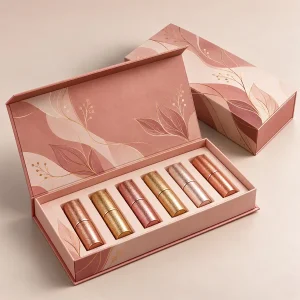
The box structure influences presentation, storage, loading, and product access. Tuck-end formats can provide a practical solution for compact eyeshadow products, while sleeves may create a branded outer layer around an inner tray. Drawer boxes can support a premium unboxing sequence, and magnetic-lid formats may suit curated palettes, gift sets, and limited-edition launches.
Every flap, tab, score, lid, sleeve, insert, and closure should have a defined purpose. Check that the box opens smoothly without damaging the palette, loosening pressed powder, shifting pans, or catching the applicator. The lid should remain aligned when closed, and the product should be easy to remove without excessive force.
For a higher-end beauty presentation, compare rigid makeup boxes. The selected structure should still be practical for the palette dimensions, order quantity, storage space, and intended customer experience.
Use Branding to Communicate Shades and Collections
Branded Eyeshadow Boxes can introduce the makeup collection through logo placement, color palettes, shade names, typography, patterns, product descriptions, usage information, and launch messaging. A neutral palette may require understated packaging, while a bold seasonal collection may use strong graphics, gradients, metallic details, or expressive color combinations.
The exterior can carry the collection identity, while the interior may include a thank-you message, shade story, application guidance, or brand statement. Keep essential information readable, including product name, shade range, size, ingredients, batch details, usage instructions, and any required labeling.
Review artwork on an assembled and filled box rather than relying only on a flat digital file. Folds, seams, corners, windows, sleeves, lid edges, and inserts can change the appearance of the artwork. Board shade, coating, ink coverage, and finishing can also affect color, so a physical proof may be useful when accurate brand reproduction matters.
Design for Retail Counters and Displays
Eyeshadow Retail Packaging should be easy for staff to identify, arrange, replenish, and rotate. Consider whether the boxes will sit on beauty counters, shelves, display trays, promotional stands, or inside a larger retail unit. Shade names, palette names, product codes, and collection details should be visible without requiring staff to open every box.
Consistent dimensions can create a clean shelf appearance, but different palettes may require separate box depths or insert cavities. Avoid using one universal box for products that vary in mirror size, pan layout, brush compartments, or case height.
For display-led packaging, explore cosmetic display boxes. Confirm that the display feature supports product visibility without reducing insert security, closure performance, shelf stability, or customer access.
Prepare Eyeshadow Boxes for Ecommerce Orders
Eyeshadow Shipping Boxes should balance presentation with practical parcel handling. Consider box dimensions, internal movement, closure security, vibration, compression, abrasion, label placement, sealing, and the protection required by the complete order. Pressed powder and mirrors may need additional internal support during transit, depending on the approved product and route.
Test the packaging with the actual palette, insert, tissue, brush, shade card, promotional materials, and outer shipping configuration.
For ecommerce fulfilment, check whether the packaging can be stored flat, assembled efficiently, loaded consistently, sealed neatly, and opened easily by the customer. Compare ecommerce eyeshadow boxes when online delivery is a major part of the packaging plan.
Consider Makeup Gift and Launch Packaging
Eyeshadow Gift Boxes can use textured papers, soft-touch coatings, foil accents, embossing, debossing, sleeves, printed tissue, ribbons, and carefully positioned interior branding. These details may suit holiday makeup collections, influencer kits, bridal beauty sets, limited-edition palettes, and product launch campaigns.
A gift-ready design should still preserve loading efficiency and product security. Decorative elements should not interfere with the lid, insert, shade card, brush, or palette removal. When the package must travel directly to customers, review the complete packed system rather than approving presentation features separately.
A pillow-style format may work for selected compact beauty sets or promotional packs, but its internal cavity and closure must match the palette shape. Compare pillow box packaging only when the format genuinely supports the product and intended presentation.
Review Cosmetic Packaging Claims Carefully
Eyeshadow packaging may communicate product information, shade details, usage guidance, ingredients, care instructions, and brand messaging. Claims about protection, sustainability, recyclability, recycled content, moisture resistance, or premium finishes should be supported by the exact board, coating, insert, and production specification.
The box itself should not be presented as a substitute for suitable cosmetic formulation, sealing, labeling, or product quality controls. Review the complete packaging and product system together, especially when palettes include mirrors, powders, applicators, magnets, or multiple components.
Keep the Search Intent Separate
This page is dedicated to eyeshadow packaging, including palettes, single pans, refill trays, shade organization, makeup inserts, cosmetic branding, retail presentation, launch kits, and ecommerce fulfilment. Custom Eyeliner Boxes should focus on slim pencil or liquid liner formats, while Custom Eyelash Boxes should address lash trays, lash protection, and display visibility.
Separating these topics reduces keyword cannibalization and gives each page a distinct buyer purpose. The eyeshadow page should answer questions about palette dimensions, pan layouts, inserts, shade presentation, mirrors, brushes, and makeup collection packaging.
Approve Samples and Prepare Order Details
Before production, provide the palette dimensions, pan arrangement, mirror and hinge details, product quantity per box, insert requirements, preferred structure, material direction, artwork, finishing, total quantity, destination, and delivery schedule. Mention whether the boxes will be used for retail shelves, ecommerce orders, subscription kits, PR packages, seasonal launches, or gifts.
A flat proof checks artwork, wording, logo placement, shade names, and panel arrangement. An assembled and filled sample reveals the actual product fit, insert security, lid clearance, loading process, product removal, shelf appearance, and opening experience. Keep the approved sample and specification recorded for consistent repeat orders.
Request a Custom Eyeshadow Box Quotation
Share your palette measurements, product images, pan layout, box style, material preference, artwork, insert requirements, quantity, and deadline. WOW Custom Boxes can help organize a product-specific packaging brief for makeup brands, cosmetic retailers, ecommerce stores, launch campaigns, PR kits, and gift collections.
Frequently Asked Questions
What are custom eyeshadow boxes?
Custom eyeshadow boxes are product-specific packages designed for eyeshadow palettes, single pans, refill trays, duo sets, and curated makeup collections. Their sizes, materials, structures, printing, and inserts can be customized around the approved product.
What should I measure before ordering?
Measure the palette length, width, height, pan layout, mirror, hinge, clasp, brush compartment, protective film, insert, and any additional accessories.
Can eyeshadow boxes include inserts?
Yes. Die-cut paperboard inserts, trays, dividers, shaped supports, and other approved structures can help keep palettes and pans positioned inside the box.
Which materials can be used for eyeshadow boxes?
Possible materials include folding carton board, kraft paperboard, solid board, rigid board, and corrugated outer packaging. The final choice depends on the product, structure, presentation, and shipping requirements.
Can I print shade names on the box?
Yes. Shade names, palette names, collection details, product information, usage guidance, and branding can be included in the approved artwork
Are eyeshadow boxes suitable for ecommerce?
They can be designed for ecommerce when the box size, insert, closure, board, label area, outer packaging, shipping route, and product movement are evaluated together.
Can I order premium eyeshadow gift boxes?
Yes. Premium formats may include rigid board, textured papers, foil details, embossing, debossing, soft-touch coatings, sleeves, magnetic lids, and branded interiors.
Can I package palettes and brushes together?
Yes. Palettes, brushes, applicators, shade cards, and other accessories can be packaged together when the internal dimensions and insert design provide suitable clearance.
What information is needed for a quotation?
Provide palette dimensions, pan layout, product images, mirror and brush details, material preference, box style, artwork, finishing, inserts, quantity, destination, and required delivery schedule.