| Specifications |
Details |
| Dimension (L + W + H) |
All Custom Sizes & Unique Shapes |
| Quantities |
Minimum Order Quantity is 500 Pieces |
| Paper Stock |
BoPET (biaxially-oriented polyethylene terephthalate) film,
89 µ to 178 µ (or 3.5 mils up to 7 mils)
|
| Printing |
No Printing, CMYK, CMYK + 1 PMS color, CMYK + 2 PMS colors |
| Finishing |
Gloss Lamination, Matte Lamination, Gloss AQ, Gloss UV, Matte UV, Spot UV, Embossing, Foiling |
| Included Options |
Die Cutting, Gluing, Scoring, Perforation |
| Additional Options |
Zipper, Hanging holes, Tear Notch,
stand-up feature, child-resistant lock
|
| Proof |
Flat View, 3D Mock-up, Physical Sampling (On request) |
| Turnaround |
7 - 10 Business Days |
Product Description
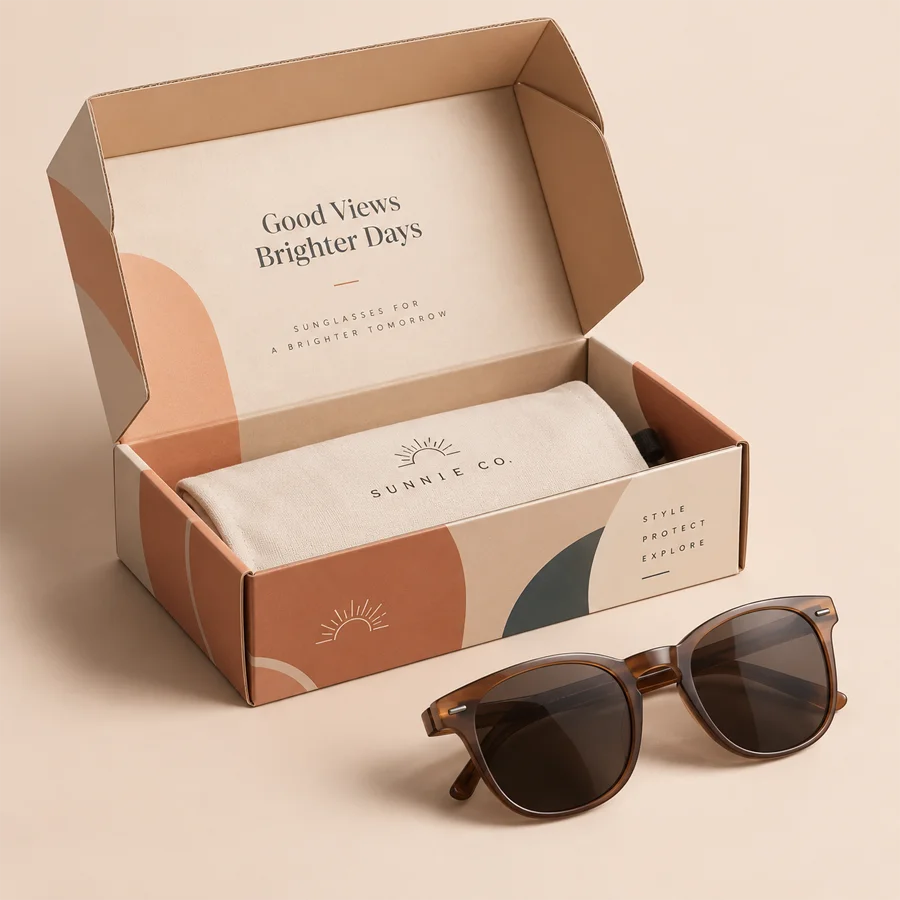
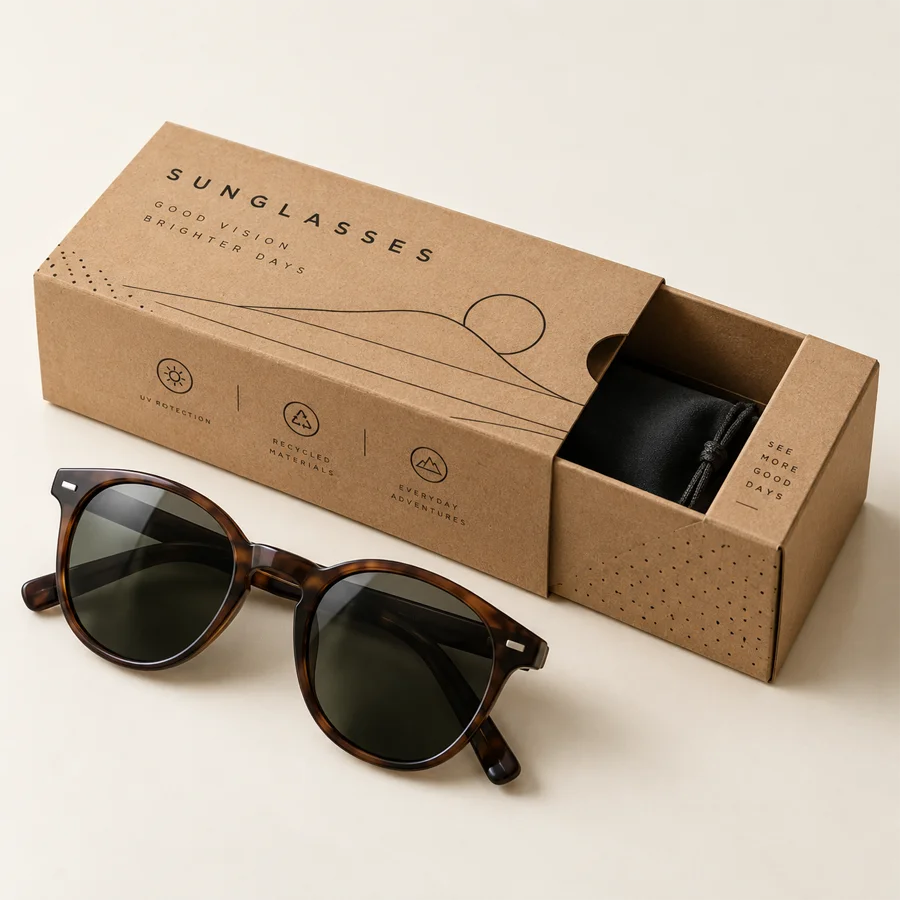
Custom sunglasses boxes give eyewear brands a secure and polished way to package fashion sunglasses, sports eyewear, and coordinated accessories. Designed around frame width, lens height, bridge, temple length, case size, and the sales channel, these boxes can include molded or paper inserts, microfiber, windows, sleeves, and branded printing. WOW Custom Boxes helps eyewear businesses create packaging for retail counters, ecommerce delivery, launches, wholesale orders, and gifts.
Product Detailed Description
Custom Sunglasses Boxes Designed for Secure Eyewear Presentation
Custom Sunglasses Boxes give eyewear brands a structured way to package fashion sunglasses, sports eyewear, prescription-style frames, cases, cleaning cloths, and coordinated accessories. Begin with the frame width, lens height, bridge, temple length, case dimensions, insert requirements, and sales channel where the packaging will be used. WOW Custom Boxes can organize the packaging brief around approved measurements, board selection, internal support, printing, finishing, and production requirements.
Sunglasses packaging should help keep the frame aligned while reducing unnecessary contact with lenses, hinges, temples, and decorative details. The exterior should also communicate the brand, collection, frame style, and care information clearly. For a wider packaging direction, explore custom packaging boxes, but keep this page focused on eyewear-specific fit, lens awareness, frame support, retail display, and ecommerce handling.
Custom Sunglasses Box Specification Options
Use this table to organize the frame, case, insert, structure, material, and branding requirements before requesting production.
Custom sunglasses packaging planning guide
| Decision |
Project direction |
Approval purpose |
| Eyewear format |
fashion sunglasses, sports eyewear, prescription-style frames, or coordinated sets |
Defines the internal product area |
| Frame details |
frame width, lens height, bridge, temple length, hinge, nose pads, and decorations |
Creates an accurate fit |
| Included items |
hard case, soft pouch, cleaning cloth, care card, certificate, or accessory |
Controls internal clearance |
| Material |
paperboard, kraft board, solid board, rigid board, or protective outer packaging |
Matches presentation and handling needs |
| Structure |
tuck end, sleeve, drawer, two-piece lid, magnetic lid, window, or custom format |
Defines opening and access |
| Protection |
molded insert, paper support, microfiber, tray, divider, or frame-specific cavity |
Reduces movement and contact |
Measure the Frame, Case, and Accessories
Custom Sunglasses Packaging Boxes should be developed around the complete product presentation rather than a general eyewear size. Record the frame width, lens height, bridge width, temple length, folded depth, hinge position, nose pads, decorative parts, and case dimensions. A slim fashion frame may require a different cavity from wraparound sports eyewear or a wide acetate design.
Decide whether the sunglasses will be packaged directly in the box, inside a hard case, inside a soft pouch, or with a separate protective layer. Include the case, cleaning cloth, care card, certificate, product tag, and any other item that will remain inside the package. These components can significantly change the required height and internal clearance.
Check the highest and widest points, especially around hinges, temples, lenses, nose bridges, and raised logos. The packaging should hold the frame securely without pressing against lenses or forcing the temples into an unnatural position. Separate box sizes may be useful when frame styles vary significantly.
Select Materials for Eyewear Presentation
Printed Sunglasses Boxes can use folding carton board, kraft paperboard, solid board, rigid board, or protective outer packaging depending on the frame, case, insert, presentation level, storage, and shipping conditions. Consider board stiffness, surface smoothness, edge quality, fold performance, coating, print compatibility, and the weight of internal supports.
Lightweight paperboard may suit simple sunglasses packaging, while thicker board can provide a more substantial retail or gift presentation. Rigid construction may support premium eyewear collections that require an elevated opening experience. For fashion-related packaging options, compare fashion eyewear boxes. The final material should still be selected around frame dimensions, lens clearance, structure, and handling conditions.
When a practical board-based format is preferred, review cardboard sunglasses boxes. Confirm the exact board grade, thickness, coating, recycled content, adhesive, and print surface before production. Avoid unsupported claims about scratch protection, sustainability, or premium performance.
Design Inserts for Frame and Lens Support
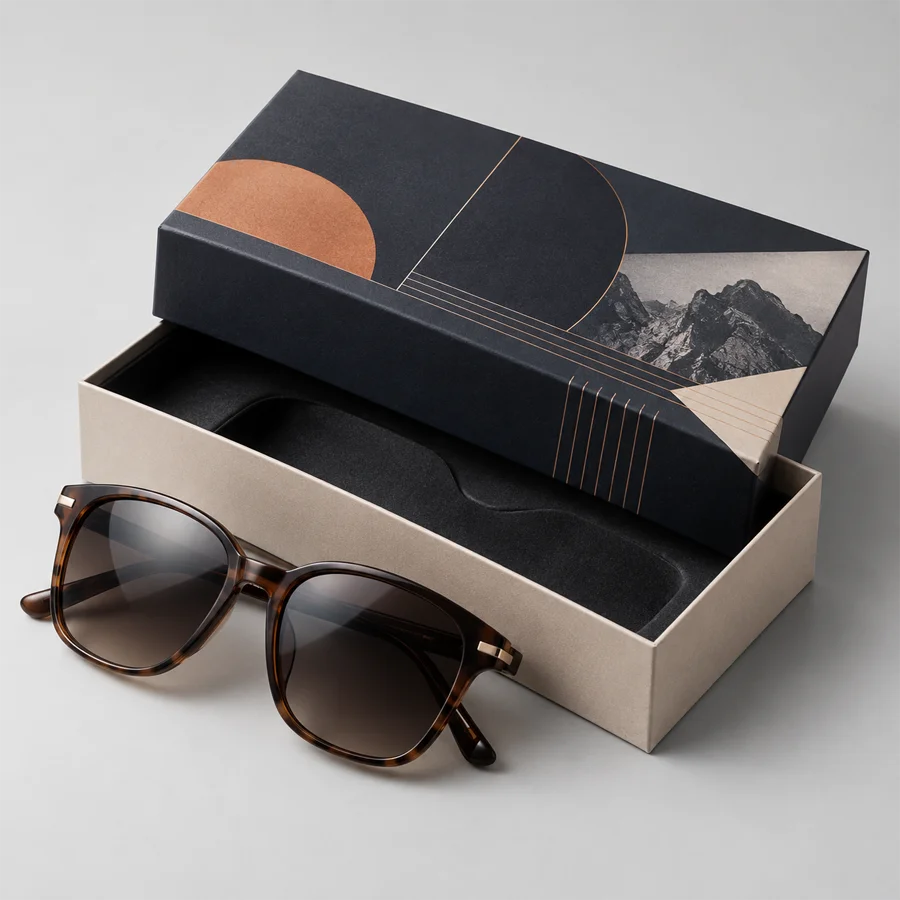
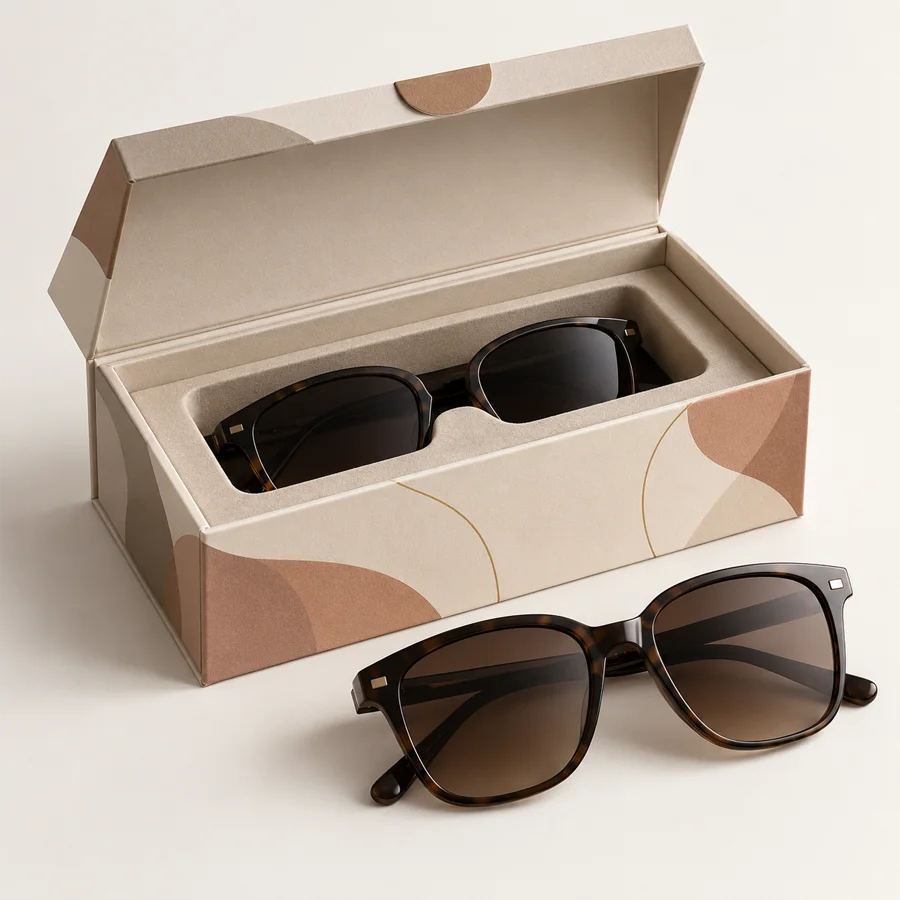
Sunglasses Boxes with Inserts can use shaped paperboard, molded inserts, formed board, trays, microfiber pads, dividers, and frame-specific cavities. The insert should support the frame without pressing against the lens surface, hinge, temple, nose bridge, or decorative details.
A shaped cavity can keep the folded frame aligned, while a microfiber layer may provide a softer contact surface when approved for the product. A separate space can hold the cleaning cloth, case, care card, or certificate. If the product is supplied inside a hard case, the box cavity should be designed around the case rather than the frame alone.
The insert should also support efficient loading and removal. Staff should be able to place the eyewear into the cavity without forcing the temples or catching the hinges. Customers should be able to remove the product without dragging it against the box edge or insert.
Choose a Structure for Opening and Storage
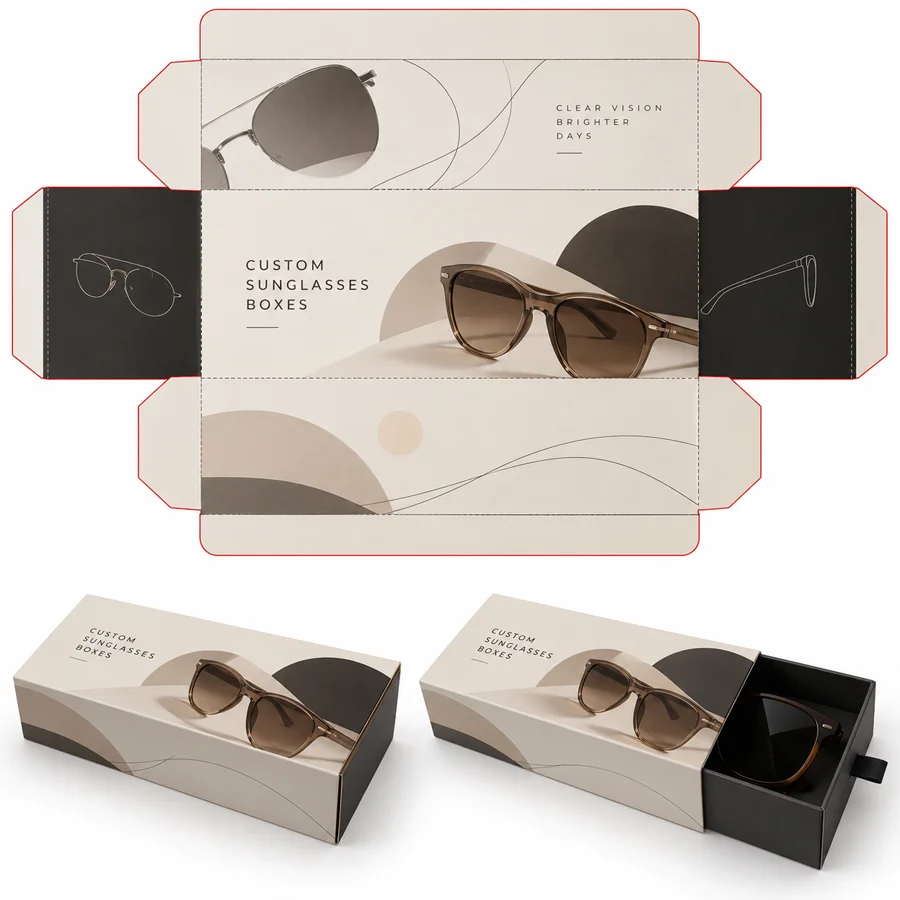
The box structure influences product access, shelf appearance, stacking, storage, and customer experience. Tuck-end boxes may suit compact eyewear products, while sleeves can add a branded outer layer around a protective case. Drawer boxes can create a more deliberate opening sequence, and magnetic lids may suit premium sunglasses collections.
A window can allow customers to see the frame color, silhouette, or collection identity before opening. Its position should be checked against the product, insert, case, printed artwork, and lid. The clear panel should not create pressure or unwanted contact with the lens or frame.
For premium eyewear presentation, compare rigid eyewear boxes. The selected format should remain practical for the frame dimensions, order quantity, storage space, loading process, and intended customer experience.
Use Branding to Present the Eyewear Collection
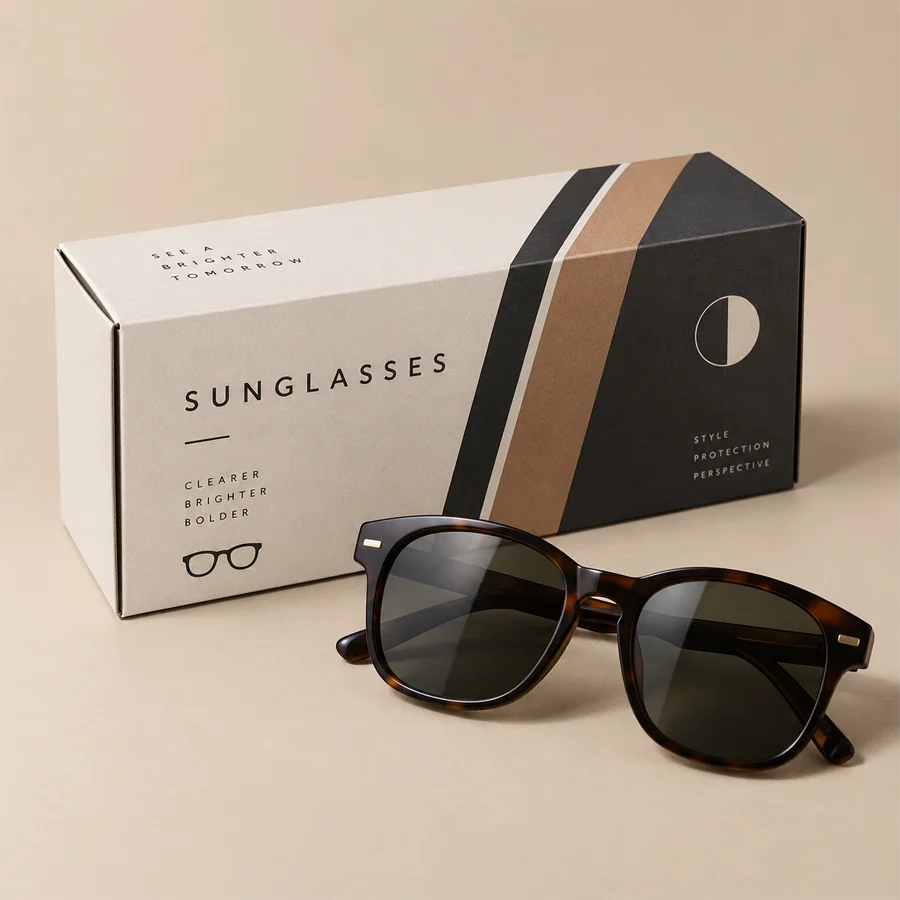
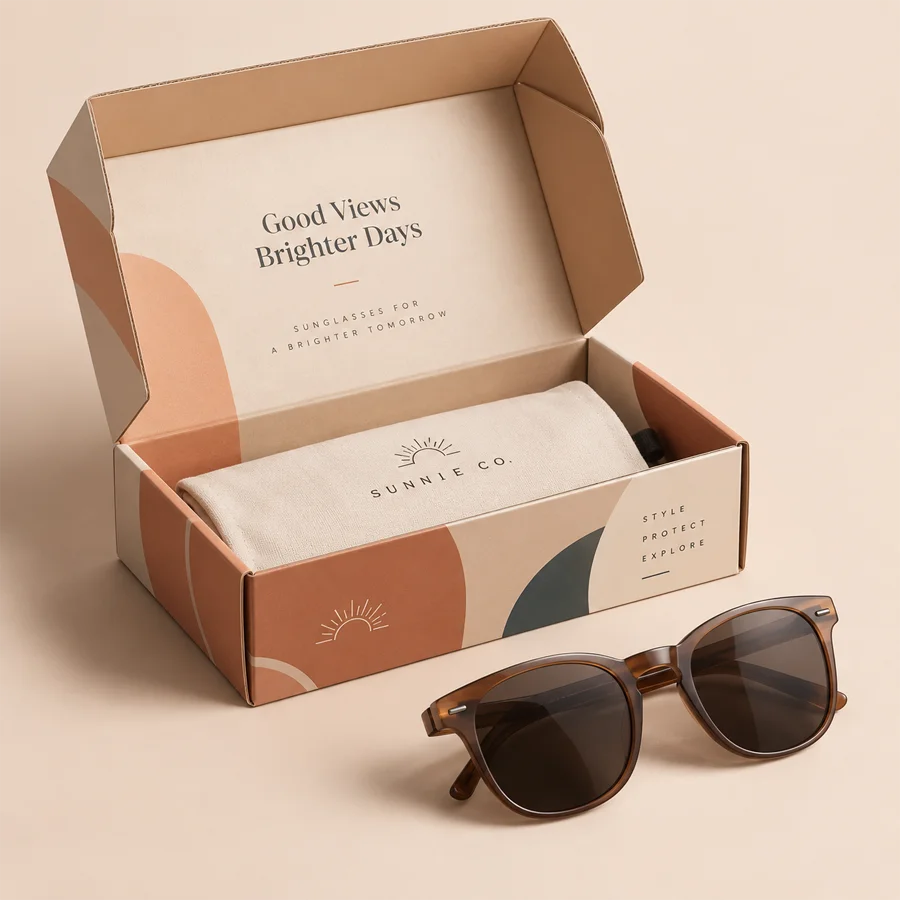
Branded Sunglasses Boxes can communicate the collection through logo placement, typography, colors, patterns, frame names, lens details, care instructions, and campaign messaging. A luxury eyewear brand may prefer a restrained design with specialty paper, while an outdoor or sports collection may use bold colors and technical graphics.
Use the exterior for brand recognition and the interior for a thank-you message, care note, collection story, certificate, or repeat-purchase prompt. Keep product information readable, including frame style, color, lens details, model number, care instructions, and any required labeling.
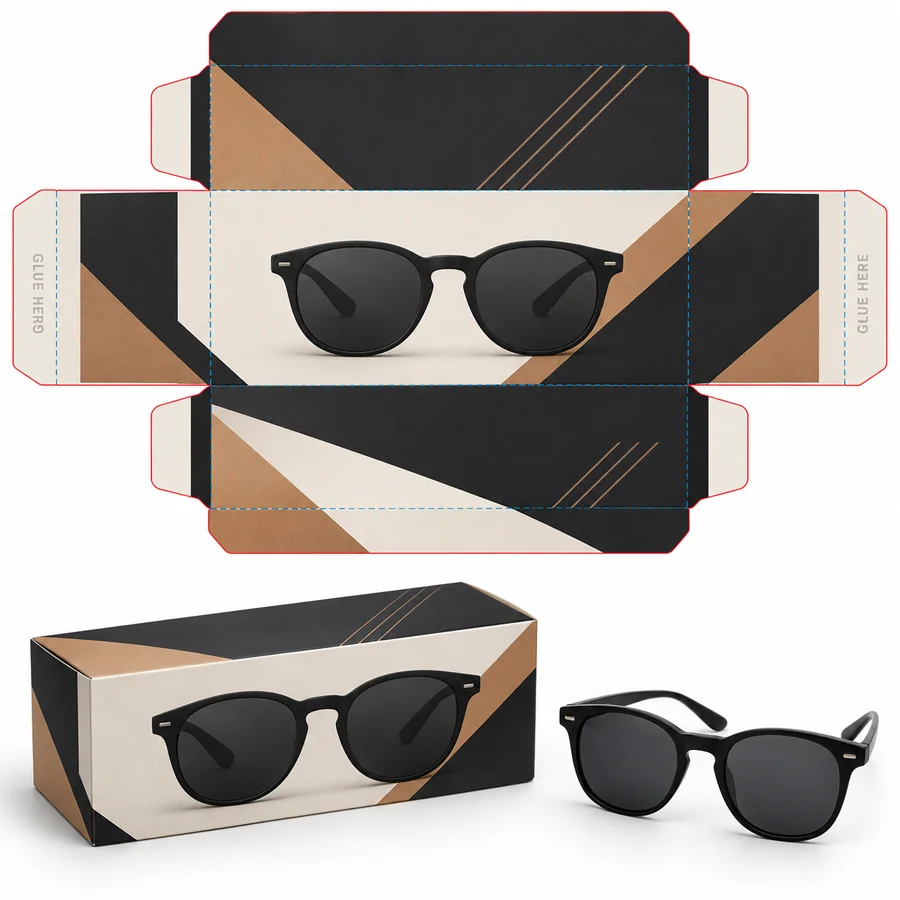
Review artwork on an assembled and filled box rather than relying only on a flat digital file. Folds, seams, corners, sleeves, windows, cases, and inserts can change how the design appears. Board shade, coating, ink coverage, and finishing can also affect final color reproduction.
Prepare Packaging for Retail Eyewear Counters
Sunglasses Retail Packaging should be easy for staff to identify, arrange, replenish, and rotate. Consider whether boxes will sit on display counters, shelves, inside showcases, or within larger retail units. Frame names, colors, model numbers, and collection details should be visible without opening every package.
Consistent external dimensions can create an organized display, but frame styles may require different depths or insert shapes. Wide frames, wraparound sports eyewear, folding sunglasses, and oversized temples should not be forced into one universal cavity.
For display-led packaging, explore sunglasses display boxes. Confirm that the display feature supports visibility without reducing frame support, lens clearance, shelf stability, closure performance, or customer access.
Develop Sunglasses Boxes for Ecommerce Delivery
Sunglass Shipping Boxes should balance compact sizing with frame and lens awareness. Consider internal movement, vibration, compression, abrasion, label placement, sealing, and the protection required by the complete order. An oversized cavity may allow the case to move, while an undersized box may place pressure on the frame or temples.
Test the packaging with the actual sunglasses, case, pouch, cleaning cloth, care card, insert, tissue, and outer shipping configuration. Gift orders and promotional kits may include several accessories, which can change the required internal dimensions.
For online fulfilment, check whether the package can be stored flat, assembled efficiently, loaded consistently, sealed neatly, and opened easily by the customer. Compare ecommerce eyewear boxes when direct delivery is a major part of the packaging plan.
Consider Premium Sunglasses Gift Packaging
Luxury Eyewear Packaging can use rigid board, textured papers, soft-touch coatings, foil accents, embossing, debossing, magnetic closures, sleeves, microfiber pads, and carefully positioned interior branding. These features may suit designer sunglasses, limited-edition frames, bridal gifts, influencer kits, and seasonal collections.
Decorative features should not interfere with the frame, lens, case, insert, closure, or loading sequence. If the box will travel directly to customers, approve the complete packed system rather than reviewing presentation features separately.
The packaging should also reflect the product’s price point without creating unnecessary bulk. A premium structure still needs to be practical for storage, warehouse handling, shipping volume, and repeat production.
Review Lens, Frame, and Product Information
Sunglasses packaging may communicate frame style, model number, color, lens details, care instructions, collection information, and brand messaging. Claims about scratch resistance, UV performance, impact resistance, recycled content, sustainability, or specialty finishes should be supported by the exact product and packaging specification.
The box should not be treated as a substitute for suitable eyewear cases, lens care instructions, product quality controls, or required labeling. Review the frame, case, microfiber, insert, and box together, especially when the product includes coated lenses, delicate finishes, hinges, magnets, or raised decorations.
Evaluate Outer Packaging for Transit Protection
When sunglasses boxes travel through parcel networks, evaluate the complete packed system for compression, corner impact, vibration, abrasion, closure release, case movement, and deformation. Empty packaging does not reproduce the behavior of a filled box containing eyewear, inserts, accessories, and promotional materials.
For a protective outer shipping format, compare corrugated eyewear boxes. The final construction should be selected according to product dimensions, case type, board grade, insert, route, stacking conditions, label placement, and approved testing.
Keep the Search Intent Separate
This page is dedicated to sunglasses packaging, including frame dimensions, lens clearance, temple support, eyewear cases, cleaning cloths, retail display, luxury presentation, and ecommerce delivery. Custom Necklace Boxes should focus on chains and pendant placement, while Custom Bracelet Boxes should address bracelet length, clasp clearance, and curved forms.
Separating these subjects reduces keyword cannibalization and gives each page a clear buyer purpose. The sunglasses page should answer questions about eyewear fit, frame support, lens awareness, case packaging, retail presentation, and secure delivery.
Approve Samples and Prepare Order Details
Before production, provide the frame width, lens height, bridge, temple length, folded depth, case dimensions, product quantity per box, insert preference, preferred structure, material direction, artwork, finishing, total quantity, destination, and delivery schedule.
A flat proof checks artwork, logo placement, product information, model numbers, and panel arrangement. An assembled and filled sample reveals the actual frame fit, lens clearance, case movement, insert security, closure, loading process, product removal, shelf appearance, and opening experience. Keep the approved sample and specification recorded for consistent repeat orders.
Request a Custom Sunglasses Box Quotation
Share your frame measurements, case images, insert preference, box style, material direction, artwork, finishing, quantity, and deadline. WOW Custom Boxes can help organize a product-specific packaging brief for eyewear brands, fashion retailers, optical businesses, ecommerce stores, launches, and premium gift collections.
Frequently Asked Questions
What are custom sunglasses boxes?
Custom sunglasses boxes are product-specific packages designed for fashion sunglasses, sports eyewear, prescription-style frames, cases, cleaning cloths, and coordinated accessories.
What should I measure before ordering?
Measure the frame width, lens height, bridge, temple length, folded depth, hinge position, case size, insert, cleaning cloth, and any included accessories.
Can sunglasses boxes include inserts?
Yes. Shaped paperboard inserts, trays, microfiber pads, dividers, molded supports, and frame-specific cavities may be considered for product alignment.
Can I package the sunglasses with a case?
Yes. The box can be designed around a hard case, soft pouch, cleaning cloth, care card, certificate, or other approved accessory combination.
Which materials can be used for sunglasses boxes?
Possible materials include folding carton board, kraft paperboard, solid board, rigid board, and protective outer packaging. The final choice depends on the frame, insert, structure, presentation, and shipping needs.
Can I add a window to eyewear packaging?
A window may be considered when it improves frame visibility without pressing against the lens, frame, insert, case, artwork, or closure.
Can I print a logo on sunglasses boxes?
Yes. Logos can be printed on the lid, sleeve, side panels, insert, interior, product card, or other approved packaging areas.
Are custom sunglasses boxes suitable for ecommerce?
They can be designed for ecommerce when the frame or case fit, insert, closure, board, label area, shipping route, and product movement are evaluated together.
Can I order luxury eyewear gift boxes?
Yes. Premium formats may include rigid board, textured papers, foil details, embossing, debossing, soft-touch coatings, magnetic lids, sleeves, and microfiber presentation pads.
What information is needed for a quotation?
Provide frame and case measurements, product images, insert preference, material direction, box structure, artwork, finishing, quantity, destination, and required delivery schedule.