| Specifications |
Details |
| Dimension (L + W + H) |
All Custom Sizes & Unique Shapes |
| Quantities |
Minimum Order Quantity is 500 Pieces |
| Paper Stock |
BoPET (biaxially-oriented polyethylene terephthalate) film,
89 µ to 178 µ (or 3.5 mils up to 7 mils)
|
| Printing |
No Printing, CMYK, CMYK + 1 PMS color, CMYK + 2 PMS colors |
| Finishing |
Gloss Lamination, Matte Lamination, Gloss AQ, Gloss UV, Matte UV, Spot UV, Embossing, Foiling |
| Included Options |
Die Cutting, Gluing, Scoring, Perforation |
| Additional Options |
Zipper, Hanging holes, Tear Notch,
stand-up feature, child-resistant lock
|
| Proof |
Flat View, 3D Mock-up, Physical Sampling (On request) |
| Turnaround |
7 - 10 Business Days |
Product Description
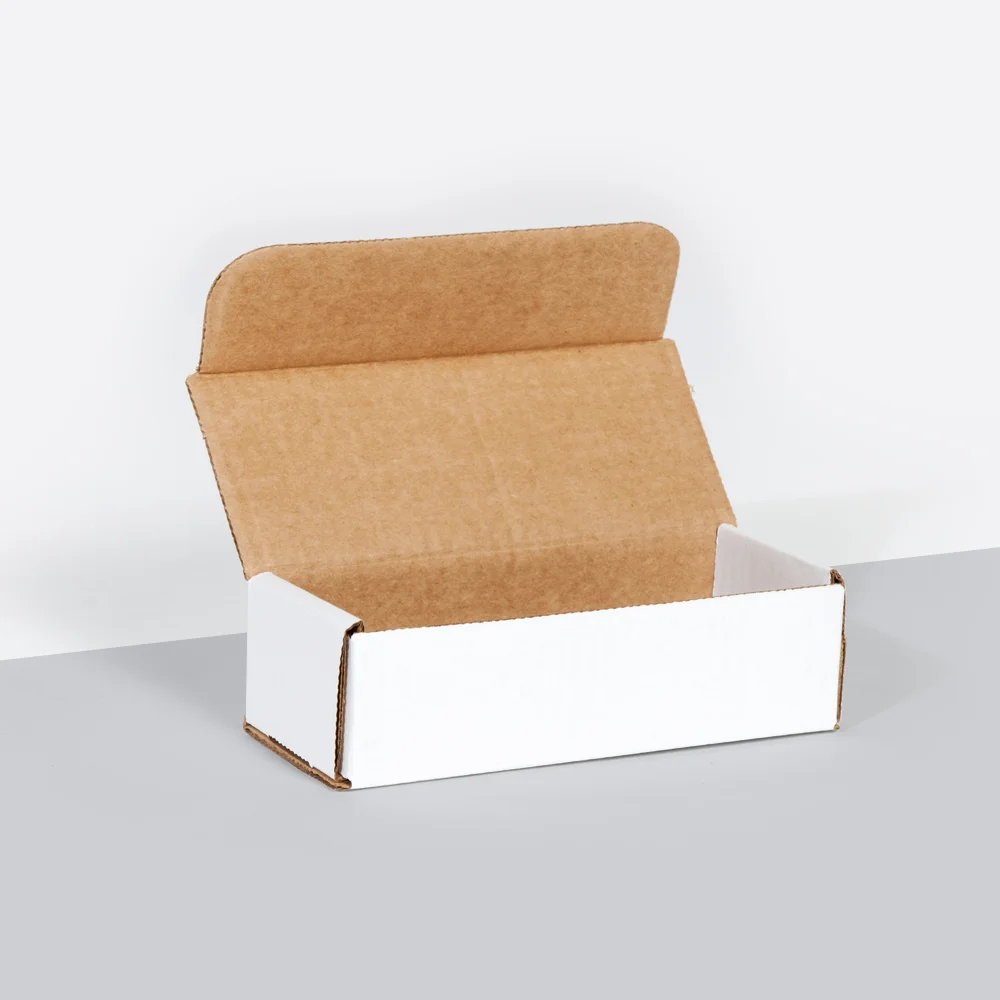
Double Wall Cardboard Mailer Box from WOW Custom Boxes are built for reinforced parcel protection. We customize dimensions, material, structure, closure, printing, and inserts around the real product and its route. The specification can prioritize double-wall board selection, packed-load support, compression planning. A representative sample helps confirm fit, packing, handling, opening, print position, and presentation before bulk production. Share product details, artwork, quantity, destination, and deadline for a production-ready quotation.
Product Detailed Description
Double Wall Cardboard Mailer Box Designed for Reinforced Parcel Protection
Double Wall Cardboard Mailer Box are a reinforced mailer format made with two corrugated mediums and three liners where the approved load needs more stacking and impact support than a single-wall construction. Begin with packed product, weight distribution, insert or cushioning buildup, closure clearance, label area, and the dimensions that face stacking pressure. WOW Custom Boxes can coordinate the package, while the approved sample and documented specification control production.
This page focuses on double-wall board selection, packed-load support, compression planning, secure roll-end closure, transit testing, and efficient heavy-product fulfilment. Coordinate the wider brand range through custom packaging boxes, but keep this product page responsible for one clear buying intent. That boundary gives visitors a useful comparison instead of several pages repeating the same promise.
Double Wall Cardboard Mailer Box Specification Options
Use this table to brief the final material, structure, artwork, and approval requirements.
Double Wall Cardboard Mailer Box planning guide
| Decision |
Project direction |
Approval purpose |
| Product fit |
packed product, weight distribution, insert or cushioning buildup |
Controls clearance and loading |
| Material |
double-wall corrugated combinations selected by flute profile, liner grade |
Matches weight, surface, and route |
| Structure |
reinforced roll-end walls, a hinged lid, locking front tabs |
Defines closure and presentation |
| Testing |
edge crush, box compression, corner drops |
Checks representative performance |
| Artwork |
flexographic marks, litho-laminated graphics, handling icons |
Organizes branding and information |
| Operations |
flat storage, heavier-board erection, product loading |
Supports repeatable packing |
Define the Product and Internal Fit
Custom Double Wall Mailer Boxes should be specified against production-intent contents. Record packed product, weight distribution, insert or cushioning buildup, closure clearance, label area, and the dimensions that face stacking pressure. Check the product at its widest and tallest points and include wraps, cards, labels, accessories, or inserts that will travel inside the package. Small changes can alter closure tension, movement, board loading, and the customer opening experience.
Reinforced Cardboard Mailer Box need only the clearance required for loading, production variation, protection, and removal. Excess space can increase movement; a tight fit can strain products or closures. When the project needs a broader choice of flute and wall construction, compare corrugated mailer boxes. This keeps each page tied to a separate buyer decision.
Select Material From Verified Requirements
Printed Double Wall Mailer may use double-wall corrugated combinations selected by flute profile, liner grade, recycled content, surface requirements, packed weight, and verified route performance. Compare packed weight, stiffness, surface, grain or flute direction, storage, converting, print method, closure, and the distribution route together. A broad term such as strong cardboard or eco material is not a measurable specification and should not replace supplier data.
Confirm the exact grade, caliper, coating, liner, adhesive, and documents, then test after printing and converting. If general board selection matters more than double-wall reinforcement, review cardboard mailer boxes. Keep the current specification centered on its named purpose.
Engineer the Structure Around the Main Job
Heavy Duty Mailer Packaging depend on reinforced roll-end walls, a hinged lid, locking front tabs, dust flaps, optional insert retention, and scores adjusted for the thicker board buildup. Every tab, slot, flap, wall, insert, window, and opening feature should have a defined purpose. The structure must be easy enough to form consistently while retaining the product and presenting the correct panel to the recipient.
Review the dieline in flat and assembled form. Mark glue areas, scores, seams, closure buildup, insert edges, finger access, and any label or tape zone. Watch for panels that spring open, corners that catch during packing, and features that interfere with removal. For projects where route performance leads the brief, use shipping mailer boxes as the closer comparison.
Test the Complete Packed System
Double Wall Shipping Mailers should be assessed for edge crush, box compression, corner drops, vibration, puncture, closure release, abrasion, and deformation after representative stacking and parcel handling. Empty boxes do not reproduce the forces created by packed mass, shifting components, stacking, abrasion, temperature, moisture, or repeated handling. Use representative products, materials, closures, inserts, labels, and case packing in the approval trial.
Document the sample condition, test method, route, observations, damage, and decision. A result for one size, product, weight, or destination should not automatically cover another. Repeat affected checks after changes to material, dimensions, artwork, insert, closure, packing, or route. When internal product retention is the main concern, the better route is mailers with inserts. The two pages should not repeat one primary promise.
Plan Printing on the Finished Format
Corrugated Twin Wall Mailer can use flexographic marks, litho-laminated graphics, handling icons, product codes, interior instructions, and protected carrier-label zones. Evaluate the design on an assembled and filled package rather than only on a flat screen. Folds, texture, curvature, windows, labels, seams, and viewing angle all change what a customer sees.
Keep required copy readable and protect barcode quiet zones. Stock shade, coatings, metallic effects, white ink, and lighting can alter color. Use a physical reference or representative proof when reproduction matters, and assign controlled filenames to every size and artwork version. When a fitted pack for one product is required, compare product mailer boxes. This keeps each page tied to a separate buyer decision.
Make Packing and Quality Control Repeatable
Strong Cardboard Postal Box require a clear working sequence covering flat storage, heavier-board erection, product loading, cushioning placement, closure checks, sealing where required, labeling, palletization, and dispatch inspection. Observe the staff who will form, load, close, label, and inspect the pack. A visually attractive design can still create avoidable cost if it is slow to assemble, difficult to identify, or inconsistent during busy dispatch periods.
Match the Format to Suitable Applications
Double Wall Ecommerce Box may suit dense product kits, hardware, electronics in approved primary protection, bundled books, replacement parts, subscription sets, and heavier ecommerce orders. Suitability still depends on the real product and route. Two items sold in the same category can differ in weight, fragility, temperature, oil, moisture, shape, finish, or opening needs and may therefore require separate specifications.
A controlled size family can share brand rules, but every format should retain its own dieline, fit approval, artwork identifier, case label, and test record. Group products only when they pass the same loading and route conditions. If another corrugated packaging format may be suitable, review corrugated packaging. Keep the current specification centered on its named purpose.
Use Accurate Material and Performance Claims
Double-wall construction is not an automatic guarantee of safe delivery. Board combination, box dimensions, packed weight, closure, cushioning, stacking, route, and verified tests determine performance. Product labeling, safety, contact, barrier, freshness, shelf-life, recycled, recyclable, compostable, biodegradable, or protective statements should be supported for the exact construction and intended market. Similar-looking materials can perform differently after printing and converting.
Keep the Search Intent Separate
This page remains distinct because this page owns two-medium reinforced mailer construction; Corrugated Mailer Boxes cover the wider flute family, while Cardboard Mailer Boxes address broader board choices. For projects where the load can use a different mailer structure, use custom mailer boxes as the closer comparison. This separation reduces cannibalization and gives buyers a direct route.
Approve Proofs, Samples, and Order Details
Wholesale Reinforced Mailer Boxes should move through a controlled dieline, copy review, proof, assembled sample, and filled approval where the project risk justifies it. A flat proof checks position and wording, while an assembled sample reveals closure, balance, clearance, loading, hand feel, viewing angle, and product removal.
For a useful quotation, provide product dimensions, complete packed weight, load distribution, route, stacking conditions, closure, print, quantity, destination, and deadline. State any required documentation, inspection method, packing format, or test standard before pricing and production. Record approved deviations so that repeat orders do not rely on memory.
Request a Product-Specific Quotation
Share the product, measurements, weight, artwork, quantity, destination, and deadline. WOW Custom Boxes can organize the approved production brief.
Frequently Asked Questions
What are double wall cardboard mailer box?
They are a reinforced mailer format made with two corrugated mediums and three liners where the approved load needs more stacking and impact support than a single-wall construction. Final construction should follow the approved product, material, artwork, route, and sample.
What should I measure before ordering?
Measure and document packed product, weight distribution, insert or cushioning buildup, closure clearance, label area, and the dimensions that face stacking pressure. Use representative production-intent contents rather than relying only on catalogue dimensions.
Which materials can be considered?
Possible directions include double-wall corrugated combinations selected by flute profile, liner grade, recycled content, surface requirements, packed weight, and verified route performance. The exact grade should be selected from verified product and route requirements.
What makes a mailer double wall?
A double-wall board normally combines two corrugated mediums with three liners, but the exact flute and paper specification must be confirmed.
Is double wall suitable for every product?
No. It can add material and shipping volume, so the choice should follow packed weight, hazards, route, and performance testing.
Can thick board still be printed?
Yes. Print method and artwork detail should be selected for the liner surface, board thickness, order quantity, and required finish.
Can the size and artwork be customized?
Yes. Dimensions, structure, print panels, colors, and selected features can be developed around the approved product and production brief.
Can I order wholesale quantities?
Wholesale production can be quoted after size, material, structure, print, versions, quantity, packing, destination, and schedule are confirmed.
Should I approve a physical sample?
A representative assembled and filled sample is useful for evaluating fit, closure, loading, opening, appearance, and relevant handling conditions.
What information is needed for a quotation?
Provide product dimensions, complete packed weight, load distribution, route, stacking conditions, closure, print, quantity, destination, and deadline. Mention any mandatory tests, compliance records, or packing instructions required for approval.