Product Detailed Description
Rigid Candy Packaging Boxes for Premium Confectionery
Rigid Candy Packaging Boxes provide a sturdy and presentable way to package chocolates, gummies, truffles, hard candies, caramels, and assorted confectionery collections. Their thick board construction helps the package maintain its shape, while trays, dividers, and individual candy cups keep different pieces organized. Businesses can explore
custom packaging solutions designed around the candy type, quantity, arrangement, branding, and intended sales channel.
Rigid candy boxes are particularly suitable for gift collections, seasonal launches, corporate presents, wedding favors, and premium retail products. Their exterior and interior can be customized with brand colors, product details, illustrations, and finishes that complement the confectionery inside.
What Are Rigid Candy Packaging Boxes?
Rigid candy boxes are manufactured from thick paperboard or chipboard covered with printed or decorative paper. Unlike lightweight folding cartons, the completed structure generally remains assembled and retains its shape during display, gifting, and normal handling. The package can contain a single layer of candies, several internal levels, or separate compartments for different flavors. A removable tray or divider system prevents products from gathering in one area and creates a more deliberate presentation when the box is opened. The rigid box should normally be treated as secondary packaging unless every material that directly touches the candy has been verified for the intended food-contact application. Candies can be placed in approved wrappers, cups, pouches, or liners before being arranged inside the presentation box.
Rigid Candy Box Specifications
| Feature |
Available Options |
| Box material |
Rigid paperboard, chipboard, and wrapped board |
| Sizes |
Custom dimensions based on candy quantity and arrangement |
| Structures |
Lid and base, drawer, book-style, and custom gift formats |
| Interior options |
Dividers, trays, candy cups, compartments, and layered inserts |
| Printing |
CMYK, PMS, inside printing, and outside printing |
| Finishes |
Matte, gloss, soft-touch, foil, embossing, and spot UV |
| Additional features |
Sleeves, ribbons, windows, labels, and removable trays |
Plan the Box Around the Candy Collection
The dimensions of a rigid candy box should be based on the complete product arrangement rather than the approximate weight of the confectionery. Measure each wrapped candy, cup, tray, divider, liner, and promotional card that will be placed inside.
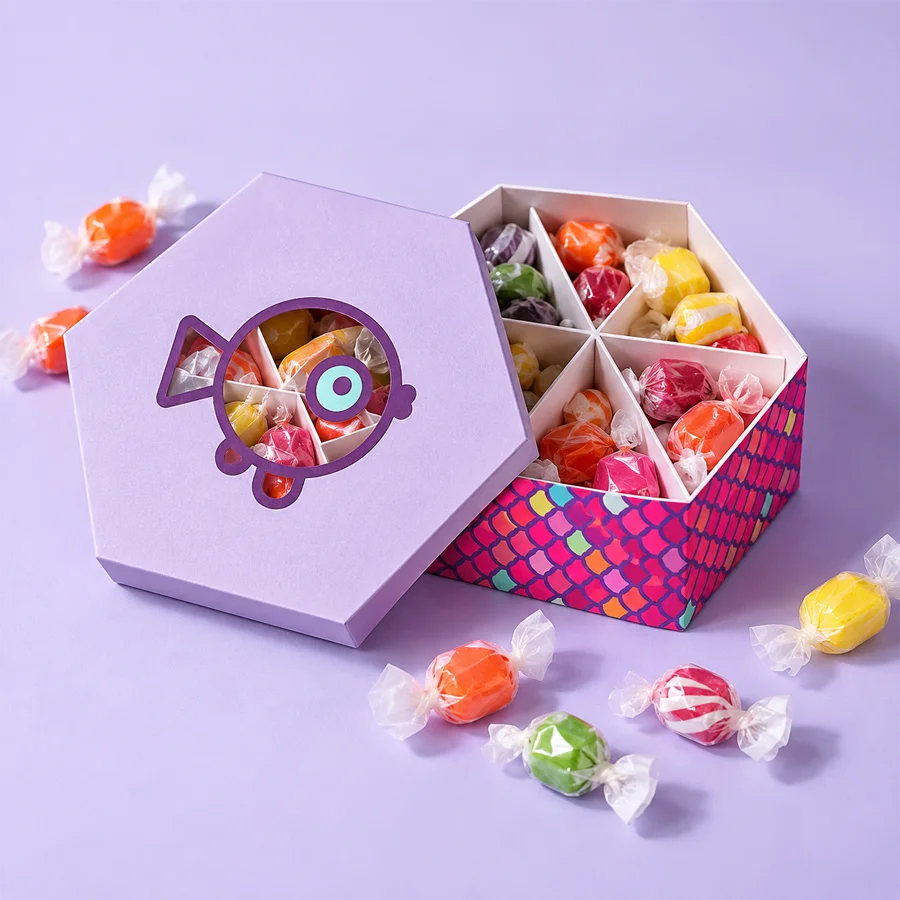
Truffles and molded chocolates may need individual cavities so their decorative surfaces remain separated. Gummies, hard candies, or wrapped caramels may use larger shared compartments. A mixed collection can combine several cavity sizes within one tray.
The arrangement should also consider how customers will remove each piece. Tight cavities may damage coatings or make the candy difficult to lift, while excessive space can allow products to rotate and lose their intended presentation.
Rigid Materials for a Premium Presentation
Chipboard and rigid paperboard create firm walls and defined corners. Board thickness should correspond to the dimensions of the box, the total packed weight, the number of internal levels, and the intended handling conditions.
The board can be covered with smooth printed paper, kraft-style wraps, textured stock, or other decorative surfaces. Brands that need a high-end presentation can compare
luxury rigid boxes for additional material and finishing directions.
Material selection should balance presentation with storage and transportation. Very heavy structures may increase shipping volume without improving candy organization, while overly light board may not support a large confectionery collection.
Custom Inserts, Trays, and Candy Compartments
The interior is one of the most important elements of rigid candy packaging. A carefully planned insert organizes flavors, protects decorated pieces, and helps customers understand the assortment.
Rigid boxes with inserts can provide a related structure for collections that need fitted internal organization. Paperboard dividers, formed trays, individual candy cups, and removable layers can be customized around the actual confectionery. Every insert should remain stable when the box is lifted or opened. Finger spaces, ribbon tabs, and tray notches can make internal layers easier to remove. Different flavors can also be identified through printed names, numbers, or a separate assortment guide.
Food Separation and Product Freshness
A presentation box alone does not necessarily provide the barrier needed to protect confectionery from moisture, grease, aroma transfer, or contamination. Candy brands should select suitable direct-contact wrappers, cups, pouches, or liners for the actual recipe and required shelf life. Strongly flavored products should be separated when aroma transfer could affect other pieces. Oily chocolates and caramels may also require suitable liners to prevent marks from reaching the decorative paper or exterior wrap. Any statement relating to food safety, freshness, grease resistance, or barrier performance should be supported for the complete approved packaging system.
Popular Opening Styles for Candy Gifts
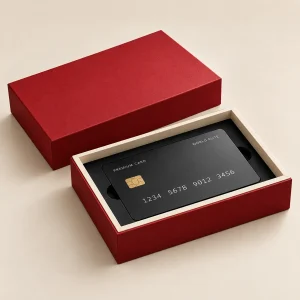
A removable lid creates a familiar gift-box presentation and provides a large branding area. The lid can cover the full base or stop at a selected depth.
Two-piece lid rigid boxes are relevant for boxed chocolates, truffles, festive assortments, and corporate candy collections.
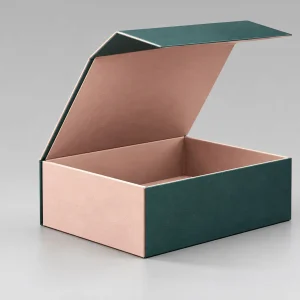
An attached cover keeps the lid connected to the base and creates space for a printed message or assortment guide inside. Brands considering this opening experience can review
book-style rigid boxes while keeping the candy arrangement and food separation requirements central to the final design.
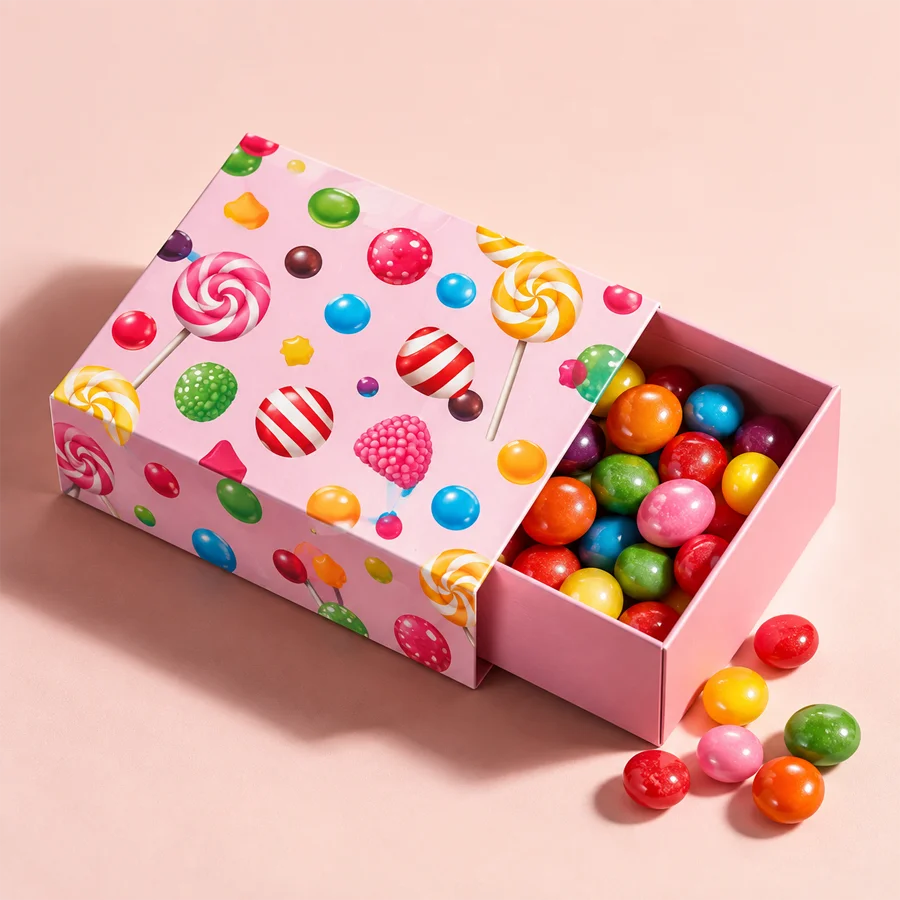
Drawer structures can create a gradual reveal, whereas tiered boxes can separate flavors across multiple levels. The chosen opening method should remain easy to pack, store, display, and use.
Printing for Candy Brands
Custom printing can communicate the brand name, candy collection, flavor information, ingredients, quantity, storage guidance, barcodes, and promotional messages. CMYK printing supports multicolor artwork and illustrations, while PMS printing may help reproduce specific brand colors. The outside can feature seasonal artwork or a permanent brand design. Inside-lid printing can include a flavor guide, thank-you message, company story, or serving suggestion. Important product information should remain readable and should not be placed across folds, seams, or textured areas. Brands should provide final approved copy for ingredients, allergens, nutrition information, date coding, storage directions, and other required labeling. These details vary by product and market and should not be replaced with generic packaging text.
Luxury Finishes for Confectionery Packaging
Foil stamping can highlight a logo, collection name, border, or small decorative detail. Gold, silver, copper, colored, and holographic foil options can be matched to the wider visual identity. Embossing raises selected artwork, while debossing creates a recessed effect. Matte lamination produces a smooth and understated surface, whereas gloss lamination creates a brighter finish. Spot UV can introduce glossy contrast on specific areas. Finishes should be selected according to the artwork and handling environment. Too many decorative treatments can make a compact candy box appear crowded and may distract from the product presentation.
Rigid Candy Boxes for Chocolates and Truffles
Chocolate assortments often contain products with different shapes, coatings, fillings, and decorations. Individual cups or cavities help separate delicate pieces and reduce direct surface contact. The interior arrangement can follow rows, a centered feature piece, or a mixed pattern. A printed guide can identify dark, milk, white, nut-filled, fruit-filled, and specialty chocolates without requiring a label beside every cavity. Temperature and shelf-life management depend on the confectionery formulation and distribution conditions. The rigid box improves presentation and organization but does not replace appropriate production, storage, or temperature controls.
Packaging for Gummies, Caramels, and Hard Candy
Wrapped gummies, caramels, and hard candies may use shared compartments because their individual wrapping already separates the products. Different colors or flavors can still be organized in divided sections. Small quantities intended for events or party favors may work well in compact shapes. For lighter candy portions,
custom pillow boxes provide another related packaging category, while rigid construction remains better suited to structured gift presentation and larger assortments.
Festive and Traditional Sweet Collections
Candy packaging is frequently ordered for weddings, holidays, festivals, anniversaries, and corporate occasions. Artwork can be changed for each campaign while the approved structure and tray layout remain consistent. Traditional sweet collections may contain several shapes and textures that need separate compartments. Businesses developing this type of assortment can compare
custom mithai boxes for another relevant sweet-packaging format. Seasonal design should still preserve space for essential product information. Gift messages, event dates, and recipient details can be added without interfering with ingredient or allergen labeling.
Retail Display and Storage
Rigid candy boxes should stack securely without transferring excessive pressure to the contents. Exterior labels can identify flavor, quantity, product code, or collection without requiring staff to open each package. Storage conditions should match the needs of the confectionery. The packaging should be kept away from moisture, strong odors, excessive heat, and environments that could affect the candy or decorative wrap.
Shipping Rigid Candy Boxes
A decorative rigid box should normally be placed inside an appropriate outer shipping carton for parcel delivery. Protective clearance and cushioning can help preserve the corners, lid, wrap, and internal candy arrangement. The complete package should be evaluated with the actual candies, trays, liners, closures, and outer carton. Testing can identify product movement, tray lifting, lid release, abrasion, or damage before bulk distribution.
Order Custom Rigid Candy Packaging Boxes
Before production, provide the candy dimensions, quantity, arrangement, packed weight, direct-contact packaging, preferred box style, insert design, artwork, and shipping route. A filled sample can help confirm fit, opening, product removal, and overall presentation. Well-planned rigid candy packaging can organize confectionery, strengthen branded presentation, and create a gift-ready customer experience. Every structural and visual decision should be based on the actual candy collection rather than a generic rigid-box template.
Frequently Asked Questions
Can Rigid Candy Packaging Boxes be made in custom sizes?
Yes. Dimensions can be developed around the candy quantity, arrangement, trays, and internal dividers.
Can individual compartments be added?
Yes. Inserts can include cavities, dividers, candy cups, and removable layers.
Can candy directly touch the rigid box?
Direct contact should only occur when the relevant materials have been verified for the intended food-contact application.
Can the box include a flavor guide?
Yes. Flavor information can be printed inside the lid or supplied on a separate card.
Can a logo be printed on the box?
Yes. Logos, artwork, product details, and seasonal designs can be printed on approved surfaces.
Can premium finishes be applied?
Yes. Options include foil stamping, embossing, debossing, matte lamination, gloss lamination, and spot UV.
Are these boxes suitable for chocolate gifts?
Yes. Custom trays and candy cups can organize chocolates and truffles for gift presentation.
Can one box contain several candy flavors?
Yes. Dividers and labeled compartments can separate different flavors and product varieties.
Are Rigid Candy Boxes suitable for corporate gifts?
Yes. They can include branded artwork, message cards, personalized sleeves, and organized confectionery.
Do Rigid Candy Boxes need outer shipping cartons?
Yes. An appropriate outer carton is recommended to protect the presentation box and candy arrangement during delivery.