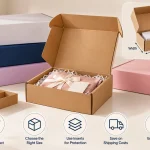
The best shoe box size for winter boots is the size that accommodates the complete pair, its protective materials, and the intended packing position without compressing the footwear. There is no single set of dimensions that fits every winter collection. A fleece-lined ankle boot may need more width than an unlined boot with the same shoe-size label. A tall boot may require additional length to accommodate its shaft. Thick soles, padded collars, buckles, and inserts can also change the space required. Choosing the right carton therefore starts with measuring the actual pair. This guide explains how to turn those measurements into a practical box specification and how to organize several footwear styles into a manageable size range.
Footwear size describes fit for the wearer. It does not provide the outside dimensions needed to design packaging. Two boots marked with the same size can have different outsole lengths, toe shapes, upper heights, and lining thicknesses. A wide rounded toe may also occupy more space than a narrower design. Separate your collection into packaging groups before measuring. Useful groups might include lined ankle boots, chunky winter boots, and tall-shaft styles. When ordering empty shoe boxes, provide the actual packed-pair dimensions rather than requesting a carton based only on a footwear size number. This gives the supplier a clearer starting point for the internal layout.
The position of the boots changes the dimensions of the package. A heel-to-toe arrangement may use space efficiently, but it should not place a rugged outsole against an exposed upper. Side-by-side packing may provide a clearer presentation while requiring more width. For tall boots, the shaft arrangement needs particular attention. Follow the footwear maker’s guidance rather than forcing a fold simply to make the carton smaller. Try the proposed positions with the real pair and protective materials. Choose an arrangement that supports loading, separation, and customer removal. Record the accepted position with a photograph. Measurements taken in one arrangement should not be used to approve another without checking the fit again.
Place both boots in the approved position on a flat surface. Add the tissue, separators, supports, and accessories that will be included.
Measure the overall space occupied by this arrangement:
Include projecting features such as pull tabs, buckles, heel edges, and padded collars. Do not press these features down while measuring unless that position is part of the approved packing method.
Repeat the process with representative pairs. A single sample may not reveal differences across the collection.
The usable space inside the carton determines whether the footwear fits. External dimensions include the board and may not describe the available interior accurately. Ask the supplier to identify whether quoted dimensions are internal or external. Confirm the order of length, width, and height on the specification. For a separate-lid structure, also review how the lid seats over the base. A carton can have enough base space while still creating pressure when closed. When discussing custom cardboard boxes, supply your packed-pair measurements and request a proposed internal size. Let the approved structure and sample establish the final clearance.
The carton needs enough room for loading, manufacturing variation, protective components, and removal. However, adding a large gap around the pair can allow movement and increase the amount of packing material needed. There is no universal clearance allowance suitable for every winter boot. A soft padded collar, a firm leather upper, and a metal buckle create different requirements. Use an assembled sample to answer practical questions: Can a packer load the pair easily? Does the lid close without pressure? Can the customer remove each boot without pulling against the sides? If the answer is no, identify which dimension or component needs adjustment.
Winter lining can make footwear bulkier even when the outsole dimensions remain similar. Fleece, wool blends, insulation, and padded openings can increase the space occupied around the upper. The carton should accommodate those areas without relying on prolonged compression. Check whether a lined variant shares a box comfortably with its unlined counterpart. If not, place it in a separate packaging group. Review the lid clearance around padded collars. A lid that appears level from the outside may still press against the highest part of the footwear. The sample should represent the finished production boot, including its actual lining and labels.
A boot shaper or insert occupies space and can change the packing position. Tall-shaft footwear may require support that cannot be accommodated in a carton designed around an unsupported pair. A divider can also reduce the usable width of each compartment. Add every protective component before approving dimensions. Include spare laces, care cards, and accessory packs if they travel inside the shoe box. For a natural kraft appearance, custom kraft boxes are a material direction to discuss after the layout is established. The chosen surface does not replace the need to specify construction and usable space.
One universal carton may be convenient to purchase but unsuitable for a varied winter range.
Instead, group boots that pass the same fit checks. Use a manageable set of sizes with clear identifiers.
| Footwear group | Main sizing concern | Sample check |
|---|---|---|
| Lined ankle boots | Collar volume and pair width | No pressure around the padded opening |
| Chunky winter boots | Sole width, depth, and weight | Adequate base space and closure clearance |
| Tall-shaft boots | Shaft position and support | No forced folding or unsupported distortion |
| Boots with hardware | Buckle and trim projection | Clearance from adjacent footwear and panels |
| Larger-size variants | Complete packed-pair dimensions | Fit confirmed with the intended largest pair |
These groups are planning categories, not fixed dimension standards. Assign a carton only after checking the actual footwear.
Checking the largest intended pair helps identify a carton that is too small. Checking smaller pairs helps identify excessive space. If one size range uses a shared carton, test both ends of that range. Review whether smaller pairs need an approved adjustment to the internal arrangement. Avoid solving every fit difference with extra filler. It may slow packing or create an inconsistent presentation. When a shared size produces poor results, compare another carton size against the operational cost of managing it. The goal is a practical range that staff can use consistently.
The retail shoe box and the outer delivery carton have different roles. Approve the footwear carton first, then measure it externally for the shipping arrangement. Include any cushioning or movement-control components between the two layers. Review custom corrugated boxes around the complete shipping load. If several footwear boxes travel together, assess the combined arrangement rather than multiplying one box measurement without considering layout. A retail carton that fits the boots correctly should not be enlarged simply to stand in for an unassessed shipping package.
Keep one clear record for each approved carton.
| Specification field | Information to retain |
|---|---|
| Carton reference | Unique identifier for the approved size |
| Footwear coverage | Styles and footwear sizes checked |
| Internal dimensions | Length, width, and height with units |
| Packing position | Photograph of the approved arrangement |
| Protective components | Tissue, separators, supports, and accessories |
| Closure | Structure and accepted lid clearance |
| Supply format | Flat, partially assembled, or assembled |
| Approval reference | Sample version and approval date |
If the lining, sole, hardware, or supports change, review the affected fit checks. An unchanged shoe-size label does not guarantee an unchanged packaging requirement.
Prepare your packed-pair measurements, footwear size range, lining details, supports, and quantities before requesting a quotation. Include photographs showing how the boots will sit inside the carton. For a coordinated footwear packaging range, custom packaging boxes can be planned around your approved dimensions, materials, and brand design. Once the measurements are ready, discuss your winter boot box requirements with the team to review the proposed structure and sample before production.
The size that fits the complete packed pair without compression or excessive empty space. Determine it from actual measurements and an assembled sample.
The footwear size can identify the product, but it is not enough to determine carton dimensions. Measure the outside of the packed pair.
Yes. When the lining or padded upper increases the finished boot’s volume. Check the lined version rather than assuming it fits an existing carton.
Send the complete packed-pair length, width, and height, including protective materials and accessories. Identify the units and packing position.
Yes. Only where the footwear’s design and maker’s instructions permit that arrangement. Do not force a fold to meet a predetermined box size.