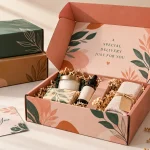
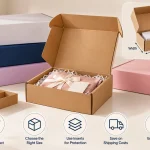
Shoe boxes help protect winter boots by limiting unnecessary movement, keeping pairs organized, and reducing contact with dust and surrounding items. When the dimensions and structure suit the boots, the package can also support orderly handling and presentation. The box needs to be part of a complete protection plan. It cannot dry wet footwear, replace shaft support, or make an unsuitable parcel waterproof. Winter boots often have heavier soles, thicker linings, taller uppers, and more volume than lightweight shoes. Packaging should follow those features rather than relying on a standard sneaker-box size. This guide explains the practical steps that help a shoe box perform during packing, storage, and delivery.
Measure both boots in the intended packing position. Include tissue, separators, supports, care cards, and other items that travel with them. Check the widest points of the soles and the space needed around the upper. For taller boots, decide how the shafts can be positioned without forcing sharp folds. The largest footwear size may need a different carton from the smallest. A shared box size should be tested across every intended variant. When ordering empty shoe boxes, provide measurements of the complete packed pair. Internal carton dimensions matter more for fit than the outside dimensions shown in a product photograph.
A close, practical fit helps stop boots sliding across the box during handling. Too much space can allow soles, buckles, or heels to rub against the opposite upper. A tight fit can place pressure on decorative details or prevent the lid from seating correctly. Use the sample to check where each boot sits and how it moves when the carton is handled normally. Add appropriate supports or separators if needed. Do not press the boots down simply to make the carton close. Adjust the structure, packing position, or size instead. The package should accommodate the footwear in the condition you want customers to receive it.
A separator or suitable wrap can help reduce direct contact between the pair. Pay particular attention to textured soles, metal hardware, heel edges, and decorative details. Their positions may create rubbing points that are not obvious when the carton is empty. Check the proposed paper or liner against the boot material. Avoid assuming that every colored or printed wrap is suitable for every finish. Review the arrangement with representative boots, including pairs with the most prominent hardware. Record how packers should position the footwear and separators. A consistent packing method makes protection easier to reproduce.
A shoe box provides an enclosure, but it may not support a tall boot shaft on its own. For styles that need shape support, discuss suitable boot shapers or product-specific inserts. Their dimensions and stiffness should match the footwear. Avoid bending the shaft into an unnatural position to fit a compact carton. The appropriate arrangement depends on the boot’s design and the maker’s instructions. Try the complete support system in the sample. Check that it stays in position and does not place pressure on the boot. The box size should be approved after the supports are included.
Winter boots can place more demanding loads on the carton than lightweight footwear. Board grade, panel span, closure, corners, and base construction all contribute to performance. The word cardboard does not establish how much load a box can handle. Review custom cardboard boxes around the pair weight and handling conditions. Ask the supplier to describe the proposed construction clearly. Inspect the filled sample for base sagging, lid interference, and panel distortion. If boxes will be stacked, assess the intended stacking arrangement rather than treating one empty carton as evidence of performance.
A closed carton can reduce dust exposure and contact with nearby stock. It should not be treated as a waterproof enclosure. Wet boots should be cared for according to the footwear maker’s instructions and allowed to dry before storage. Leather, suede, textiles, and insulated linings may require different treatment. Keep storage areas dry and avoid putting cartons directly where water can reach them. Inspect packages that have become damp or softened. Ventilation features, where appropriate, do not make a wet pair safe for immediate enclosed storage. Moisture conditions need to be managed separately from box design.
A retail shoe box may keep the pair arranged while still needing an outer shipping carton. Choose the outer package around the filled shoe box, packed weight, closure, and parcel route. Allow for the protective components required by that arrangement. Custom corrugated boxes can be assessed for the outer shipping role. Their final grade and size should be selected against the complete load. Prevent the inner box moving excessively, and confirm the sealing method. Any moisture-related protection should be specified for the shipping situation rather than inferred from a surface finish.
Put the style, size, color, and stock reference where staff can read them without repeatedly opening the carton. This helps reduce unnecessary handling and makes it easier to keep the correct pair together. For stores, a consistent label position also helps when boxes are stacked. Avoid covering essential identification with tape or the parcel label. If an outer package is used, decide which information belongs on each layer. For a compact delivery arrangement, custom mailer boxes are another structure to review against the boot dimensions and weight. Approval should use the real packed pair.
| Protection concern | What to check in the sample |
|---|---|
| Product fit | Both boots fit without forced compression |
| Surface contact | Soles and hardware do not rub vulnerable uppers |
| Shaft shape | Supports and packing position suit the boot design |
| Base loading | Filled carton does not sag or distort unacceptably |
| Closure | Lid or flap engages with the complete contents |
| Storage | Intended stacking and dry storage conditions |
| Delivery | Outer package, sealing, and movement control |
| Identification | Correct style and size remain easy to read |
Keep photographs of the approved arrangement so staff can reproduce it during busy winter periods. WOW Custom Boxes provides packaging options that can be discussed around these footwear requirements. To prepare a boot-packaging brief, contact the packaging team with pair dimensions, weight, boot type, supports, artwork, quantities, and the intended storage or delivery route.
It organizes the pair, limits movement when correctly sized, and reduces contact with dust and nearby items. Additional support may still be needed.
Yes. If the actual pair and its protective components fit properly. Taller or bulkier boots may require another size or structure.
Yes. When their design requires support to maintain the intended shape. Follow the footwear maker’s guidance and approve the support with the box.
Measure the packed pair, including soles, shafts, hardware, separators, inserts, and any cards or accessories.
Yes. When the material and placement suit the footwear. Check the packed pair for remaining contact points.