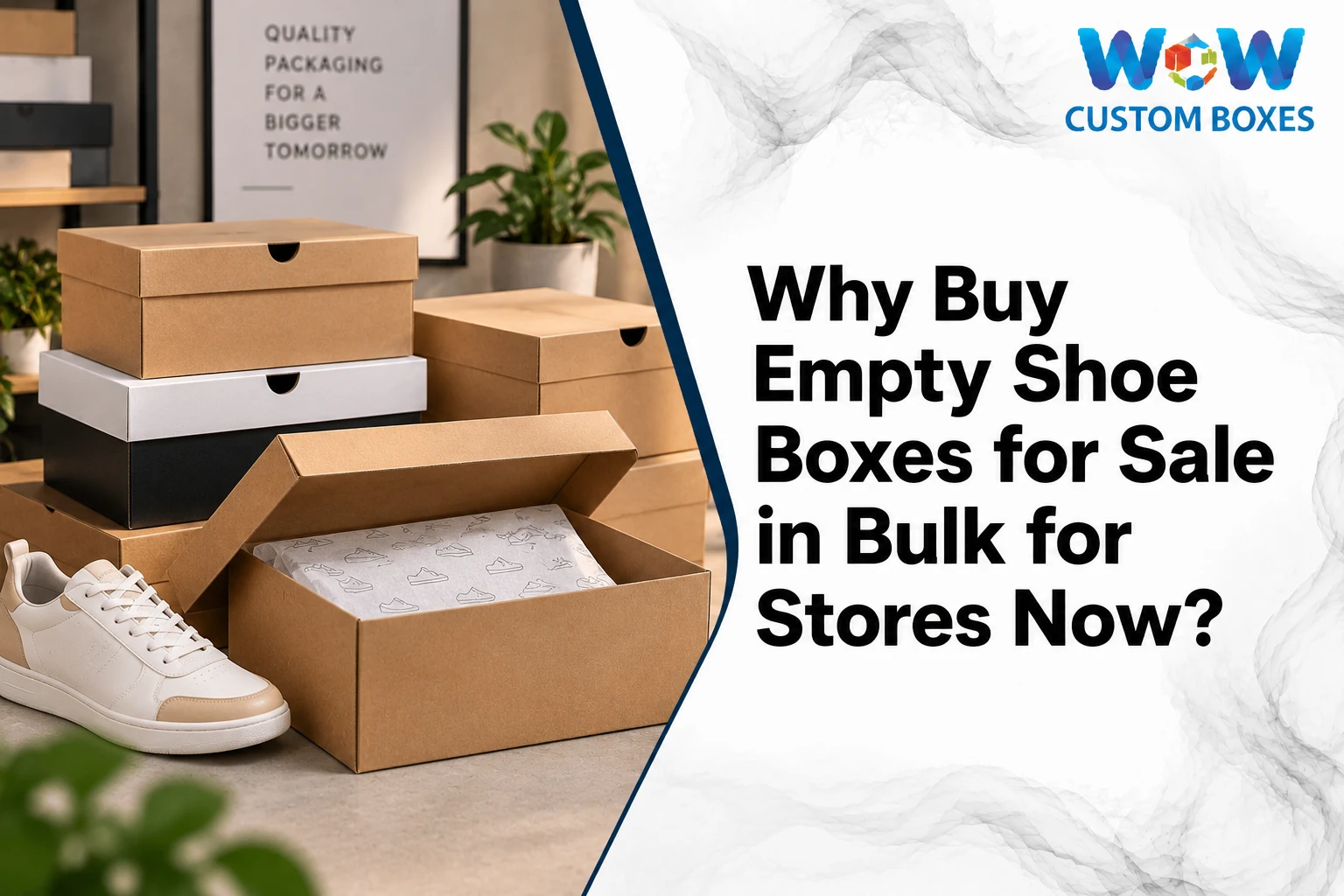
Footwear retailers handle large numbers of shoes in different sizes, styles, colors, and collections. Original packaging can sometimes become damaged during transportation, warehouse handling, product inspection, or repeated customer viewing. Having replacement boxes available allows stores to repackage footwear without delaying sales or presenting customers with damaged packaging.
Ordering empty shoe boxes for sale in bulk can also help retailers standardize the way products are stored. Consistent boxes are generally easier to stack, label, identify, move, and organize than mismatched packaging collected from different suppliers.
Purchasing Bulk Shoe Boxes gives stores access to a ready packaging supply whenever new stock arrives. This is particularly useful for retailers that sell sneakers, formal footwear, sandals, flats, children’s shoes, sports shoes, boots, and other footwear categories throughout the year.
Bulk purchasing may also help retailers reduce the administrative effort involved in placing frequent small packaging orders. Instead of repeatedly checking stock and reordering boxes, businesses can plan packaging requirements around expected footwear sales and inventory cycles.
Retailers experiencing regular or increasing footwear sales may find that purchasing wholesale shoe boxes is more practical than sourcing packaging only when individual boxes are required. Wholesale ordering enables businesses to plan around larger volumes and maintain packaging consistency across multiple product lines.
Stores with several branches can also benefit from using standardized Shoe Boxes Wholesale because similar packaging can be distributed between locations. This makes stock transfers easier and can create a more consistent presentation across the retailer’s physical stores, warehouses, and online fulfillment operations.
The right material depends on the weight of the footwear, required level of protection, storage conditions, and whether the box will remain inside a store or travel through a delivery network. Cardboard Shoe Boxes remain one of the most common choices because they balance lightweight handling, structural support, printability, and practical storage.
| Material | Suitable For | Primary Benefit |
|---|---|---|
| Paperboard | Lightweight retail footwear | Easy folding and printing |
| Cardboard | General footwear retail | Versatile and lightweight |
| Corrugated Board | Heavier shoes and distribution | Higher structural strength |
| Kraft Board | Natural-style shoe packaging | Simple and practical appearance |
| Rigid Board | Luxury footwear | Premium presentation |
Yes. Shoe Boxes Cardboard packaging is widely suitable for footwear stores because cardboard can be produced in different dimensions, thicknesses, and structural styles. Retailers can select smaller boxes for children’s footwear and larger structures for sneakers, men’s shoes, or boots.
A well-designed Shoe Box Cardboard structure also provides space for size labels, product codes, barcodes, style information, care instructions, and branding. This can make stock identification easier while maintaining a clean exterior appearance.
Cardboard Shoe Boxes With Lids are particularly practical for retail environments because staff frequently need to open footwear boxes to show products to customers. A separate lid allows repeated access while helping the packaging maintain its basic structure.
Boxes with lids can also make stock rooms easier to manage because footwear remains covered when stored on shelves. This helps reduce exposure to dust and supports a more organized inventory system.
When stores use boxes with consistent dimensions, footwear can be arranged more efficiently on shelves, racks, and warehouse storage systems. Employees can organize inventory according to shoe size, style, brand, season, color, or SKU without relying solely on the appearance of the footwear.
A suitable Shoe Storage Box also provides a defined space for each product. Shoes remain paired and protected while waiting to be sold, reducing the risk of products becoming separated or damaged during daily stock handling.
Shoe Storage Boxes are useful not only for consumers but also for retailers maintaining back-room stock. Retail footwear may remain in inventory for weeks or months before being sold, particularly when stores carry multiple sizes of the same product.
Packaging can help protect shoes from dust, surface scuffs, accidental contact, and unnecessary movement during storage. Stackable boxes can also help stores use vertical shelving space more effectively.
Plain Shoe Boxes can be an effective solution for retailers carrying footwear from multiple brands. Instead of creating separate printed packaging for every collection, stores can use neutral boxes and apply product-specific labels when needed.
Plain packaging can also be useful when an original manufacturer’s box becomes damaged. The retailer can transfer the footwear into a clean replacement box instead of selling the product with torn, crushed, or heavily marked packaging.
Not every Empty Cardboard Box is automatically suitable for shoes. Retailers should choose structures designed around footwear dimensions and weight. A box that is too large wastes storage space, while one that is too small may place pressure on the footwear.
Purpose-built Shoe Packaging Boxes normally provide a better balance between product fit, stackability, accessibility, and protection. Before bulk ordering, retailers should measure representative products from each footwear category they sell.
Stores should avoid relying on only one universal box size when their product range contains significantly different footwear. A sneaker, women’s flat, children’s sandal, men’s dress shoe, and boot may all require different packaging dimensions.
| Footwear Type | Recommended Box Approach |
|---|---|
| Children’s Shoes | Compact lightweight boxes |
| Women’s Flats | Slim rectangular boxes |
| Men’s Dress Shoes | Medium sturdy cardboard boxes |
| Sneakers | Durable cardboard or corrugated boxes |
| Sports Footwear | Strong boxes with secure lids |
| Boots | Larger reinforced packaging |
Purchasing shoe boxes in bulk can help stores prepare for periods when packaging demand increases quickly. Seasonal sales, new footwear collections, promotional events, ecommerce growth, and holiday demand can all increase the number of boxes required within a short period.
Maintaining sufficient stock reduces the chance that employees will need to use unsuitable packaging simply because the correct shoe box is unavailable. This can improve consistency across both customer purchases and warehouse operations.
Price is important, but stores should not choose packaging based on unit cost alone. A cheap box that collapses during stacking or does not properly fit the footwear may ultimately create more problems than it solves.
Stores selling large quantities of footwear may benefit from cardboard shoe boxes wholesale because cardboard provides a practical combination of strength, low weight, stackability, and customization potential. Large quantities can also help retailers maintain consistent box dimensions throughout their inventory.
Wholesale purchasing is particularly useful when the retailer already understands which sizes and structures sell through most frequently. Accurate demand forecasting helps prevent both packaging shortages and excessive unused inventory.
Retail Shoe Packaging Boxes can do more than simply hold footwear. Boxes can carry logos, brand colors, product details, promotional messages, social media information, QR codes, or care instructions.
For branded stores, consistent packaging can make purchases feel more professional and recognizable. For multi-brand retailers, simple neutral boxes combined with labels may be more practical. The right approach depends on the store’s positioning, audience, and packaging budget.
Yes. Footwear sellers operating online often require a steady supply of packaging because every order needs to reach the customer in presentable condition. Retail shoe boxes can protect and organize the footwear inside the fulfillment process, although an additional shipping carton may sometimes be required for courier transportation.
Bulk availability is especially valuable for ecommerce businesses during high-volume periods because packaging shortages can slow order fulfillment even when the footwear itself is in stock.
For stores with consistent footwear sales, bulk purchasing can be worthwhile because it supports packaging availability, stock organization, product presentation, and operational planning. However, the quantity should match realistic sales volume and available storage space.
The best Empty Shoe Boxes for Sale are those that correctly fit the footwear, withstand normal retail handling, stack efficiently, and remain easy for employees and customers to open. Buying more boxes does not automatically create better value unless the dimensions, materials, and structures match the products being sold.
Buying Empty Shoe Boxes Bulk can help footwear stores prepare for regular inventory needs while maintaining consistent product storage and presentation. Retailers should compare cardboard quality, box dimensions, lid styles, stacking strength, storage requirements, and anticipated order volume before making a wholesale purchase.
Whether a business requires Bulk Shoe Boxes, Wholesale Shoe Boxes, Cardboard Shoe Boxes, or simple replacement packaging, selecting the right structure can improve both stock management and customer presentation. For help with materials, dimensions, quantities, and footwear packaging requirements, Contact Us to discuss your project.
Bulk purchasing helps stores maintain a consistent packaging supply for new inventory, replacement packaging, stock organization, and customer orders.
Yes. They can be used for sneakers, formal shoes, sandals, children’s footwear, sports shoes, and many other retail footwear categories.
Yes. Wholesale purchasing can be practical for retailers that use consistent box sizes and require packaging in larger quantities.
Yes. Separate-lid boxes allow staff to open and close the packaging repeatedly while inspecting or presenting footwear.
Yes. Retailers can use plain boxes with labels, stickers, product codes, or other identification when full custom printing is unnecessary.