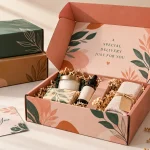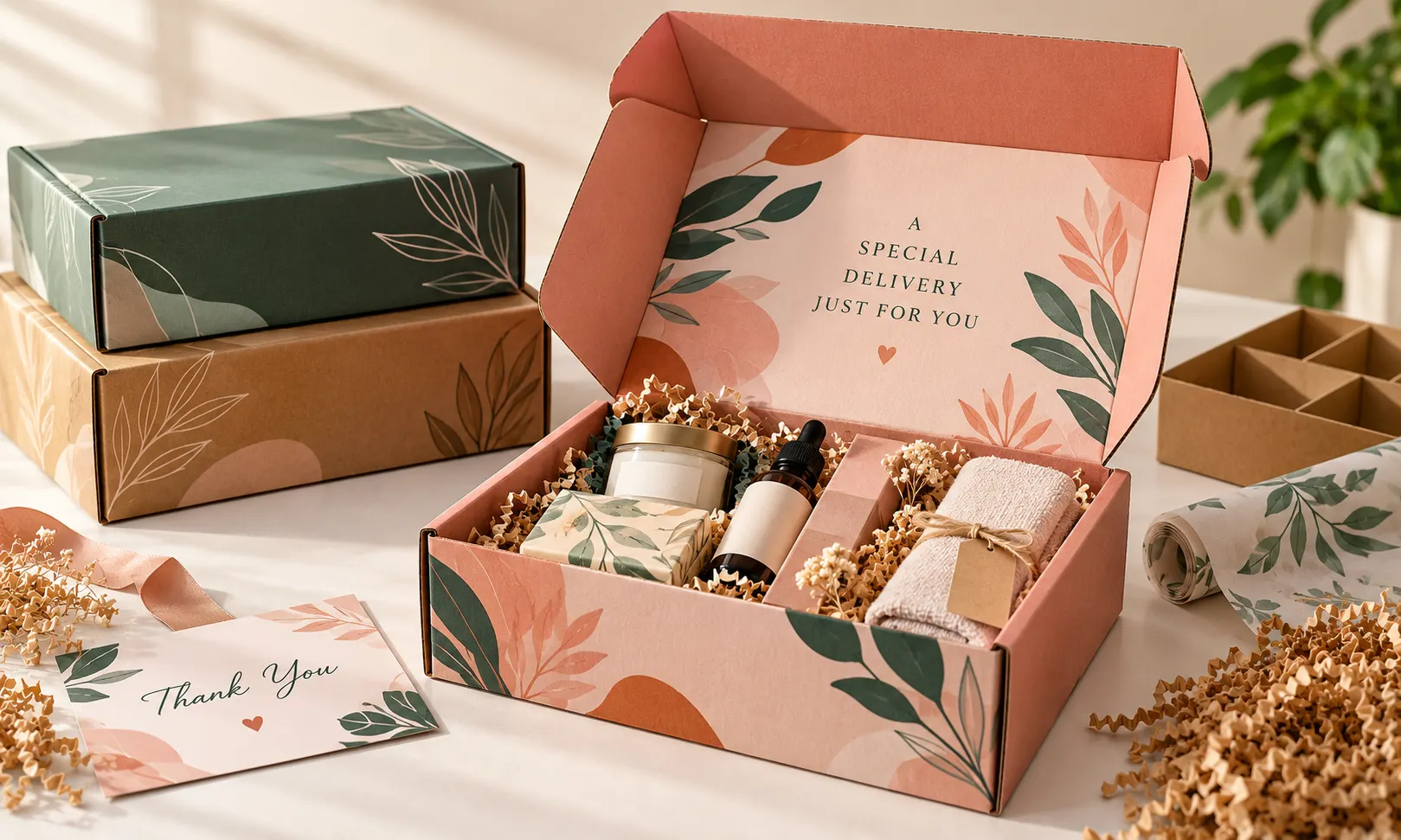
A subscription box is more than a parcel delivered to someone’s doorstep. It is a recurring opportunity for a business to present its products, reinforce its identity and give customers a reason to look forward to their next delivery. From beauty products and candles to stationery, snacks and curated gifts, the packaging helps shape the experience before the customer even sees the contents.
For small businesses, getting this balance right can be challenging. Packaging must protect the products, fit the monthly selection, support an attractive presentation and remain practical to produce at scale. A design that looks impressive but takes too long to assemble or uses excessive materials may not be suitable for a growing subscription service.
This guide explores how to plan subscription box packaging that works for your products, budget and customers.
Unlike one-off purchases, subscription deliveries follow a recurring schedule. Customers may receive a box every month, every season or at another regular interval. This gives businesses an opportunity to develop a recognisable packaging style while changing the details to suit each delivery.
Start by deciding what the customer should experience when opening the parcel. A skincare subscription might prioritise neat product arrangement and individual compartments. A book subscription could focus on protecting the book and presenting a coordinated selection of reading accessories.
The outer packaging should support this experience without revealing too much of the contents before opening. Thoughtful placement, tissue paper and a simple printed message can make an ordinary delivery feel more considered.
The objective is not to add decoration everywhere. It is to create a clear, consistent experience that reflects the products inside.
Every subscription has different packaging requirements. A box containing lightweight stationery will need a different construction from one carrying glass bottles, candles or several beauty products.
When choosing the format, consider the combined dimensions and weight of the monthly selection. Leave enough room for protective materials, but avoid unnecessary empty space that allows products to move around.
For businesses sending mixed product collections, custom e-commerce mailer boxes can be considered when a practical, organised format is needed for regular fulfilment. The dimensions should be based on the typical contents and tested with the actual packing arrangement.
Before placing a bulk order, prepare a sample containing the full selection. Check whether the lid closes properly, the products remain secure and the box can be packed without excessive effort.
A subscription box often contains several different items. Without a suitable arrangement, smaller products can move during transit, packaging can become untidy and fragile items may collide.
Inserts and dividers help create dedicated spaces for individual products. Depending on the contents, these may be made from cardboard, corrugated board, foam or other suitable materials.
For example, a monthly beauty box containing bottles, jars and accessories may benefit from separate compartments. A candle subscription could use an insert to keep the candle centred and reduce movement inside the package.
The insert must be designed alongside the outer box rather than treated as an afterthought. Its thickness, layout and loading method affect the overall dimensions and packing process.
Choose a protective solution that suits the weight and fragility of the contents. For delicate collections, test the assembled package under handling conditions appropriate to the intended delivery route.
Customers who subscribe to a service may receive several deliveries throughout the year. A consistent visual identity helps each box feel connected to the same business, even when the products or seasonal themes change.
Branding can appear through printed colours, typography, patterns, stickers, tissue paper or a small message inside the lid. You do not need to use every option. Two or three consistent design elements may be enough to make the packaging recognisable.
Businesses looking for a more substantial presentation can explore branded mailer boxes and consider how their colours and printed artwork will work with different monthly collections.
Keep the design practical. A heavily decorated box may look attractive, but additional components can increase production time and material use. Test the design with the people responsible for preparing orders to ensure it is straightforward to assemble.
The packaging should make sense for the products it contains. A uniform approach may help with consistency, but the materials and construction should reflect the needs of each category.
| Subscription category | Packaging priorities |
|---|---|
| Beauty and skincare | Bottle protection, compartment layout and clean presentation |
| Candles and home fragrance | Stability, cushioning and protection against breakage |
| Books and stationery | Flat packing, corner protection and organised accessories |
| Food and treats | Suitable food-contact materials and any required barrier protection |
| Gifts and lifestyle products | Coordinated presentation and adaptable compartments |
| Craft kits | Clear organisation of small parts and components |
Food-related subscriptions need particular care. Packaging materials that directly contact food must be suitable for their intended use, and products may require additional barriers or temperature control depending on their nature and delivery conditions.
For a gift-led subscription, rigid gift boxes may suit collections where a more structured presentation is important. The right format depends on the product, shipping method and budget rather than appearance alone.
A packaging design that works for 50 subscribers may become difficult to manage when the business serves hundreds or thousands of customers. As order volumes increase, small inefficiencies can add up.
Review the cost of the complete packaging system, including the outer box, inserts, protective materials, printing, assembly time, storage and shipping. The cheapest box alone does not necessarily produce the lowest overall cost.
Several practical changes may help:
Businesses shipping heavier or more delicate collections may also consider corrugated mailer boxes where the construction suits the contents and shipping conditions.
Compare the complete packed parcel rather than just the empty box. Its final size and weight may affect delivery charges, particularly where carriers use dimensional or volumetric weight calculations.
Subscription businesses often need to introduce new themes to keep the experience fresh. However, producing a completely new box design for every delivery can increase costs and complicate inventory.
A more manageable approach is to keep the main packaging structure consistent and update selected details. A seasonal sleeve, printed insert card, coloured tissue paper or themed sticker can create variation without requiring a new outer box each time.
For instance, a winter collection might use a different insert card and colour accent while retaining the same box dimensions. A summer edition could change the artwork while using the existing packing process.
This approach works best when the standard box accommodates the expected range of products. If the contents vary significantly, create a small number of packaging formats rather than forcing every collection into a single size.
The customer sees the finished box, but the fulfilment team experiences every step required to prepare it. A complicated design can slow packing, increase mistakes and make subscription dispatch harder to manage on a fixed schedule.
Prepare a simple packing specification for each box format. Include the box dimensions, insert layout, product arrangement and order in which materials should be added. Photographs of the finished arrangement can help staff reproduce the same presentation.
Keep an eye on packaging stock before each dispatch cycle. If boxes or inserts have long production lead times, reorder based on expected demand and an appropriate buffer rather than waiting until supplies are nearly exhausted.
As the service grows, review customer feedback, damage reports and packing time. These indicators can help you decide whether the current packaging needs a change.
The best option depends on the products, their weight, fragility, delivery method and presentation requirements. Mailer boxes are often practical for recurring shipments, while more structured boxes may suit premium gift collections.
Use a consistent colour palette, neat product arrangement, suitable protective inserts and a thoughtful opening experience. Premium presentation comes from the overall design and finish, not simply from adding more decoration.
Not necessarily. Keeping the main box consistent and changing smaller elements, such as printed cards or tissue paper, can introduce variety while making production easier.
Choose suitable box dimensions, avoid excessive void fill and use only the protective materials required for the products. Where practical, consider recyclable materials and check local recycling guidance for the complete packaging system.
Not always. Inserts are particularly useful when a box contains multiple, fragile or irregularly shaped items. Simpler collections may need only appropriate cushioning and careful product placement.
Consider an upgrade when products are frequently damaged, packing takes too long, the design no longer reflects the brand or subscriber numbers make the existing system inefficient. Test improvements before changing packaging across all orders.
Effective subscription box packaging brings product protection, presentation and operational practicality together. It should make each delivery feel considered while remaining reliable enough for repeated use throughout the subscription journey.
Small businesses can begin with a suitable box format, a well-planned product layout and a consistent visual identity. As the service grows, reviewing packing time, shipping costs and customer feedback can reveal where improvements will make the greatest difference.
The strongest subscription packaging strategy is one that customers enjoy opening and the business can produce consistently. With careful planning, each delivery can reinforce the brand experience without making fulfilment unnecessarily complicated.