Several factors influence the cost of rigid packaging. Box dimensions are important because larger structures normally require more board and wrapping material. The box style also affects production because a simple lid-and-base structure has different requirements from a drawer or magnetic closure box. Inserts can add another component when the product needs internal support. Printing and finishing can also increase the production specification. Finally, the order quantity can affect the per-unit cost. Businesses should consider all of these factors together instead of judging the price from box size alone.
The product also determines how much customization is necessary. A simple item may work with a straightforward rigid structure, while a delicate or premium product may require a fitted interior. Businesses should first identify the functions the package must perform. After that, they can decide which decorative features are useful. This approach can help prevent unnecessary additions and keep the packaging specification focused on the actual product.
Box size can directly affect material usage. A compact package for jewelry or a small accessory normally requires less board than a large package for electronics or a multi-product gift set. Larger boxes may also require stronger construction when they hold heavier products. Custom sizing helps businesses avoid unnecessary empty space and can create a more balanced appearance around the product. However, the box should still provide enough room for safe product placement, inserts, and comfortable removal.
Businesses should measure the product before finalizing the box dimensions. Length, width, height, weight, container shape, and accessories should all be considered. Accurate measurements can reduce the risk of ordering an oversized package. They can also help create a better-looking final product because the box proportions match the item inside. The goal is to create an appropriate fit rather than simply choosing the smallest possible structure.
The structure of a rigid box can influence its production requirements. A simple two-piece box may have fewer components than a drawer box with an outer sleeve and sliding tray. Magnetic closure structures can require additional components, while multi-compartment boxes need more detailed internal construction. Businesses should select the structure according to the product and customer experience instead of choosing the most complex option available.
A drawer structure may suit products that benefit from a distinctive opening experience. A simpler lid-and-base format may work better when the main priority is a clean presentation and controlled production cost. The box style should therefore provide a clear function. If a feature does not improve protection, organization, branding, or presentation, businesses can consider removing it from the specification.
Material selection affects the strength, appearance, and production requirements of a rigid box. Different board thicknesses can support different product weights, while outer wrapping materials can create different visual and tactile results. Businesses may select printed paper, textured stocks, kraft-style materials, or specialty wrapping papers according to the product and brand identity. The most expensive material is not automatically the best choice. The material should provide the required structure and appearance without adding unnecessary cost.
A heavier product may need a stronger board, while a lightweight product may work with a simpler specification. Businesses should also consider storage and transportation because packaging weight can influence handling and shipping requirements. Reviewing product weight, dimensions, material, and structure together can help create a specification that provides suitable performance while keeping the budget under control.
Yes. Inserts can increase the cost because they add another component to the package. However, they can provide useful support when a product needs a dedicated position inside the box. Watches, jewelry, perfume bottles, cosmetics, electronics, and gift sets can all benefit from fitted interiors. An insert can separate products, organize accessories, and reduce unnecessary movement during normal handling.
The cost of an insert depends on its material, shape, dimensions, and number of compartments. A simple paperboard insert may require less production work than a complex fitted structure. Businesses should therefore use inserts when they provide a clear benefit. For fragrance products, Perfume Boxes With Inserts can provide a dedicated interior around the bottle and related components.
Printing can range from a simple logo and product name to detailed artwork covering several panels. The amount of artwork, number of colors, and selected printing method can affect the production specification. Businesses should decide which information customers need to see before finalizing the design. A clear logo, product name, collection name, and relevant product details can often communicate the brand without covering every surface with complex graphics.
The exterior and interior can also use different artwork. Some brands may only need the lid printed, while others may want coordinated designs throughout the package. Printing should support the product and make important information easy to understand. A well-planned design can provide strong branding without adding unnecessary decorative elements.
Premium finishes can increase packaging costs because they may require additional production processes. Foil can highlight a logo or product name, while embossing and debossing can add texture. Matte, gloss, and soft-touch finishes can change the surface appearance and feel of the box. These options can support premium presentation, but businesses should select them according to the product positioning and available budget.
Using too many finishes can make the packaging more complicated without providing enough additional value. A small number of carefully selected details can create a cleaner result. Businesses should decide whether a finish improves branding, product presentation, or customer experience before adding it to the specification. This can help keep the final package attractive while avoiding unnecessary production costs.
Yes. Order quantity can affect the per-unit cost because some setup and production expenses can be distributed across a larger number of boxes. A small order may have a higher per-unit cost than a larger order with the same design and materials. However, businesses should not order more packaging than they can reasonably store or use. Excess inventory can create storage problems and tie up money that could be used for other business requirements.
The right quantity depends on sales volume, product demand, available storage, and future packaging plans. A new product may require a smaller initial order while an established product may support a larger production run. Businesses should balance the possible per-unit savings against their actual demand before selecting the final quantity.
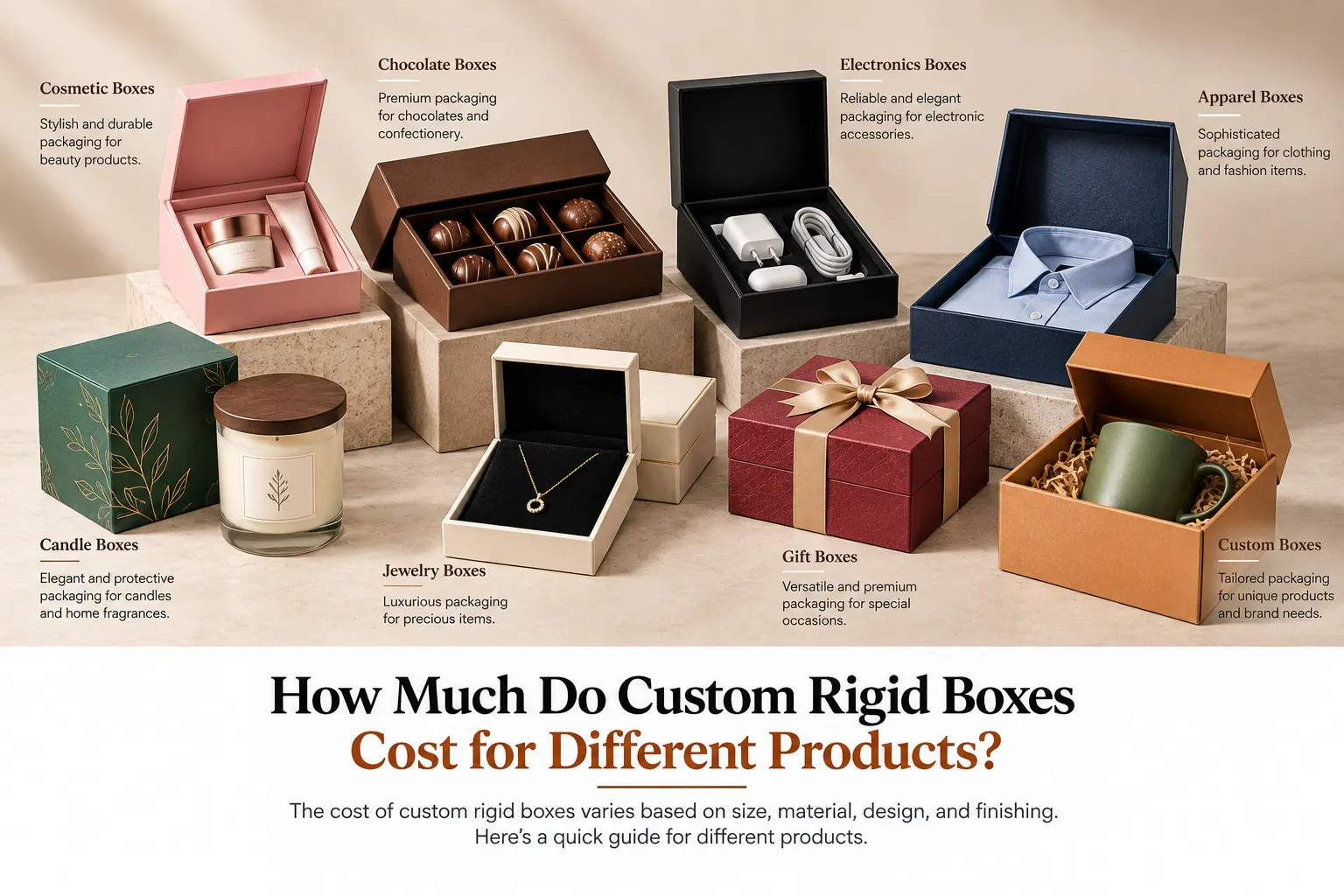
Different product categories can require very different rigid packaging specifications. Jewelry boxes are often compact but may need fitted interiors. Watch packaging can require a dedicated holder, while perfume boxes may need inserts around glass bottles. Electronics packaging can become larger because the box may need space for cables, chargers, and other accessories. Gift sets may require the largest structures because several products need to fit together inside one package.
| Product Type | Main Cost Factors |
|---|---|
| Jewelry | Small dimensions, inserts, printing, and finishing |
| Watches | Product holder, structure, and presentation |
| Perfumes | Bottle size, insert, printing, and support |
| Cosmetics | Dimensions, compartments, printing, and artwork |
| Electronics | Size, accessories, compartments, and support |
| Gift Sets | Multiple products, inserts, and larger structures |
Watch packaging often needs a dedicated interior because the product has a specific shape and should remain positioned inside the package. The watch size, number of products, accessories, insert type, box dimensions, and finishing can all influence the packaging specification. A small single-watch box may require fewer materials than a larger presentation package designed for multiple items. Businesses should provide accurate product measurements before finalizing the box structure.
The exterior can then use branding that matches the product identity. A premium watch may use a simple layout with restrained finishing, while another collection may use stronger colors and more detailed artwork. The final cost depends on the complete specification rather than the watch category itself.
Perfume packaging often requires careful planning because fragrance bottles can have different shapes, heights, caps, and weights. Glass containers may also need additional internal support. An insert can provide a dedicated space around the bottle and help maintain its position inside the package. The final cost depends on the bottle dimensions, box size, insert, material, quantity, printing, and finishing.
Businesses can compare different fragrance packaging options before choosing the final structure. The Custom Perfume Boxes category includes different packaging directions for fragrance products, allowing businesses to consider structures based on their product and presentation requirements. :contentReference[oaicite:1]{index=1}
Electronics can require more complex packaging because one product may include several accessories. A device may need separate spaces for a charger, cable, adapter, manual, or other components. Each compartment adds design and production requirements. Product weight can also influence the strength of the rigid structure. A heavier device may require additional internal support compared with a lightweight accessory.
Businesses should balance presentation with practical requirements. The box should provide enough space for every component without becoming unnecessarily large. If the product needs internal support, the insert should be designed around its actual dimensions and weight. This approach can help create organized packaging without adding features that do not serve a purpose.
Businesses can control packaging costs by starting with accurate product measurements and selecting a suitable structure. Unnecessary empty space can be reduced through custom sizing, while unnecessary decorative features can be removed. Printing can focus on essential branding, and finishing can be limited to details that improve the product presentation. These decisions can reduce unnecessary production requirements while keeping the package professional.
Comparing different box structures before production can also help businesses manage their budget. A product may work well with a simple rigid structure, while another product may need a drawer, magnetic closure, or fitted insert. The correct choice depends on the product’s requirements. Businesses should focus on features that improve protection, organization, branding, or customer experience.
A packaging provider needs clear product information to prepare an accurate quotation. Businesses should provide product dimensions, weight, quantity, preferred box style, insert requirements, artwork, printing preferences, finishing requirements, and delivery information. Product photographs or samples can also help when an item has an unusual shape. Accurate information reduces uncertainty and makes it easier to recommend a suitable structure.
Businesses can also request different specifications when comparing budgets. For example, they can compare a simple rigid box with a drawer structure or basic printing with premium finishing. This makes it easier to identify which features affect the cost and which ones provide the most useful value for the product.
The most useful way to estimate rigid box cost is to review the complete packaging specification rather than asking for a price based only on the product name. Size, material, structure, quantity, inserts, printing, and finishing can all change the final requirements. A small box with basic printing can have a very different cost from a large premium package with multiple compartments and specialty finishes.
Businesses should decide which features are essential before requesting a quotation. This can make the comparison process easier and can prevent unnecessary additions. Once the product requirements are clear, the packaging provider can recommend suitable structures and calculate the quotation according to the actual project.
If you are planning packaging for watches, perfumes, cosmetics, electronics, jewelry, gifts, or other premium products, the final cost should reflect the actual packaging requirements. A well-planned rigid box can provide product organization, branding, and presentation without adding features that the product does not need. Reviewing size, structure, quantity, inserts, printing, and finishing together can help create a practical packaging specification.
Prepare your product dimensions, quantity, preferred box style, artwork, insert requirements, and finishing preferences before requesting a quotation. You can Contact Us to discuss your requirements and compare suitable packaging options.
Yes. Businesses can adjust the size, material, structure, printing, finishing, inserts, and quantity according to their budget. A simpler specification can reduce production requirements, while selected premium features can be added when needed.
Yes. Larger boxes can require more board, wrapping material, and structural support. The final cost also depends on the product weight, box style, quantity, inserts, printing, and finishing.
Yes. Inserts add another packaging component and require separate design and production. They can still provide useful support for products that need dedicated spaces or better internal organization.
Yes. Foil, embossing, debossing, specialty coatings, and textured materials can add production steps and affect the overall cost. Businesses can select only the finishes that support their product presentation.
Yes. Larger production quantities can distribute certain setup and production expenses across more boxes, which may reduce the per-unit cost. Businesses should still choose quantities according to product demand and available storage.