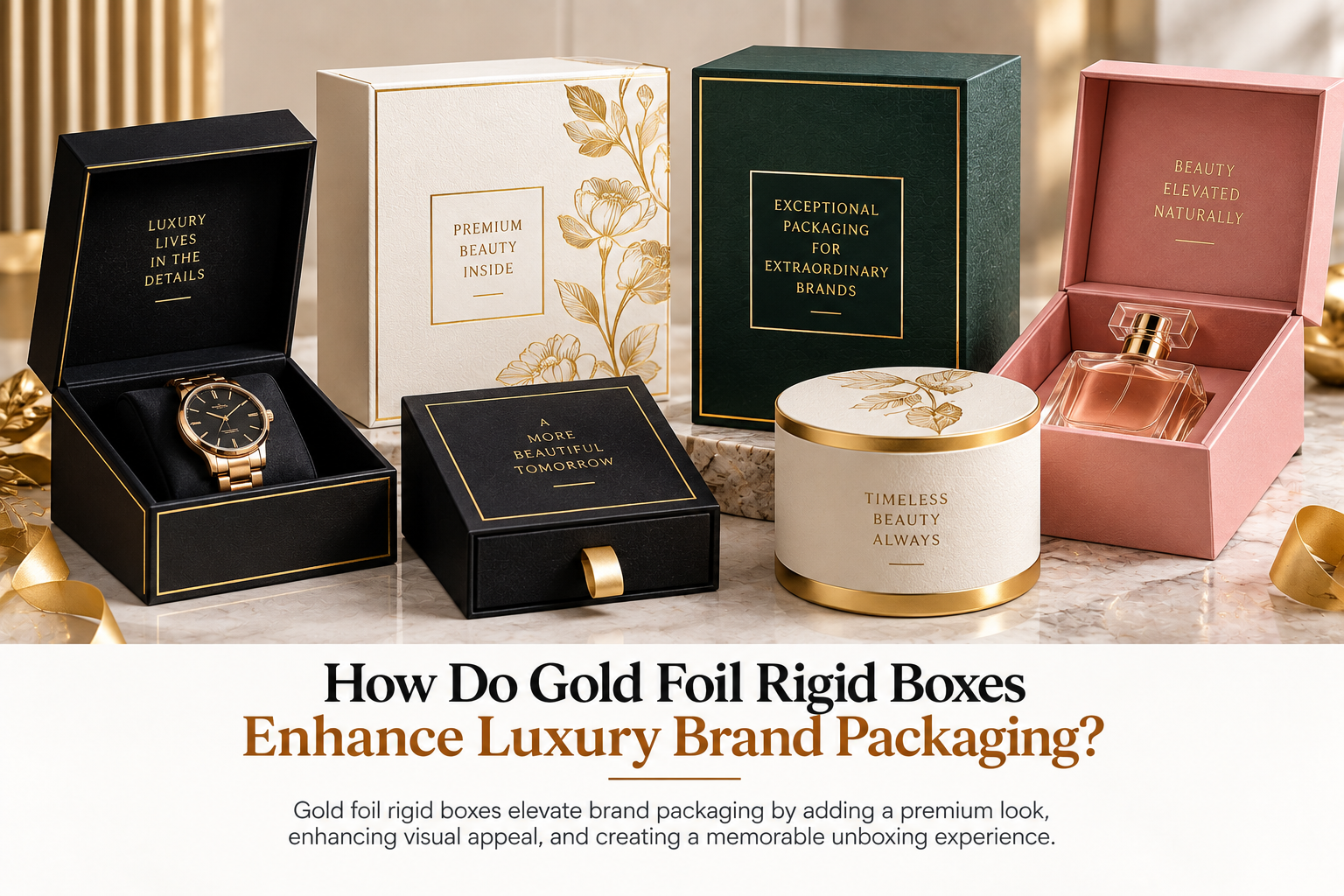
Luxury packaging must communicate product value before the customer opens it. Material quality, structural strength, color selection, logo placement, and surface finishing all influence how buyers perceive a premium brand. Gold Foil Rigid Boxes combine firm construction with controlled metallic details, creating packaging that feels substantial while presenting the product professionally.
At Wow Custom Boxes, gold foil packaging can be developed around the product’s dimensions, weight, retail position, and visual identity. Brands can customize the rigid structure, wrapping paper, foil shade, logo treatment, interior color, insert, and opening style to create a consistent luxury presentation.
Customers often see the box before they interact with the actual product. A weak or poorly finished package can reduce the perceived value of an expensive item, even when the product itself is well made. Luxury packaging needs to look deliberate, feel stable, and support the brand’s positioning at every stage of the opening experience.
Rigid boxes provide the strong foundation required for high-end presentation. Their thick board construction maintains its shape and offers a more substantial feel than lightweight folding cartons. When metallic gold details are applied to this structure, the packaging gains a recognizable premium accent without needing excessive printed decoration.
Gold foil reflects light and immediately draws attention to selected artwork. It can highlight a logo, product name, border, monogram, collection title, or limited-edition detail. Unlike ordinary yellow or gold-colored ink, metallic foil creates a reflective surface that changes slightly as the package is viewed from different angles.
The finish can be applied to black, white, cream, navy, green, red, brown, purple, or other wrapping papers. Dark backgrounds create stronger contrast, while white and cream surfaces produce a softer presentation. Brands can order Gold Foil Rigid Boxes with customized foil placement, structural styles, inserts, and interior presentation.
A premium appearance is most effective when it is supported by reliable construction. Gold foil cannot compensate for weak walls, uneven corners, loose lids, or poorly fitted products. Rigid chipboard provides a stable body that helps the package retain its shape during retail display, storage, gifting, and repeated opening.
Board thickness should be selected according to the box dimensions and packed weight. Smaller jewelry or cosmetic boxes may use a different specification than packaging created for a large gift collection or electronic device. The outer wrapping material must be applied smoothly so the gold foil remains clean and properly aligned.
Luxury brands often use a limited number of visual elements repeatedly. A recognizable logo, consistent typography, established color palette, and signature metallic detail can make packaging identifiable without filling every panel with artwork. Gold foil supports this approach by directing attention toward the most important brand elements.
The same foil shade and logo position can be repeated across boxes of different dimensions. This creates visual consistency for collections containing fragrances, cosmetics, watches, jewelry, candles, fashion accessories, and gift products. Coordinating these details through a Branded Luxury Box helps create a connected packaging family rather than unrelated individual designs.
Gold and silver are both metallic finishes, but they create different visual impressions. Gold is commonly associated with warmth, celebration, heritage, exclusivity, and traditional luxury. It works naturally with dark colors, warm neutrals, jewel tones, and rich textured papers.
Silver usually produces a cooler, cleaner, and more contemporary appearance. It can suit technology products, modern cosmetics, minimalist jewelry, and brands using blue, grey, white, or black color palettes. Businesses deciding between the two can compare gold packaging with Silver Foil Rigid Boxes before selecting the metallic tone that best represents their products.
Cosmetic and fragrance brands use packaging to communicate product quality, collection identity, and price positioning. Gold foil can highlight a fragrance name, cosmetic shade range, skincare collection, or limited-edition release. The metallic finish pairs well with dark matte papers, neutral backgrounds, textured wraps, and carefully controlled typography.
Bottle dimensions, caps, pumps, jars, applicators, and accessories must be considered when designing the insert. Glass containers require stable positioning, while multi-item beauty sets need separate compartments. The exterior should remain visually refined while the interior supports the practical requirements of each product.
Gold foil naturally complements jewelry, watches, bracelets, necklaces, rings, and luxury fashion accessories. A small metallic logo can create an elegant contrast against black, navy, cream, or deep green wrapping paper. The interior may use foam, fabric, or velvet-style material to hold the item securely.
The insert should present the product at the correct angle when the lid opens. Watch packaging may require a cushion or holder, while necklace boxes need suitable channels or tabs to control the chain. Ring packaging requires a stable slot that keeps the item centered and visible.
Some brands want reflective packaging without using a traditional gold appearance. Color-shifting surfaces can provide a more energetic direction for cosmetics, fashion, collectibles, entertainment products, and limited releases. In these cases, Holographic Rigid Boxes offer a related option with rainbow, prism, and spectrum effects.
Gold remains more suitable when a brand wants controlled metallic emphasis and a timeless presentation. Holographic finishes are more appropriate when the packaging concept depends on changing colors, movement, or a futuristic visual identity.
Gold foil may be paired with embossing to create a raised metallic logo. Debossing presses the artwork into the surface and can produce a more restrained tactile effect. Spot UV can add glossy contrast to selected printed areas, while matte or soft-touch lamination changes how the surrounding surface feels.
Each finish should have a specific purpose. Combining foil, embossing, spot UV, patterns, and several colors without a visual hierarchy can make the packaging appear crowded. Premium design usually benefits from fewer, carefully selected treatments that allow the logo and product identity to remain clear.
On a retail shelf, packaging competes for attention with neighboring products. Gold foil can create a visible point of contrast when store lighting reaches the metallic surface. The reflective element can draw attention toward the logo or collection name while the rigid structure keeps the package straight and presentable.
Important information should remain readable from the normal viewing distance. Product names and brand elements should not be placed where shelf positioning, security labels, or display arrangements may hide them. Consistent box dimensions can also create a neat visual block when several products are displayed together.
Limited-edition packaging may include launch dates, collection numbers, anniversary marks, artist collaborations, or exclusive artwork. Gold foil helps distinguish these details from the permanent product range. The box can also contain an authenticity card, numbered insert, or printed story explaining the collection.
For brands that want strong construction without making gold the main feature, a Premium Rigid Box can provide a more flexible design foundation. Gold foil can then be limited to one controlled logo, border, or product detail.
Box dimensions should be developed around the complete packed arrangement rather than only the main product. Inserts, accessories, product cards, protective covers, and working clearance must be included. The lid should close properly without pressing against the contents.
An oversized box can allow movement and make the presentation appear unfinished. A tight box may damage the wrapping paper, interfere with the closure, or make product removal difficult. Physical testing can confirm the fit, board strength, insert performance, lid alignment, and opening experience before full production.

Gold Foil Rigid Boxes enhance luxury branding because they combine visual distinction, strong construction, controlled logo emphasis, and organized product presentation. The metallic finish helps communicate exclusivity, while the rigid body supports the product and maintains a professional appearance.
Successful luxury packaging depends on how every element works together. Board thickness, wrap color, foil shade, typography, structure, insert, and interior printing should support the same brand message. When these details are planned carefully, the box becomes part of the product experience rather than only a protective container.
Gold foil rigid packaging can be customized for fragrances, cosmetics, watches, jewelry, candles, fashion accessories, electronics, gifts, and premium collections. Brands should prepare product dimensions, quantity, artwork, preferred structure, foil shade, wrapping material, and insert requirements before requesting production.
To discuss a custom gold foil packaging project, Contact Us with your product details and design requirements. A properly developed box can strengthen luxury positioning, protect the product, and create a memorable opening experience for customers.
Yes. Brand logos, product names, monograms, borders, and collection details can be highlighted with metallic gold foil.
Yes. Their strong chipboard construction and metallic finish make them suitable for jewelry, watches, cosmetics, fragrances, gifts, and fashion accessories.
Yes. Gold foil can be combined with raised embossing or recessed debossing to create distinctive tactile branding.
Yes. Paperboard, foam, molded pulp, fabric-covered, and velvet-style inserts can be customized according to the product.
Yes. The length, width, height, board thickness, and internal depth can be tailored to the product and insert arrangement.