For a footwear retailer, a shoe box is also a unit of organization. It keeps a pair together, carries size and style information, and gives staff a consistent way to store and handle stock. That role becomes more important when a seasonal range includes bulky winter boots alongside smaller everyday shoes. Different dimensions, changing demand, and leftover stock can make one generic packaging approach difficult to manage. A useful seasonal packaging plan connects product fit with inventory control. It helps staff identify pairs, choose the correct carton, prepare deliveries, and review returned stock. This article focuses on those retail and warehouse decisions, rather than repeating a general guide to boot care.
Staff should be able to identify the footwear without opening every carton. Use a consistent area for the product style, size, color, and stock reference. Confirm whether additional fields, such as collection or width, are useful for the business. Use readable type and avoid relying on color coding alone. Similar packaging colors can look different under warehouse lighting or become difficult to distinguish at a distance. For empty shoe boxes, plan labeling alongside the carton specification. Decide whether information is printed permanently or applied on a product-specific label. The box should support a reliable stock record rather than replace it.
Seasonal footwear can vary considerably in volume. An ankle boot, a tall lined boot, and a lightweight shoe may need different packing arrangements. The shoe size alone does not describe the full package. Group products by their actual packed dimensions and protection requirements. Test a manageable set of cartons against the range, including larger sizes and bulky linings. Too many carton sizes can complicate purchasing and storage. Too few can lead to forced fit or excessive empty space. Create a clear size-selection guide so staff do not need to make the decision from memory during busy periods.
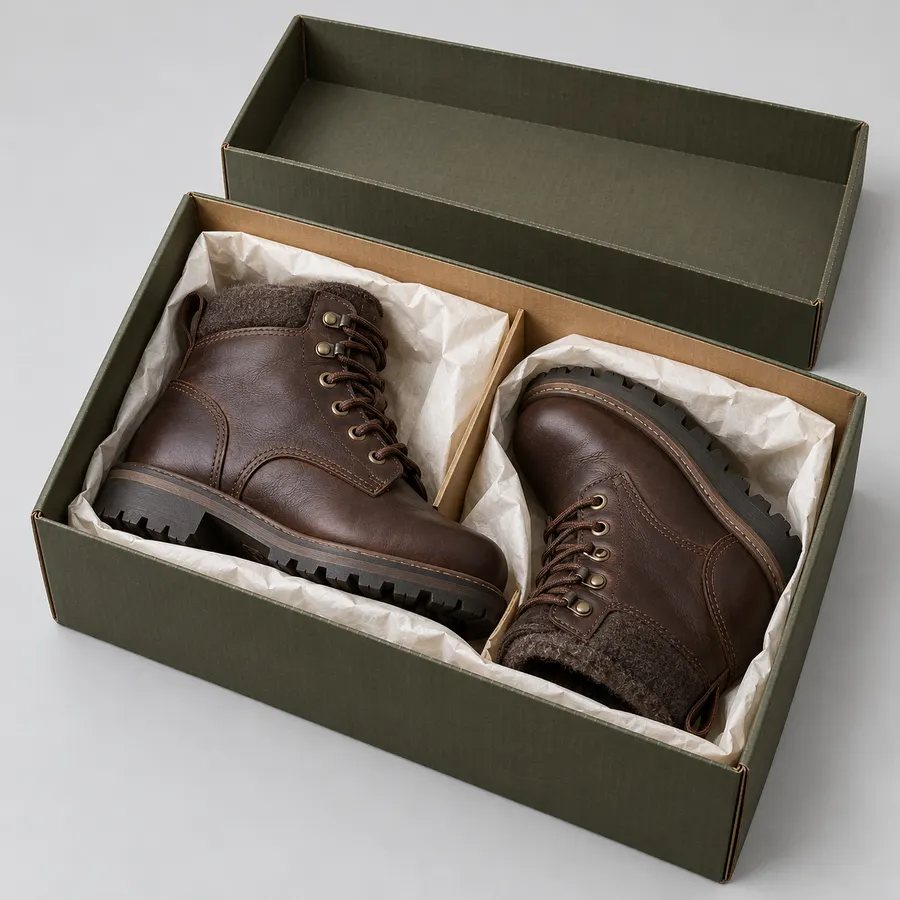
A consistent internal arrangement helps staff confirm that a package is complete. Decide where each boot sits and where care cards, spare laces, or other included items belong. Keep small accessories from moving freely against the footwear.
Where a separator or support is needed, include it in the documented packing method. Do not assume that staff will reproduce a presentation photograph without instructions. Check the fit using the complete contents before approving the carton. Custom cardboard boxes can be discussed around these product groups, with the material and structure selected for the required handling.
Plan carton quantities using expected footwear sales and current packaging inventory. Separate requirements by box size and printed version. A total forecast can hide a shortage in one carton size and a surplus in another. Consider whether packaging will be used only for a winter collection or across several seasons. Permanent date-specific artwork may reduce the usefulness of leftover boxes. Where appropriate, keep the outer design consistent and use replaceable labels or cards for seasonal details. This can preserve a recognizable identity while leaving more flexibility. Review the forecast regularly rather than assuming the original order remains correct throughout the season.
Keep a record of the approved material, dimensions, construction, artwork, and supply format.Record how many units are packed in each delivery case and whether cartons arrive assembled or flat. These details affect receiving and storage planning. Set a reorder point using actual usage and the lead time confirmed for your supplier. Leave room for changes in demand and approval requirements. Do not reorder by photograph alone. A box that looks similar may have different internal dimensions or board specifications. A clear reference reduces the chance of receiving packaging that does not match the existing stock.
Arrange boxed footwear so staff can find frequently requested styles and sizes without moving large amounts of stock. Keep labels facing the aisle and preserve the agreed stacking arrangement. Heavy boot cartons placed above unsuitable lighter cartons can create avoidable pressure. Store packaging and footwear stock in appropriate dry conditions. A cardboard carton cannot compensate for a damp storage environment. When reviewing custom kraft boxes, specify the required structure and load rather than choosing only by the natural appearance. Storage suitability depends on the complete carton and the way it is used.
A package that works on a stockroom shelf may still need protection for parcel delivery. Set a clear rule for which footwear boxes require an outer shipper and how staff should seal the complete order. Avoid leaving this decision to individual preference. If an ecommerce order contains several pairs, assess the full load and movement inside the shipping carton. Custom corrugated boxes can be considered for that outer-packaging function. Confirm the size, board, closure, and intended handling with representative orders. Keep shipping labels separate from information needed to identify the retail product later.
Inspect returned orders before returning them to available stock. Check the pair, accessories, labels, supports, and carton condition. A damaged box may need replacement even when the footwear remains saleable. Classify the reason for return. Size preference, an incorrect product, transit damage, and incomplete packing require different responses. Review repeated packaging issues by style and carton size. If one boot model regularly presses against the lid, update that product’s packing specification. Returns provide useful evidence, but avoid attributing every footwear return to the box.
A seasonal package can support a collection without becoming overloaded with winter graphics. Use a clear logo, consistent typography, and an orderly product label. Add temporary promotional elements only where they contribute to the customer experience. Plan the outer box and any interior materials together so staff know which components belong to each version. Do not let decorative changes interrupt practical details such as scanning, label visibility, or the opening method. The strongest packaging identity is one the team can reproduce accurately across the whole range.
| Planning area | Review question |
|---|---|
| Product fit | Which styles need a different size or support? |
| Size selection | Did staff choose cartons consistently? |
| Labeling | Was every style and size easy to identify? |
| Packaging inventory | Which sizes ran short or remained unused? |
| Storage | Did cartons suit the intended stacking and space? |
| Delivery | Were outer packages appropriate for the orders? |
| Returns | Which issues were related to packing or packaging? |
| Artwork | Can remaining stock support the next collection? |
Use the review to update the brief before the next production order. Retain usable stock where the specification still suits the product. WOW Custom Boxes provides packaging options that can be reviewed around your footwear range and handling process. To plan seasonal stock, contact the packaging team with product groups, pair measurements, weights, labeling requirements, carton quantities, and delivery needs.
They keep pairs together and support identification, storage, handling, and presentation across a changing product range.
Yes. If every intended pair and its protective components fit correctly. Many ranges benefit from a small set of assessed sizes.
Include the style, size, color, and stock reference. Add collection or width information when it helps your operation.
Yes. When their volume, shaft height, weight, or supports create different packaging requirements.
Yes. A consistent outer design with product-specific labels can provide flexibility when it suits the brand and inventory process.