Coffee is more than a morning drink. For many people, it is part of a daily ritual, a moment of comfort and a way to explore new flavours. But when customers browse different coffee brands, what makes them choose one bag over another?
The aroma and quality of the coffee matter, of course. Yet the packaging also plays an important role. A well-designed coffee bag protects the product, communicates useful information and helps a brand stand out in a crowded market.
Whether you sell freshly roasted coffee beans, ground coffee, instant coffee or single-serve portions, choosing the right packaging requires more than selecting an attractive design. You need to consider freshness, storage, material performance, pack size and how customers will use the product. In this guide, we will explore the main types of custom coffee packaging bags, compare common material options, explain useful design features and share practical tips for choosing packaging that suits your business.
Coffee can lose its desirable aroma and flavour when exposed to unsuitable storage conditions. Oxygen, moisture, heat and light can all affect quality, although the degree of impact depends on the coffee and its processing. Packaging should therefore be selected according to the product, expected shelf life and distribution conditions.
Coffee contains aromatic compounds that contribute to its distinctive smell and taste. Packaging with appropriate barrier properties can help limit exposure to oxygen and moisture. For roasted coffee, some brands also use one-way degassing valves. These allow gases released by freshly roasted beans to escape while helping restrict outside air from entering the package. Whether a valve is necessary depends on the coffee, roasting process and packaging method.
Packaging is often the first physical interaction a customer has with a coffee brand. A consistent colour scheme, readable typography and thoughtful layout can make a product easier to recognise.If you are building a new coffee range, investing in custom packaging solutions can help you create a consistent appearance across different blends, roast levels and pack sizes.
Customers appreciate packaging that is easy to open, store and close again. Resealable closures can be useful for larger bags that are opened over several days. For smaller portions, compact sachets can offer a convenient alternative for offices, travel, hospitality and sampling campaigns.
Different coffee products require different packaging formats. The best option depends on your product, production process, target audience and budget.
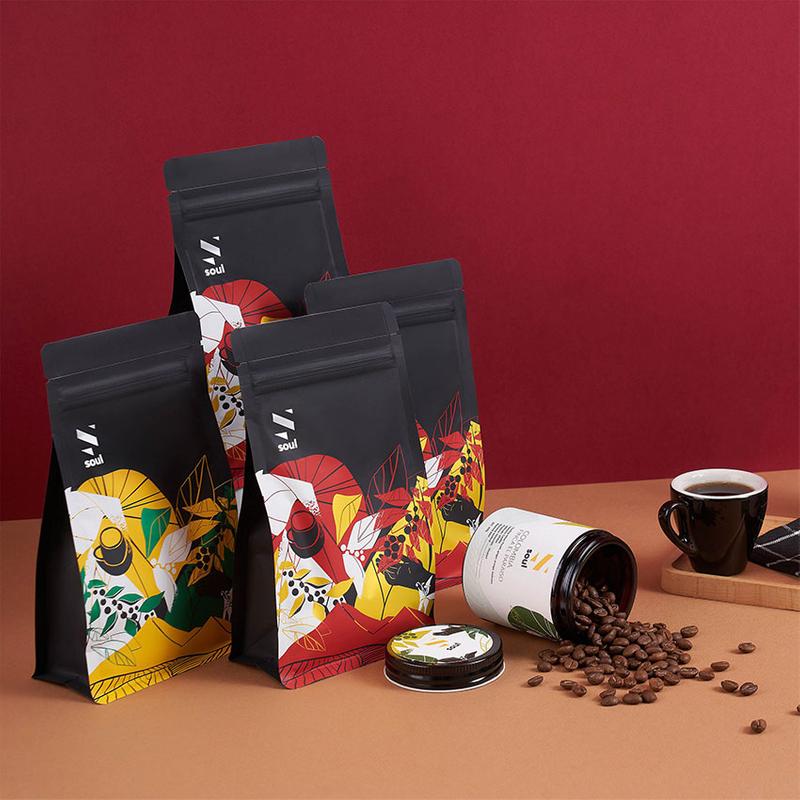
Flat-bottom bags have a stable base that allows them to stand upright on shelves. Their shape provides room for product branding and information, making them suitable for retail presentation. They may be considered for premium coffee beans and ground coffee where shelf appearance is an important part of the brand experience. When evaluating this format, check the available sizes, sealing method, material structure and compatibility with your filling equipment.
Stand-up pouches use a bottom gusset to help the filled package stand upright. They are available in different sizes and can include features such as zippers, tear notches and optional valves. Their flexible construction can be useful for businesses seeking lightweight packaging that is easy to store and transport. However, a stand-up pouch is not automatically suitable for every coffee product. The material and closure must provide the protection required for the intended shelf life.
Side-gusseted bags expand when filled, offering useful capacity without an unnecessarily wide package. They are commonly considered for coffee beans and ground coffee, including larger packs. Depending on the construction, these bags can accommodate printed branding, product details and suitable sealing features. Before selecting this format, consider whether the bag will be sold on shelves, shipped directly to customers or used in a commercial environment.
Not every customer wants to prepare coffee from a large bag. Single-serving formats are useful for travel, hotels, offices, cafés and promotional sample packs. If your business sells instant coffee or powdered coffee mixes, coffee sachets are a relevant packaging option to explore. The packaging should suit the portion size, powder characteristics and sealing process. Also consider how easily customers can open the sachet without spilling its contents.
Coffee brands that sell drinks as well as packaged coffee may need a consistent visual identity across several touchpoints. Printed sleeves for takeaway cups can complement retail coffee bags and help reinforce brand recognition. For example, custom coffee cup sleeves can be considered for cafés and coffee shops that want branded presentation for hot drinks. Cup sleeves and coffee bags serve different purposes, so each should be selected according to its own practical requirements.
Material selection is one of the most important decisions when developing coffee bags. The material must support the required barrier performance while remaining suitable for the chosen format and filling process.
Laminated films combine layers with different properties. Depending on the structure, they can offer protection against moisture and oxygen, provide suitable sealing performance and support high-quality printing. These structures are often considered for flexible coffee packaging because they allow brands to balance product protection, appearance and pack functionality. Ask your supplier for the specifications of the proposed material rather than relying on a general description such as “premium film”.
Aluminium-foil laminates and metalised films can provide useful barrier properties, but they are not identical. Their performance depends on the complete structure, thickness, manufacturing quality and seals. They may be appropriate when a coffee product requires additional protection from oxygen, moisture or light. The final choice should be based on the product’s requirements and validated shelf-life expectations.
Kraft-style paper surfaces are popular with brands that want a natural, understated appearance. They can create a distinctive visual style when combined with simple typography, earthy colours and clear product information. However, paper appearance alone does not establish how well a package protects coffee. Some paper-look bags use a separate inner barrier layer, which must be suitable for the product. If sustainability is a priority, ask about the complete material composition, available recycling routes and any relevant certifications. Avoid assuming that a package is recyclable or compostable simply because it looks like paper.
The right features can improve the customer experience, but adding every available option is not always necessary.
Zippers can help customers close a bag after opening. They are particularly useful for products that are consumed over several servings. Remember that a resealable closure does not replace the need for a suitable initial seal or an appropriate barrier structure.
Freshly roasted coffee releases carbon dioxide. A suitable one-way valve can allow gas to escape while limiting the entry of outside air. Discuss valve placement and performance with your packaging supplier, especially if you are packing coffee shortly after roasting.
Tear notches can make bags easier to open without scissors. Their placement should be practical and should not interfere with the package seal.
Printed coffee bags help customers identify the brand, roast level and product type. Depending on the supplier, options may include matte or gloss finishes, selected colour schemes and different printing methods. Keep the design readable and leave enough space for mandatory product information. The artwork should support the product rather than compete with it.
An effective coffee bag balances shelf appeal with clear communication. Customers should be able to identify the product quickly and understand what makes it different.
Make the coffee name and variety easy to read. If you sell multiple roasts, use a consistent system to distinguish light, medium and dark options.
Where relevant and accurate, include details such as the coffee’s origin, roast date, roast level, tasting notes and recommended brewing method. Only include claims that you can substantiate. Information about origin, processing or flavour should accurately reflect the coffee inside the package.
A recognisable colour palette and typography system help customers identify your products across different formats. For example, a brand might use one colour family for its espresso blend and another for its filter coffee. The exact colours matter less than having a clear and consistent design system.
If you sell coffee online, packaging must also look clear in product photography. Use readable artwork, balanced lighting and a background that contrasts with the bag. Photographs should show the actual package design accurately. Avoid adding visual claims or features that are not present on the product.
Before requesting quotations, answer these five questions.
1. What are you packaging?
Whole beans, ground coffee, instant coffee and flavoured coffee mixes may need different formats and material structures.
2. What pack sizes will you sell?
Smaller packs may suit sampling and occasional users, while larger bags may work better for regular customers or commercial buyers.
3. How will the product be filled?
Confirm compatibility with your filling and sealing equipment. Coffee particle size, product weight and filling speed can affect the choice of bag.
4. What shelf life do you require?
Discuss the product’s expected storage period and distribution conditions with your supplier. Material specifications and package seals should be assessed against these requirements.
5. What is your budget and order quantity?
Compare setup charges, printing costs, minimum order quantities, unit prices and delivery times. A lower unit price may not be the best value if the packaging fails to meet your product requirements. If you are planning a new launch or redesign, custom Mylar bags may also be worth discussing with a supplier, provided the selected construction is appropriate for your coffee product and intended use.
Even attractive packaging can create problems when important practical details are overlooked.
Taking time to review these details can help reduce avoidable waste and support a more consistent customer experience.
Flat-bottom bags, stand-up pouches and side-gusseted bags are all potential options. The best choice depends on the quantity, storage requirements, desired shelf presentation and filling method.
Not every coffee bag needs one. A one-way valve can be useful when packaging freshly roasted coffee because it allows carbon dioxide to escape. The requirement depends on the coffee and packaging process.
Materials with suitable oxygen and moisture barrier properties can help protect coffee quality. The correct structure depends on the product and target shelf life, so consult your supplier about material specifications and testing.
Yes. Depending on the supplier, coffee bags can be printed with brand colours, logos, product names, roast details and other relevant information. Printing options and minimum quantities vary.
Not necessarily. A kraft appearance does not tell you whether the complete package is recyclable, compostable or made from a particular percentage of renewable material. Check the full construction and relevant local disposal options.
Depending on the product and sales market, relevant information may include the product name, net weight, ingredients where applicable, best-before date, storage instructions, business details and any legally required declarations. Check the applicable rules for your target market.
Prepare your preferred format, dimensions, target quantity, material requirements, artwork, optional features and delivery destination. This gives the supplier enough information to assess suitable options and provide a meaningful quotation.
The best custom coffee packaging bags combine suitable product protection, practical features and a design customers can recognise. From stand-up pouches and flat-bottom bags to single-serving sachets, each format offers different advantages. Start by understanding your coffee product, required shelf life and filling process. Then compare materials, closures, pack sizes and printing options before approving the final design. At Wow Custom Boxes, your packaging project should begin with clear requirements rather than guesswork. If you are planning a new coffee range or updating existing packaging, discuss your packaging requirements to explore options that fit your product and business goals.