The apparel box with the best return is the one that meets your protection and presentation requirements at a sensible total cost per fulfilled order. The cheapest quotation is not automatically the most economical choice. A low-priced box may require more assembly time, extra filler, or a larger shipping package. An expensive presentation box may also be difficult to justify if customers gain little useful benefit from it. To assess return on packaging, separate measurable savings from assumptions about branding. Count the costs you can observe, then test whether a design change improves outcomes. This approach gives clothing brands a clearer basis for choosing between standard cartons, direct-shipping mailers, and premium presentation boxes.
Choose the business outcome before comparing designs. You may want to reduce packaging-related damage, shorten packing time, control delivery costs, or improve the presentation of premium orders. These goals need different measurements. A box that speeds up packing may not increase conversion. A gift carton may improve customer feedback without reducing shipping costs. Set a baseline using the current package. Record the complete material cost, typical packing time, external parcel size, and packaging-related complaints .Your custom clothing boxes brief should identify which problem the proposed package needs to solve. This keeps quotations connected to an actual business requirement.
Start with the box price, then add the other costs needed to complete the order. These may include tissue, protective bags, inserts, labels, tape, cards, assembly labor, inbound freight, and packaging storage. If a retail carton needs an outer shipper, include both. If a finish changes the packing process or storage requirement, account for that difference too. A useful working calculation is:
Packaging cost per order = packaging materials + packing labor + allocated setup and delivery costs.
Track outbound delivery and packaging-related losses separately, then combine them when evaluating the overall fulfillment choice. Use actual quotations and observed costs. A supplier’s box price alone cannot establish your final cost per successful order.
A meaningful comparison needs the same product, quantities, fit, print requirements, and delivery assumptions. If one quote includes a finished carton and another excludes inserts or freight, the unit prices are not directly comparable. Ask for clear specifications and identify one-time charges separately. Spread setup costs across the quantity that you realistically expect to use. When reviewing custom cardboard boxes, check whether the proposal provides the intended retail function or the complete shipping package. Keep the comparison focused on usable finished packages, rather than treating every item called a box as equivalent.
Have your team pack representative orders using each shortlisted sample. Record assembly, garment folding, loading, sealing, and labeling. Use the same garment types and include all presentation materials. Repeat enough trials to avoid making a decision from one unusually fast or slow attempt. Note errors as well as time. For example, a structure that saves one step may still cause repeated lid adjustments. A preassembled box may save labor while increasing storage requirements. Evaluate the complete process. The best choice for your operation is the one staff can pack accurately and consistently.
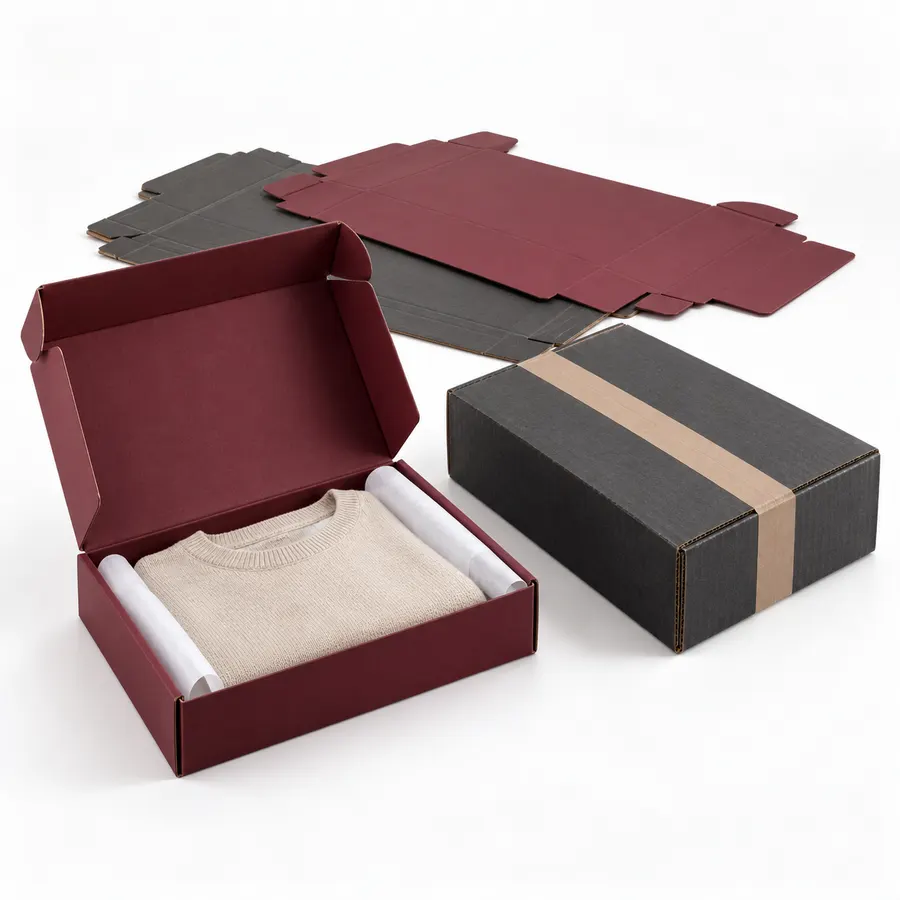
An oversized box can create costs beyond extra paperboard. It may need more filler, occupy more storage space, or affect delivery pricing where a carrier uses parcel dimensions. Review the actual external measurements with your current delivery service. Custom mailer boxes can be assessed as a direct-shipping option when their structure suits the contents. Compare them against the full retail-carton-plus-shipper arrangement. Do not shrink the package so much that the garment becomes compressed or the closure strains. Savings should come from suitable sizing, rather than removing necessary protection.
An apparel return caused by the wrong fit is different from one caused by a crushed package or damaged garment. Classify complaints so you can identify which outcomes packaging can realistically improve. Track issues such as garment snagging, wet parcels, failed closures, incorrect packing, and damaged presentation boxes separately from sizing or style preferences. A packaging upgrade should not be credited with preventing every return. Use evidence that connects the problem to the packaging or packing process. This distinction helps you spend money where a change has a plausible effect.
Rigid presentation, special finishes, or interior printing can be appropriate for selected orders. Their value should be judged against a clear purpose. An occasion-wear gift set may benefit from a stable opening layout. A standard everyday garment may need a clean logo and practical shipping structure instead. Assess custom rigid boxes for the products and order types that justify the added presentation. If you want to measure a branding effect, compare similar orders and collect customer feedback. Do not assume that an attractive unboxing automatically produces repeat sales. Premium packaging should support the offer customers purchased.
A larger order may bring a lower quoted unit price, but the saving depends on using the stock. Consider expected sales, storage capacity, product changes, and the number of printed versions. Seasonal artwork or product-specific information can limit future use. Separate standard packaging from temporary promotional components where that makes operational sense. A reusable brand layout with a replaceable card may offer more flexibility than a completely seasonal carton. Ask how minimum quantities apply to each size and artwork version. Confirm this before calculating the expected unit cost.
| Cost or outcome | Current package | Proposed package |
|---|---|---|
| Complete material cost | Enter actual cost | Enter quoted complete cost |
| Packing time | Measure representative orders | Measure the same order types |
| Outer parcel dimensions | Record finished parcel | Record finished parcel |
| Delivery cost | Use current service data | Check the proposed parcel |
| Packaging-related complaints | Review recorded issues | Track during the trial |
| Storage requirement | Record case dimensions | Confirm supply format |
| Unused stock risk | Review existing inventory | Assess planned quantity |
Keep presentation feedback alongside this sheet, but separate it from confirmed financial savings.
If you calculate ROI, use an agreed period and compare incremental packaging cost with attributable savings or additional gross profit. Avoid counting the same benefit twice.
Choose a representative trial group and define what you will measure. Check product mix, parcel routes, and order values so the comparison is reasonably consistent. Seasonal demand changes can affect results independently of packaging. Review packing accuracy and customer complaints as well as costs. A small material saving may be less useful if the package causes operational problems. WOW Custom Boxes offers packaging options you can compare through an approved specification and practical trial. To prepare your comparison, contact the packaging team with the current package, product measurements, quantities, artwork, delivery requirements, and the outcome you want to improve.
The one that meets the required performance and presentation at a sensible total cost. The answer depends on your products and fulfillment process.
No. Additional materials, labor, shipping, storage, and packaging failures can change the overall cost.
Yes. When it reduces unnecessary space or materials without compromising fit and protection. Check the complete parcel cost.
Include the box, other packing materials, labor, setup, inbound delivery, storage allocation, and relevant fulfillment costs.
They may support presentation, but repeat purchasing depends on several factors. Measure the effect rather than assuming a direct increase.