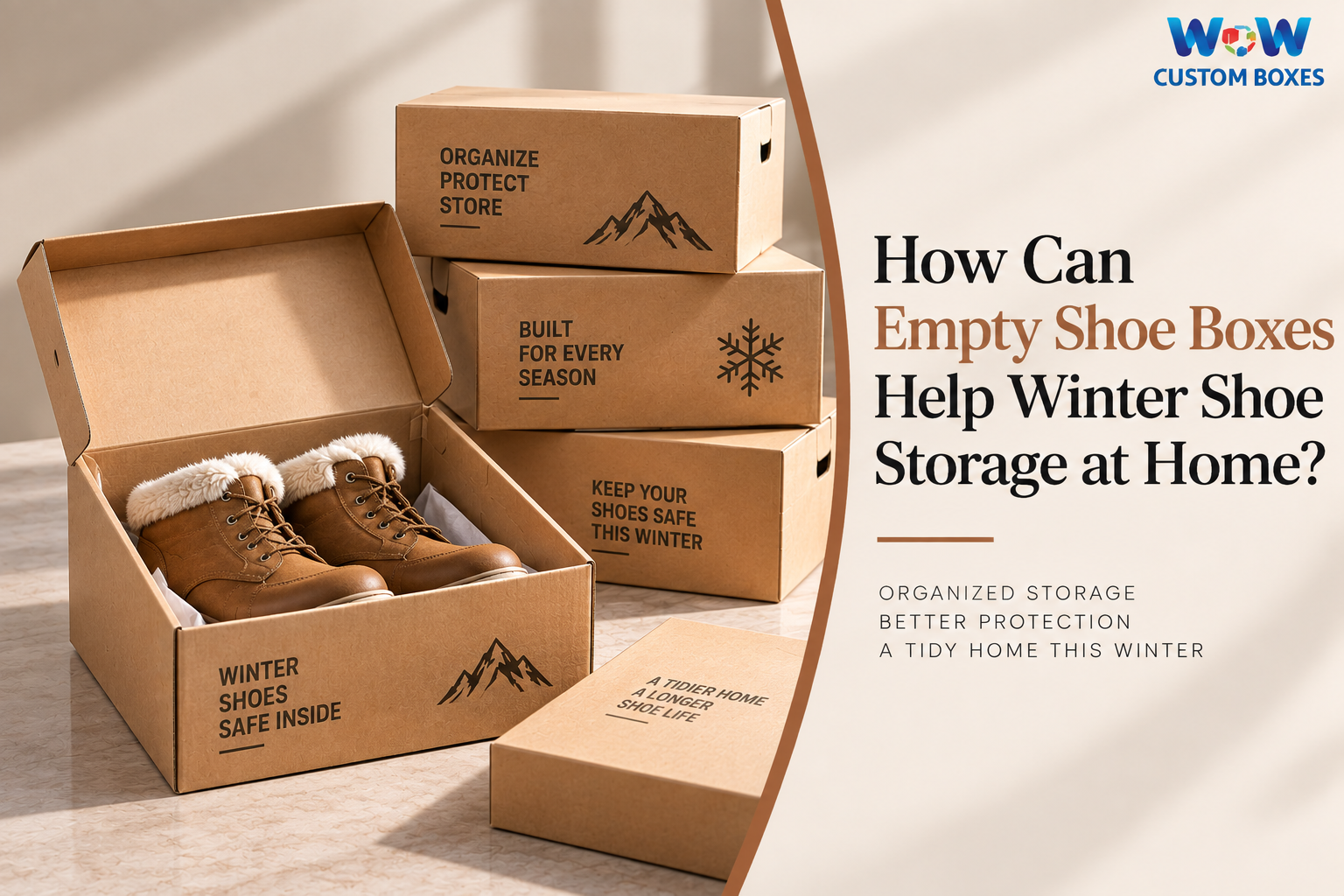
When winter arrives, many households need to reorganize their wardrobes and make space for seasonal footwear. Boots, sneakers, formal shoes, sandals, and lighter footwear may all need to be stored differently when they are not being used regularly. Leaving shoes scattered around a closet can take up valuable space and make it harder to find the right pair when the season changes. Empty Shoe Boxes can provide a simple way to keep winter footwear organized, separated, labeled, and easier to store at home. With the right box size and storage arrangement, each pair can have its own protected space while the wardrobe remains cleaner and easier to manage.
Using separate boxes can also make seasonal organization more practical because footwear can be grouped according to size, type, color, or frequency of use. Instead of placing several pairs together in one large storage container, homeowners can assign individual boxes to different shoes and identify them with labels or visible markings. This approach can make seasonal rotation much easier because summer footwear can be packed away while winter shoes remain accessible. For households looking for organized packaging and storage solutions for different products, customized shoe boxes can also provide a more structured approach to keeping footwear arranged at home.
Why Are Empty Shoe Boxes Useful for Winter Storage?
Winter footwear is often larger and heavier than many warm-weather shoes. Boots, thick-soled shoes, and insulated footwear can require more closet space and may be difficult to stack without proper organization. Empty Shoe Boxes provide individual compartments that help keep pairs together instead of allowing footwear to become mixed throughout a wardrobe. A suitable box can also make it easier to arrange shoes vertically or horizontally depending on the available storage area. When every pair has a designated location, homeowners can make better use of shelves, cabinets, wardrobes, and under-bed storage spaces without constantly moving other footwear to reach one particular pair.
Another benefit is that boxed storage can help reduce unnecessary contact between different pairs. Shoes may collect dust, dirt, or other particles during normal use, and keeping them separated can make the overall storage area easier to maintain. The box itself does not eliminate every environmental factor, but it provides a physical enclosure that can help keep stored footwear organized. For long-term seasonal storage, homeowners should still clean and completely dry shoes before putting them away, especially when footwear has been exposed to rain, snow, mud, or moisture during winter weather.
How Can Empty Shoe Boxes Save Closet Space?
Closet organization becomes much easier when storage units have consistent shapes and sizes. Individual shoe boxes can create a more predictable arrangement because each pair occupies a defined space. Instead of leaving boots and shoes loosely positioned across a shelf, homeowners can stack or line up boxes according to the dimensions of the storage area. This can help reduce wasted space and make it easier to create sections for different types of footwear. A consistent box arrangement can also make seasonal changes quicker because entire groups of boxes can be moved together rather than reorganizing every individual pair.
The size of the box is important when space is limited. A box that is significantly larger than the shoes may create unnecessary empty areas, while a box that is too small can make loading and removing footwear difficult. Custom dimensions can therefore be useful for households or businesses that need a specific fit. For footwear requiring more structured storage, Empty Shoe Boxes designed around the footwear size can provide a practical starting point for creating a more organized storage system.
Can Empty Shoe Boxes Protect Shoes from Dust?
A closed shoe box can provide a physical layer between stored footwear and ordinary household dust. This can be particularly useful for shoes that are not worn for several months. Open shelving may leave footwear exposed to dust from the surrounding room, while an enclosed box can help keep the shoes contained. However, the box should not be treated as a complete environmental barrier. Proper storage still requires a dry, clean, and reasonably stable location, especially for leather, suede, fabric, or other materials that may be affected by unsuitable humidity or temperature conditions.
Before storing a pair for the season, it is useful to remove visible dirt and allow any moisture to evaporate naturally. Shoes should not be placed into a closed storage box while they are still wet. Allowing footwear to dry before storage can help create a better environment for long-term organization. The box then serves mainly as a storage and organization layer rather than being expected to solve every possible footwear-care issue.
How Do Shoe Boxes Help Keep Pairs Together?
One of the simplest advantages of individual boxes is that they keep each pair together. Loose shoes can easily become separated when several family members use the same wardrobe or when seasonal footwear is moved from one storage area to another. A dedicated box creates a defined location for both shoes, which can reduce the chance of losing one shoe or mixing different pairs. This is especially helpful when several shoes have similar colors or designs and would otherwise be difficult to distinguish quickly.
Boxes can also be arranged according to a simple organization system. Homeowners may keep frequently used winter footwear at eye level while placing less frequently used pairs on higher shelves. Boots can be grouped separately from everyday sneakers, and formal shoes can have their own section. For shoes that need additional internal organization, shoe box inserts for organized footwear storage can provide another way to keep products positioned neatly inside their boxes.
How Can Labels Make Winter Shoe Storage Easier?
A box becomes much more useful when its contents can be identified without opening it. During seasonal storage, homeowners may have several boxes that look similar, making it difficult to remember which pair is stored inside each one. A simple label can solve this problem by identifying the shoe type, color, size, or occasion. Clear identification is particularly useful when boxes are placed on high shelves or stored under beds where checking every box individually would be inconvenient.
A practical labeling system does not need to be complicated. A homeowner could mark boxes with descriptions such as black winter boots, brown formal shoes, everyday sneakers, or waterproof footwear. A small photograph can also be attached to the outside of a box when quick visual identification is preferred. The main goal is to make the contents recognizable without repeatedly opening and closing each storage container.
What Shoe Box Styles Work Best for Home Storage?
Different footwear and storage spaces can benefit from different box structures. A traditional folding box can work well for everyday shoes, while a box with a lid can be useful when homeowners want easy access without fully unfolding the packaging. Transparent areas may also help with identification when the box design allows them. The best option depends on the shoe dimensions, available closet space, frequency of access, and preferred organization method.
For footwear that needs convenient access throughout the winter season, shoe boxes with lids for convenient footwear storage can make it easier to open and close individual packages. A lid can also allow boxes to be stacked while keeping the stored pair contained. Homeowners should select a structure that is easy to handle and appropriately sized for the footwear rather than choosing a style based only on appearance.
Can Empty Shoe Boxes Help Store Boots?
Boots often require more storage space because they can be taller and wider than standard shoes. Placing boots loosely inside a wardrobe can consume considerable shelf or floor space, especially when several pairs are stored together. A suitably sized box can provide a dedicated location for each pair and help keep the boots arranged when they are not being worn. Taller footwear may require a larger or specially designed storage format, so measurements should be taken before choosing the box.
Boots should also be completely dry before seasonal storage. This is particularly important after winter use because snow, rain, and wet surfaces can leave moisture on the footwear. Cleaning the boots, allowing them to dry naturally, and then placing them into a suitable storage box can create a more organized routine. Heavy boots may also require stronger packaging construction if boxes will be stacked.
Can Shoe Boxes Help Store Sneakers During Winter?
Sneakers that are not being used during colder months can be stored in individual boxes to keep them organized and separated from winter footwear. This can be useful when wardrobes have limited space because summer or lightweight sneakers can be grouped together and moved to a less accessible storage area. Keeping each pair inside its own box also makes seasonal rotation easier when warmer weather returns.
For households with many pairs, consistent box dimensions can create a cleaner storage arrangement. Boxes can be stacked on shelves or placed under beds where suitable. The important consideration is to avoid excessive weight or unstable stacking that could damage the shoes or make the storage arrangement difficult to access.
How Can Custom Shoe Boxes Improve Seasonal Organization?
Custom sizing can be useful when standard shoe boxes do not fit a particular type of footwear or storage area. Different shoes have different dimensions, and boots can require substantially more space than low-profile sneakers. A custom box can be planned around the actual footwear dimensions while leaving enough clearance for comfortable placement and removal. This can make the storage system more efficient and reduce the amount of unused space around the shoes.
Customization can also extend to the visual appearance of the boxes. A homeowner may prefer simple labels and neutral designs, while a retailer or footwear brand may want printed packaging that identifies a specific collection. Businesses that need a branded footwear presentation can explore custom shoe boxes with logo printing for recognizable footwear packaging while maintaining a consistent box format across different shoe styles.
What Are the Best Places to Store Empty Shoe Boxes?
The ideal storage location depends on the home’s available space and the frequency with which the footwear will be accessed. Closets and wardrobes are convenient for shoes that will still be worn during winter, while under-bed areas can work for footwear that will not be needed until another season. Shelving units can also provide an organized option because boxes can be arranged vertically and labeled for quick identification.
The storage environment matters as much as the location. Cardboard packaging should generally be kept away from direct water exposure and areas with excessive humidity. Basements, garages, and sheds may require additional consideration because their environmental conditions can differ significantly from the main living areas of a home. A dry and reasonably stable storage location is preferable for both the box and the footwear inside it.
What Size Should Empty Shoe Boxes Be?
The correct size depends on the actual footwear being stored. A standard pair of low-top sneakers may need considerably less space than a pair of winter boots. Homeowners should measure the length, width, and height of the footwear and consider whether additional inserts, tissue, or protective materials will be used. The goal is to provide enough room for easy placement while avoiding excessive empty space that makes the box unnecessarily large.
| Shoe Type | Storage Consideration |
|---|---|
| Sneakers | Compact box with enough room for comfortable placement |
| Formal Shoes | Structured space to maintain pair organization |
| Winter Boots | Larger dimensions and sufficient height |
| Children’s Shoes | Smaller format for efficient storage |
| Large Footwear | Custom dimensions may provide a better fit |
How Should Shoes Be Prepared Before Winter Storage?
Proper preparation can make boxed storage more effective. Shoes should be cleaned according to their material and allowed to dry completely before being stored. Dirt, mud, salt, and moisture left on footwear can create problems when shoes remain packed away for an extended period. Leather, suede, fabric, and synthetic footwear may also require different cleaning and care methods, so homeowners should follow the manufacturer’s care instructions. Once the shoes are clean and dry, each pair can be placed inside an appropriately sized box. Tissue or another suitable internal material can be used where needed to help maintain shape, particularly for certain types of footwear. The box can then be labeled according to the shoe type, size, color, or season so that it can be identified quickly later.
How Can Shoe Boxes Be Arranged for Maximum Convenience?
A useful arrangement should reflect how often each pair is used. Everyday winter footwear can be placed where it is easy to reach, while occasional or special-event shoes can be stored on higher shelves or in less accessible areas. Heavy boxes should generally be placed where they can be handled safely, and unstable stacks should be avoided. Keeping frequently used shoes within easy reach can make daily routines more convenient. Boxes can also be grouped by category rather than randomly stacked. For example, winter boots can occupy one section, formal shoes another, and occasional footwear a separate area. This approach makes it easier to return shoes to the correct location after use and prevents the storage system from becoming disorganized over time.
Can Foldable Shoe Boxes Save More Storage Space?
Foldable packaging can be useful when empty boxes themselves need to be stored before they are used. A folding structure can take up less space when flat compared with an assembled box. This can be particularly useful for households or businesses that keep spare packaging available for future storage needs. For people who regularly reorganize seasonal footwear, foldable shoe boxes for flexible storage arrangements can offer a practical option. The final structure should still be strong enough for the intended footwear and should be stored in a dry environment when not in use.
Why Are Empty Shoe Boxes a Practical Winter Storage Choice?
Winter footwear can quickly become difficult to manage when several bulky pairs are placed together without an organization system. Empty Shoe Boxes give each pair a defined location and make it easier to separate footwear by type, season, size, or frequency of use. They can also help homeowners make better use of closets, shelves, cabinets, and other available storage areas. While a cardboard box cannot replace proper footwear care, it can provide a practical enclosure that supports cleaner and more organized storage.
The most effective approach is to combine the right box size with proper shoe preparation, clear labeling, dry storage, and sensible stacking. Shoes should be cleaned and dried before storage, while boxes should be protected from excessive moisture. When these simple steps are followed, individual shoe boxes can make seasonal rotation much easier and help keep winter footwear ready whenever it is needed.
Get the Right Empty Shoe Boxes for Your Storage Needs
Choosing the right shoe box starts with understanding the footwear that will be stored and the space available at home. Consider the dimensions of each pair, the number of shoes that need storage, the preferred box style, and
whether labels or internal inserts will be useful. A well-planned storage system can make seasonal organization easier while helping keep individual pairs together and accessible. If you need customized footwear packaging or want to discuss a suitable box format, you can discuss your custom shoe box requirements with the packaging team and select a solution based on your preferred size, structure, and storage application.
Frequently Asked Questions About Empty Shoe Boxes
1. How Can Empty Shoe Boxes Help With Winter Shoe Storage?
Empty Shoe Boxes give each pair a dedicated storage space, helping homeowners
organize winter footwear, reduce clutter, identify different shoes, and use
closet space more efficiently.
2. Can Empty Shoe Boxes Protect Shoes From Dust?
Yes. A closed box can provide a physical layer that helps reduce ordinary
dust exposure while shoes are stored, although it does not replace proper
cleaning and environmental care.
3. Can Shoe Boxes Save Closet Space?
Yes. Consistently sized boxes can make shelves and closets easier to arrange
because footwear can be grouped and stacked according to the available
storage space.
4. Are Empty Shoe Boxes Suitable for Winter Boots?
Yes. Larger shoe boxes can be used for suitable boots when the dimensions
provide enough room for comfortable placement and removal.
5. Can I Label Empty Shoe Boxes?
Yes. Labels can identify shoe type, size, color, season, or occasion and make
it easier to find footwear without opening every box.