Minimalist packaging continues to attract attention because it creates a clean and organized appearance. Instead of covering every surface with graphics, luxury brands can use open space, limited colors, simple typography, and carefully positioned branding. This approach allows the product and packaging material to become part of the overall presentation.
A minimalist rigid box can use a single brand color with a small logo or product name. Another option is a neutral exterior with a detailed interior. The purpose is to create visual balance rather than remove all design elements. When the structure and artwork work together, the package can communicate a premium identity without appearing crowded.
Texture has become an important part of the packaging experience because customers can feel the box before they see the product. Textured paper, soft-touch coatings, fabric-style wraps, and embossed surfaces can add another dimension to rigid packaging. These details can make the package feel more distinctive while keeping the printed design relatively simple.
Luxury brands can select a tactile material that matches their product identity. A soft surface may suit cosmetics or fragrance products, while a more natural texture may support a brand focused on responsible materials. The important point is to select a finish that supports the overall concept rather than combining too many effects.

Why Luxury Brands in Germany Choose Rigid Boxes | Lussopack
Yes. Custom inserts are increasingly useful for luxury packaging because they can position the product neatly inside the box. Inserts can create dedicated spaces for watches, jewelry, cosmetics, fragrance bottles, accessories, and gift sets. They can also prevent different components from moving into each other during handling.
The interior of a luxury box can be designed as carefully as the exterior. A fitted insert can reveal the product in a controlled position when the customer opens the package. This creates a more organized unboxing experience and gives the brand another opportunity to present its identity.
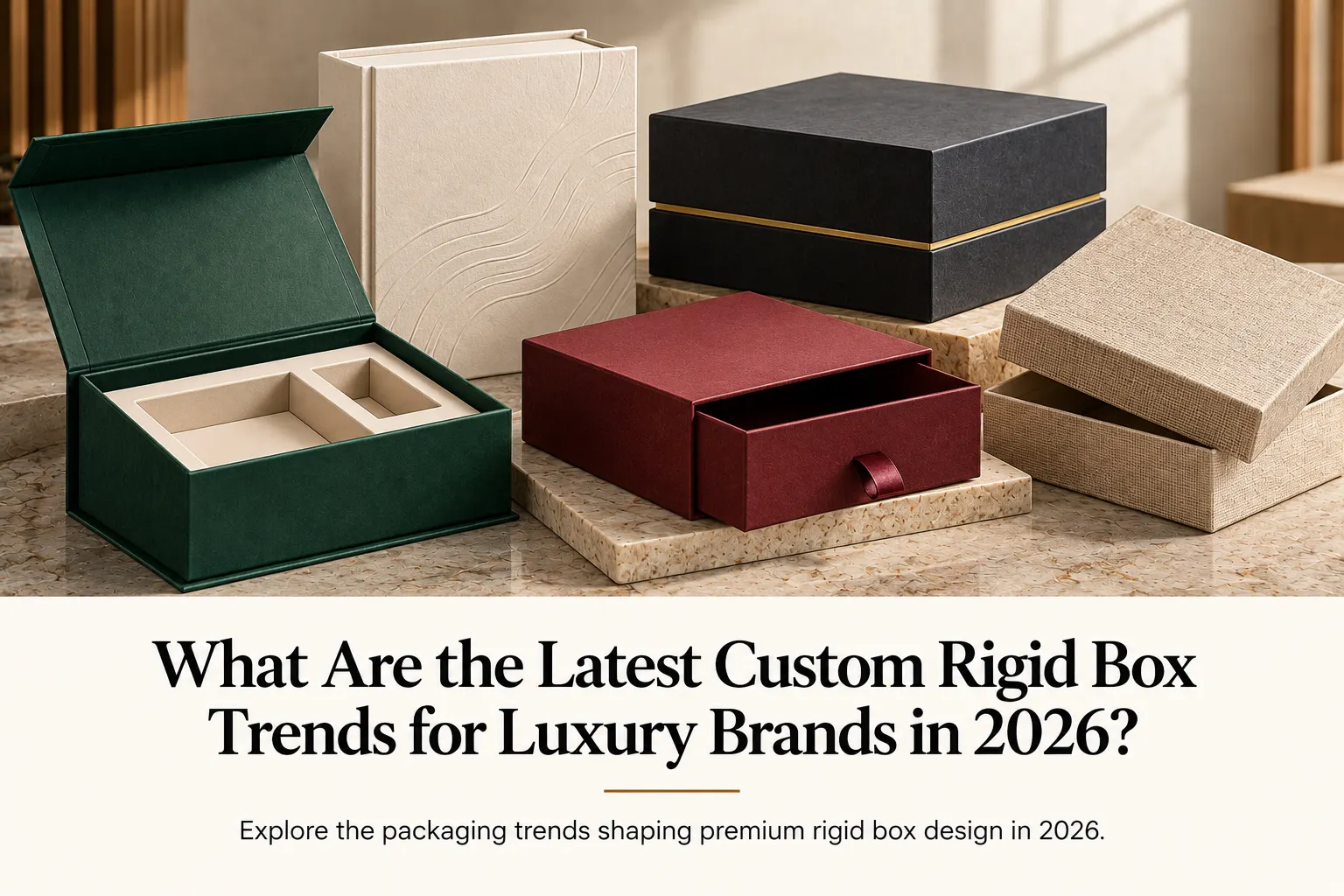
Drawer-style rigid boxes provide a different opening experience from conventional lid-style boxes. The inner tray slides from the outer sleeve, allowing the product to appear gradually. This structure can work well for products where the unboxing process forms an important part of the customer experience.
The outer sleeve can carry the main branding while the inside tray can hold the product and its insert. This creates two connected packaging surfaces that brands can design separately. Businesses interested in this format can explore Rigid Drawer Boxes for products that require a structured sliding presentation.
Some luxury products and gift collections require more internal space than a standard drawer structure provides. Larger rigid drawer formats can accommodate multiple products, accessories, or presentation components. They can also provide more room for customized inserts and interior branding.
The dimensions should match the actual product arrangement. A box that is too large can create unnecessary empty space, while a box that is too small can make the interior difficult to organize. Brands can consider Rigid Drawer Big Boxes when a larger presentation structure suits the product range.
Yes. Personalization allows brands to create packaging for limited collections, seasonal launches, special events, gifting campaigns, and exclusive product releases. The personalization can appear through artwork, product names, messages, inserts, colors, or selected finishing details.
A brand does not always need a completely different structure for every campaign. The same rigid box can support different artwork or interior elements while maintaining the main brand identity. This approach allows packaging to feel special without making the entire packaging system inconsistent.
Luxury packaging often includes finishes such as foil stamping, embossing, debossing, spot effects, matte coatings, and soft-touch surfaces. In 2026, these features can be used selectively to create specific focal points. A logo, product name, or small design element can receive a premium finish while the rest of the box remains simple.
Using fewer finishing effects can also make the final design easier to understand. For example, a matte surface with a metallic logo can create contrast without covering the entire package in foil. Brands can select finishing details according to the product category, brand identity, and desired presentation.
Gold foil remains a familiar choice for premium packaging because it can create strong contrast against dark, neutral, or textured surfaces. Brands can use it on logos, borders, product names, or selected artwork. The effect can remain subtle when applied to a limited area.
The goal should be controlled contrast rather than excessive decoration. A carefully positioned metallic element can draw attention to the brand name or product while allowing the rest of the packaging to remain visually balanced. This approach works particularly well when the rigid structure already provides a premium physical presence.
Yes. Reusable packaging is receiving greater attention because brands can design rigid boxes that customers continue using after removing the original product. A durable box can become a storage container for jewelry, accessories, keepsakes, or other personal items.
Reuse also changes how the customer interacts with the brand after the initial purchase. Instead of becoming immediately disposable, a well-designed rigid box can remain part of the customer’s environment. The structure should therefore combine durability with a timeless appearance that does not depend entirely on a temporary campaign.
Sustainability is another important consideration for luxury brands. Businesses are increasingly reviewing material choices, unnecessary packaging components, and opportunities to reduce waste. A premium package can still maintain an elegant appearance while using carefully selected paper-based materials and practical structures.
The packaging should be designed around actual product requirements rather than adding unnecessary layers. A well-sized rigid box can help create an organized interior, while a reusable structure can give the package a longer useful life. Material selection should always consider the required strength, finish, appearance, and product protection.
Luxury packaging is no longer limited to the outside of the box. The interior can include brand messages, printed patterns, product information, custom inserts, or coordinated colors. These details become visible during the opening process and can add another stage to the customer experience.
For example, a jewelry box can reveal the product from a fitted insert, while a fragrance package can use an interior message to introduce the collection. The exterior can remain minimal while the interior provides additional detail. This creates contrast between the first impression and the actual unboxing experience.
The box structure determines how the customer interacts with the package. A two-piece design creates a straightforward opening, while a drawer structure provides a sliding reveal. Magnetic structures can create a controlled opening action, and specialized formats can provide different ways to arrange the product.
Luxury brands should select the structure according to the product rather than choosing a style only because it looks impressive. Product dimensions, weight, insert requirements, storage, shipping, and customer experience should all influence the final decision.
Jewelry requires packaging that can present small products in a controlled and organized way. A fitted interior can hold necklaces, bracelets, rings, earrings, or other pieces in dedicated positions. The exterior can then use minimal branding and selected finishing details to create a coordinated presentation.
For necklace collections, for example, the internal arrangement should prevent the product from becoming tangled or poorly positioned. Brands can explore Custom Necklace Boxes when developing packaging around the dimensions and presentation requirements of necklace products.
Bracelet packaging can combine compact dimensions with premium materials, fitted interiors, and restrained branding. The box should provide enough space for the bracelet while keeping the product centered and easy to remove. An insert can also provide a dedicated position for the product.
The exterior can use a minimalist logo, subtle foil, textured paper, or a refined color combination. For brands developing packaging specifically for bracelets, Custom Bracelet Boxes can support a product-specific presentation.
Fragrance packaging often depends heavily on visual presentation because the box introduces the product before the bottle is revealed. Luxury fragrance packaging can use structured interiors, textured surfaces, restrained colors, metallic details, and carefully positioned branding.
The interior can also support the bottle with a fitted insert. This keeps the product organized and creates a controlled reveal during unboxing. Brands working with fragrance products can consider Custom Cologne Boxes when planning packaging around bottle dimensions and presentation requirements.
Material quality affects both the appearance and physical feel of the package. Rigid board provides a firm structure, while the outer wrap can introduce color, texture, or specialized finishing. The combination of structure and surface treatment can create a more substantial package than a basic folding carton.
Brands should choose materials according to the product and intended customer experience. The package should feel appropriate for the product without adding unnecessary features. A carefully selected material can provide enough visual and tactile impact while keeping the design focused.
Brands do not need to use every trend in one package. A better approach is to select features that work naturally with the product. One brand may combine a minimalist exterior, textured wrap, and fitted insert. Another may use a reusable structure with subtle metallic branding.
The design should remain consistent from the outside to the inside. Colors, typography, materials, inserts, and finishing should support one another. When several elements compete for attention, the luxury appearance can become less clear.
Brands should first confirm the product dimensions, weight, quantity, shape, and required internal arrangement. They should then decide on the box structure, material, printing, finishing, and insert. Shipping requirements should also be considered if the package will travel through ecommerce fulfillment.
A physical sample can help brands review the final structure before larger production. The sample allows them to check the product fit, closure, insert position, artwork, material, and overall presentation. This step can help identify changes before the complete packaging order is produced.
The main direction is toward packaging that combines premium presentation with purposeful design. Minimalist layouts, tactile materials, selective finishes, personalized details, fitted interiors, reusable structures, and distinctive opening experiences can all contribute to modern luxury packaging.
The most suitable combination depends on the product. Jewelry may need a fitted insert, fragrance may benefit from a refined interior, and gift collections may work well with reusable or drawer-style structures. Brands can compare different structures and finishes before selecting the packaging system that matches their product.
Custom rigid packaging continues to give luxury brands flexibility in structure, material, finishing, dimensions, and interior presentation. In 2026, luxury packaging is increasingly about creating a complete experience rather than simply adding decorative elements to a box.
A strong packaging concept can combine a clean visual identity with tactile materials, suitable inserts, controlled finishing, and a practical structure. The final design should reflect the product while making the opening experience feel organized and intentional. Brands that need help planning their packaging requirements can Contact Us with their product dimensions and design preferences.
Yes. Custom Rigid Boxes can incorporate minimalist designs, tactile materials, premium finishes, personalized artwork, fitted inserts, and reusable structures according to the product and brand requirements.
Yes. Custom inserts can create dedicated spaces for jewelry, cosmetics, fragrance bottles, watches, accessories, and gift sets while improving product organization inside the box.
Yes. Gold foil can highlight logos, product names, borders, and selected artwork. Brands can use it selectively to create contrast while keeping the overall packaging design refined.
Yes. Rigid boxes can use durable structures and practical dimensions that allow customers to reuse them for storage, gifting, accessories, or other purposes after the original product has been removed.
Yes. Drawer-style rigid boxes can create a gradual product reveal as the inner tray slides from the outer sleeve. This structure can support both product presentation and customized interior arrangements.