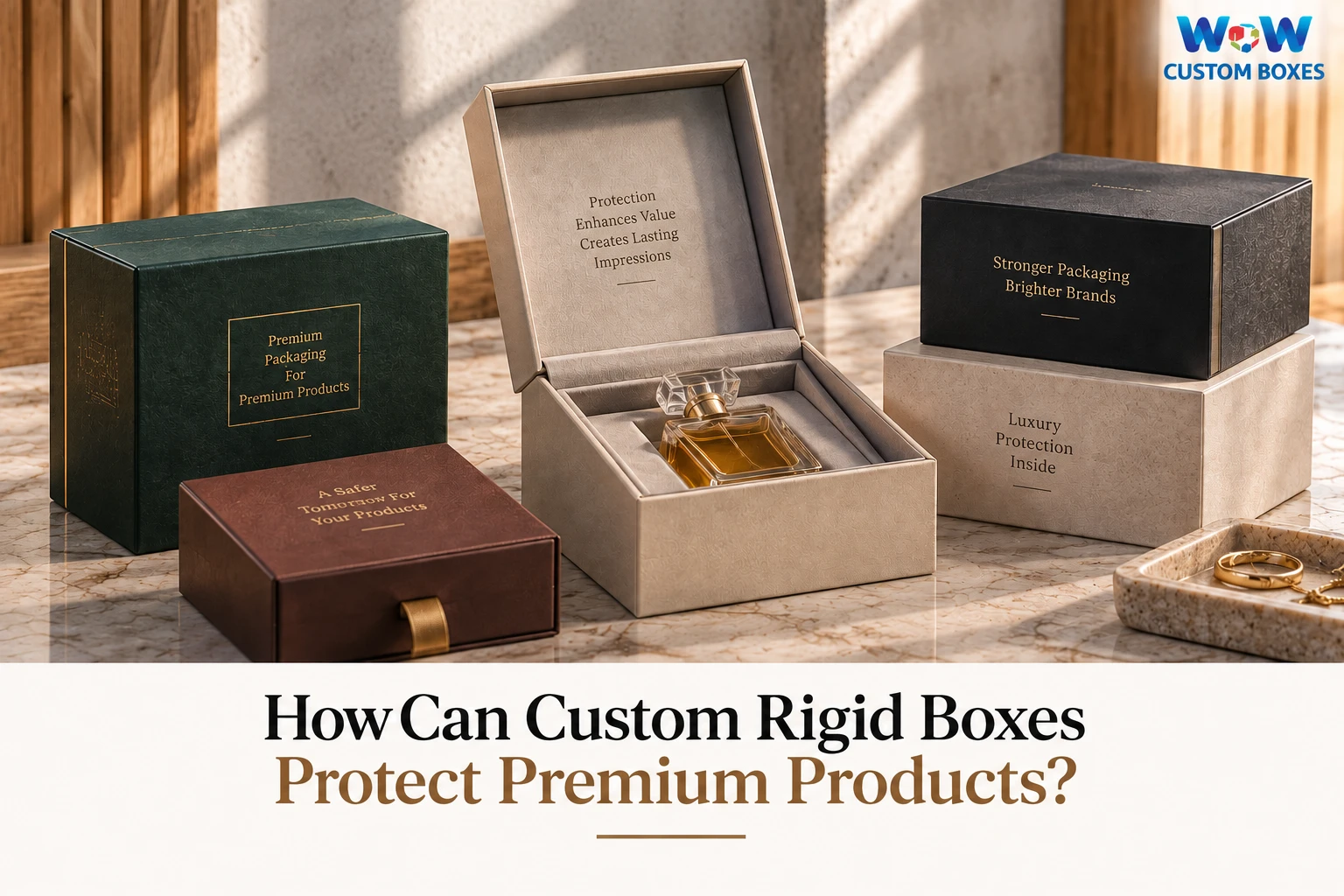
Custom Rigid Boxes are premium packaging structures manufactured from thick and durable paperboard to create a firm outer enclosure around a product. Unlike many lightweight folding cartons, rigid boxes maintain their shape and provide a more substantial packaging experience. They can be customized according to the dimensions, weight, shape, and presentation requirements of the product. Businesses can also select different box styles, interior configurations, printing methods, finishes, closures, and decorative details to create packaging that matches their brand identity.
The structured construction makes rigid packaging particularly suitable for products that require a more controlled presentation. Watches, jewelry, perfumes, cosmetics, electronics, luxury gifts, and specialty retail products can all benefit from packaging that keeps the item positioned while giving customers a stronger first impression. The final box should always be designed around the actual product because the required level of protection depends on its dimensions, fragility, weight, handling conditions, and intended use.
The protective advantage of rigid packaging starts with its firm outer structure. A properly constructed box creates a defined enclosure around the product and can help reduce unnecessary bending, crushing, and movement compared with lighter packaging formats. When the box is correctly sized, it can also reduce excessive empty space around the item. This becomes particularly useful for premium products that need to remain carefully positioned during storage and transportation. The outer structure can work together with an internal insert to create a packaging system where the product has a dedicated space instead of moving freely inside the package.
Internal protection is equally important because even a strong outer box cannot completely prevent movement if the product is loose inside. Custom inserts can be developed around the shape of the product and can separate individual components where necessary. Depending on the application, businesses may use paperboard inserts, foam, fabric-lined interiors, molded components, or other suitable materials. The appropriate insert should be selected according to the product and should provide useful support without making the package unnecessarily complicated.
A premium product can lose some of its presentation value when it is placed inside a box that is significantly larger than the item or poorly fitted to its shape. Excessive empty space can allow the product to move during handling, while a package that is too tight may make insertion and removal difficult. Custom sizing allows businesses to develop the box around the actual product dimensions and create a more controlled internal arrangement. This can improve both protection and presentation because the product can sit in a deliberate position rather than appearing loose inside the package.
Custom dimensions become especially useful for products with unusual shapes or several components. A perfume bottle, watch, jewelry piece, cosmetic collection, or electronic accessory may each require a different internal structure. Businesses can therefore plan the box and insert together rather than treating them as completely separate packaging decisions. Brands looking for a dedicated premium structure can use custom rigid box packaging for products that require a stronger and more refined presentation.
Product movement is an important consideration when designing packaging for premium items. When an item moves repeatedly inside a package, it can come into contact with the interior walls or other components. Depending on the product material, repeated contact can increase the possibility of scratches, scuffs, or other surface damage. A rigid box with a properly designed insert can create a more stable environment by holding the product in its intended position and separating it from unnecessary contact.
The amount of internal support required depends on the product. A lightweight cosmetic item may only need a simple paperboard insert, while a delicate electronic accessory, watch, or jewelry item may require a more carefully engineered interior. The goal is not simply to fill the box with protective material but to create a controlled fit that keeps the product stable while allowing the customer to remove it easily when the package is opened.
Yes, custom inserts can significantly improve the way a premium product sits inside its box. Instead of placing an item directly on the bottom surface, an insert can create a dedicated cavity, compartment, or support structure. This can help keep the product centered and can separate it from other components such as accessories, instruction cards, charging cables, bottles, or smaller items included with the purchase.
Inserts can also improve the unboxing experience. When customers open a rigid box and find the product positioned neatly inside, the presentation feels more deliberate and organized. Businesses can select an insert material and finish that complements the product and overall brand identity. For products that require a larger internal arrangement, rigid drawer big boxes with spacious interiors can provide additional room for product collections, accessories, or multiple components.
Drawer-style rigid boxes use an outer sleeve and an internal tray that slides outward when opened. This structure creates a defined space for the product and can be customized with inserts to keep the contents organized. The sliding tray also gives the customer a controlled opening experience, which can be particularly effective for jewelry, cosmetics, luxury gifts, accessories, and other premium products where presentation matters.
The inner tray can be designed around the dimensions of the product so that the item does not move unnecessarily during normal handling. Additional compartments can also be incorporated when the package contains several components. For brands that want this combination of structured presentation and convenient access, rigid drawer boxes for organized premium product presentation can provide a suitable packaging format.
Premium products often require packaging that reflects their positioning in addition to providing a practical enclosure. Luxury rigid packaging can combine a firm structure with refined printing, specialty papers, foil details, embossing, debossing, and carefully planned interiors. These features can create a package that feels substantial while giving the product a dedicated presentation space. The structure itself should still be selected according to the product, because decorative details do not replace the need for correct sizing and suitable internal support.
A luxury package can also become part of the customer’s long-term product experience. Customers may keep rigid packaging for storing jewelry, watches, collectibles, fragrances, or other premium products after purchase. This makes the box more than a temporary shipping container and gives brands another opportunity to maintain a consistent visual identity. Businesses looking for a more elevated format can consider luxury rigid boxes with premium presentation and finishing options.
Transportation exposes products to handling, stacking, movement, and changes in the surrounding environment. A rigid box provides a firm outer structure that can help maintain the shape of the package during normal handling. However, rigid packaging should not be treated as completely damage-proof. The final shipping solution should consider the product’s fragility, transportation method, distance, and expected handling conditions.
For ecommerce orders and products that travel through multiple distribution stages, the rigid product box can be combined with suitable outer shipping packaging. This allows the premium box to focus on product presentation while the outer package provides another layer for transportation. This separation can be particularly useful when the rigid box has a decorative finish that the business wants to keep clean throughout delivery.
Rigid boxes are generally constructed using thick paperboard or chipboard-based structures that provide greater rigidity than lightweight folding cartons. The outer surface can then be wrapped or finished with printed paper, specialty paper, fabric, or other suitable materials depending on the desired appearance. The final material selection should take into account product weight, box dimensions, intended use, and desired presentation.
Premium packaging can also incorporate different interior materials. A box for jewelry may require a soft or fabric-lined interior, while an electronics package may benefit from a structured insert that separates the device from its accessories. Cosmetic and fragrance packaging may use shaped compartments to hold bottles securely. The material combination should therefore be selected according to both the protective requirements and the visual direction of the product.
Custom printing allows businesses to turn the outer surface of a rigid box into a recognizable brand element. Logos, product names, patterns, illustrations, colors, and other visual details can be incorporated into the design. A premium product can therefore arrive in packaging that immediately communicates the identity of the brand before the customer even opens the box.
Printing can also help create consistency across a product range. A business selling several fragrances, cosmetics, watches, or jewelry collections can maintain a common design system while changing individual product names or colors. This makes different products recognizable as part of the same brand family while allowing each item to have its own presentation.
Finishing options can influence both the appearance and tactile experience of rigid packaging. Matte finishes can create a refined and understated appearance, while gloss finishes can make colors appear brighter and more reflective. Foil details can be used for logos, borders, typography, or decorative elements, while embossing and debossing can add texture to selected areas of the package.
The best finish depends on the product and the intended brand image. A luxury jewelry brand may prefer a restrained combination of foil and embossing, while a modern cosmetic brand may choose a clean matte surface with minimal graphics. Premium packaging does not need every available finish. Carefully selected details can often create a stronger result than excessive decoration.
Rigid packaging is versatile because the structure can be customized around different product shapes and sizes. A small jewelry item may require a compact box with a fitted insert, while a fragrance collection may need multiple compartments. Electronics packaging may require dedicated areas for the main device, accessories, cables, and documentation. The box style and interior structure can therefore be adapted according to the specific product.
Businesses can also use rigid packaging for premium gifts and special collections. A carefully designed box can create a stronger presentation when the customer opens the package, making the packaging part of the gifting experience rather than simply a container. This can be particularly valuable for limited editions, seasonal collections, and products positioned at a higher price point.
| Feature | Available Options |
|---|---|
| Material | Rigid Paperboard, Chipboard and Suitable Wrapped Materials |
| Box Style | Drawer, Magnetic Closure, Lift-Off Lid and Custom Structures |
| Sizes | Small, Medium, Large and Custom Dimensions |
| Printing | Full-Color Printing, Logos, Patterns and Product Artwork |
| Finishes | Matte, Gloss, Foil, Embossing and Debossing |
| Interior | Custom Inserts, Compartments, Linings and Supports |
| Applications | Jewelry, Cosmetics, Watches, Fragrance, Electronics and Gifts |
Magnetic rigid boxes are popular for premium packaging because the closure creates a smooth and deliberate opening experience. The lid can remain aligned with the base while the customer opens the package, creating a more controlled presentation. This can be particularly useful for products where the packaging experience is an important part of the perceived value. Inside the box, a custom insert can hold the product in a fixed position. The combination of a structured exterior and fitted interior can create a neat presentation when the package is opened. Businesses can further customize the outer surface with printing, foil, embossing, or other suitable finishes to match their brand identity.
Premium packaging is often judged before the product is even removed from the box. A rigid box can create a sense of quality through its weight, structure, surface finish, opening method, and interior arrangement. When the lid opens
and the product is positioned neatly inside a fitted compartment, the customer receives a more deliberate presentation than they might get from a basic folding carton. The unboxing experience can also reinforce brand identity. A printed exterior, custom insert, inner message, branded tissue, or carefully selected finish can create a consistent sequence from the outside of the package to the product
inside. The goal should be to make every element feel connected rather than adding decorative features without a clear purpose.
Luxury branding depends heavily on consistency and attention to detail. Customers often associate substantial materials, clean printing, refined finishes, and carefully arranged interiors with premium products. A rigid box provides several surfaces where these elements can be incorporated without making the package feel visually crowded.
Businesses can use subtle branding rather than covering every surface with graphics. A centered logo, refined typography, a restrained color palette, and one or two premium finishes can create a sophisticated appearance. Additional branding elements can be placed inside the box so that the customer discovers them during the opening experience.
Rigid boxes can be produced in different dimensions depending on the product and interior arrangement. Small boxes may be appropriate for jewelry, watches, or individual cosmetics, while larger formats can accommodate gift sets, electronics, and multiple products. Custom dimensions allow businesses to create a closer fit around the contents and can reduce unnecessary empty space.
| Size Category | Possible Applications |
|---|---|
| Small | Jewelry, Watches, Small Cosmetics and Accessories |
| Medium | Perfumes, Beauty Products and Premium Retail Items |
| Large | Electronics, Gift Sets and Product Collections |
| Custom | Products Requiring Specific Dimensions or Compartments |
| Pros | Cons |
|---|---|
| Strong and structured construction | Usually costs more than lightweight folding cartons |
| Excellent premium presentation | Can require more storage space |
| Custom inserts can improve product stability | Rigid construction can increase packaging weight |
| Wide range of printing and finishing options | More complex designs may require longer production times |
| Can be retained for product storage | Not every product requires rigid packaging |
The right rigid box starts with the product itself. Businesses should consider the product dimensions, weight, shape, fragility, accessories, and how customers will open and store the package. Once these requirements are
clear, the box style and interior structure can be selected. The goal should be to create enough protection and presentation without making the package larger or more complicated than necessary. The branding requirements should then be considered. Businesses can choose printing, colors, finishes, closures, and inserts that support their visual identity. Premium packaging works best when these elements are coordinated rather than selected independently. A consistent combination of structure, graphics, and finishing can make the package feel more intentional and professional.
Before ordering Custom Rigid Boxes, businesses should determine the exact dimensions of the product and identify any accessories that will be placedinside the package. The amount of internal space required, insert design, closure style, and desired presentation should all be considered. Product fragility and transportation conditions should also be evaluated so that the box provides an appropriate level of support. Businesses should also request appropriate samples before committing to a large production quantity. A physical sample can help evaluate the box size, closure, printing, finish, insert fit, and overall presentation. For premium products, testing the complete package with the actual product can reveal small issues that may not be obvious from a digital design alone.
If your product requires a combination of structure, presentation, and customized protection, rigid packaging can provide a practical solution. Whether you are packaging jewelry, watches, cosmetics, fragrances, electronics, or premium gifts, the box can be developed around the product dimensions and the experience you want customers to receive. To discuss your packaging requirements, you can contact the packaging team about your custom rigid box project and explore suitable materials, structures, inserts, printing options, and finishes for your premium products.
Custom Rigid Boxes provide a firm outer structure and can be combined with custom inserts to help keep suitable premium products positioned and organized inside the package.
Rigid boxes generally provide a more substantial and firm structure than many lightweight folding cartons, although actual performance depends on thematerial, construction, dimensions, and intended application.
Yes. Inserts can be designed for individual products, accessories, compartments, and other internal packaging requirements.
Rigid boxes are commonly considered for suitable premium products such as jewelry, watches, cosmetics, fragrances, electronics, gifts, and specialty retail products.
Yes. Logos, product names, artwork, patterns, colors, and other brand elements can be incorporated into the box design.