Your first packaging order looked right. The product fitted properly, the logo sat in the correct position, and the opening experience matched your brand. Now you need another batch. A repeat order may appear straightforward, but “same as last time” leaves important details unstated. Your product might have changed slightly. A different artwork file may be circulating. The original material or finish may need to be reconfirmed. The most reliable way to reorder custom rigid boxes is to use an approved specification record, a clearly identified artwork version, and a retained physical reference. Here is what to check before placing your next order.
Give the supplier the previous order number, product name, and approximate order date. This helps identify the correct packaging job when your business has ordered several sizes, designs, or product variations. Attach the previous specification sheet or quotation if you have it. State whether the new order is an exact repeat or a revised version. Avoid describing a changed design as an identical reorder. When reordering custom rigid boxes, confirm the new quantity alongside the original reference. The minimum order at WOW Custom Boxes is 100 boxes.
The insert deserves its own repeat-order check. Place the current product into the retained insert. Check whether it sits securely, whether important surfaces remain visible, and whether customers can remove it comfortably. Look for changes in accessories, protective wrapping, or product orientation. An item may technically fit while being difficult to lift out. When reordering rigid boxes with inserts, identify the insert version as clearly as the outer box artwork. A correct box paired with an outdated insert can still create a packing problem.
A small product change can create a noticeable packaging problem. A jar may have a wider lid. A bottle pump may be taller. An accessory might now come with an additional cable, card, or pouch. Measure the current product rather than assuming that the previous dimensions still apply. Compare its shape and weight with the item used for the original packaging approval. If you package several items together, check the entire set. Confirm that each item still fits its allocated space and that the complete arrangement allows the box to close properly. A new product version may require a packaging revision even when the product name stays the same.
Keep the packaging information in one document that your team and supplier can reference.
| Specification | What to record |
|---|---|
| Box dimensions | Internal or external measurements, clearly identified |
| Structure | Opening style and construction details |
| Materials | Board and wrapping material specifications |
| Printing | Artwork version and color references |
| Finish | Approved surface and decorative treatments |
| Insert | Material, cavity layout, and fit requirements |
| Quantity | Required number of boxes and design variations |
| Reference | Previous order number and approved sample |
Avoid relying on photographs alone. A photograph can show appearance, but it may not reveal material thickness, exact dimensions, or the intended lid fit.
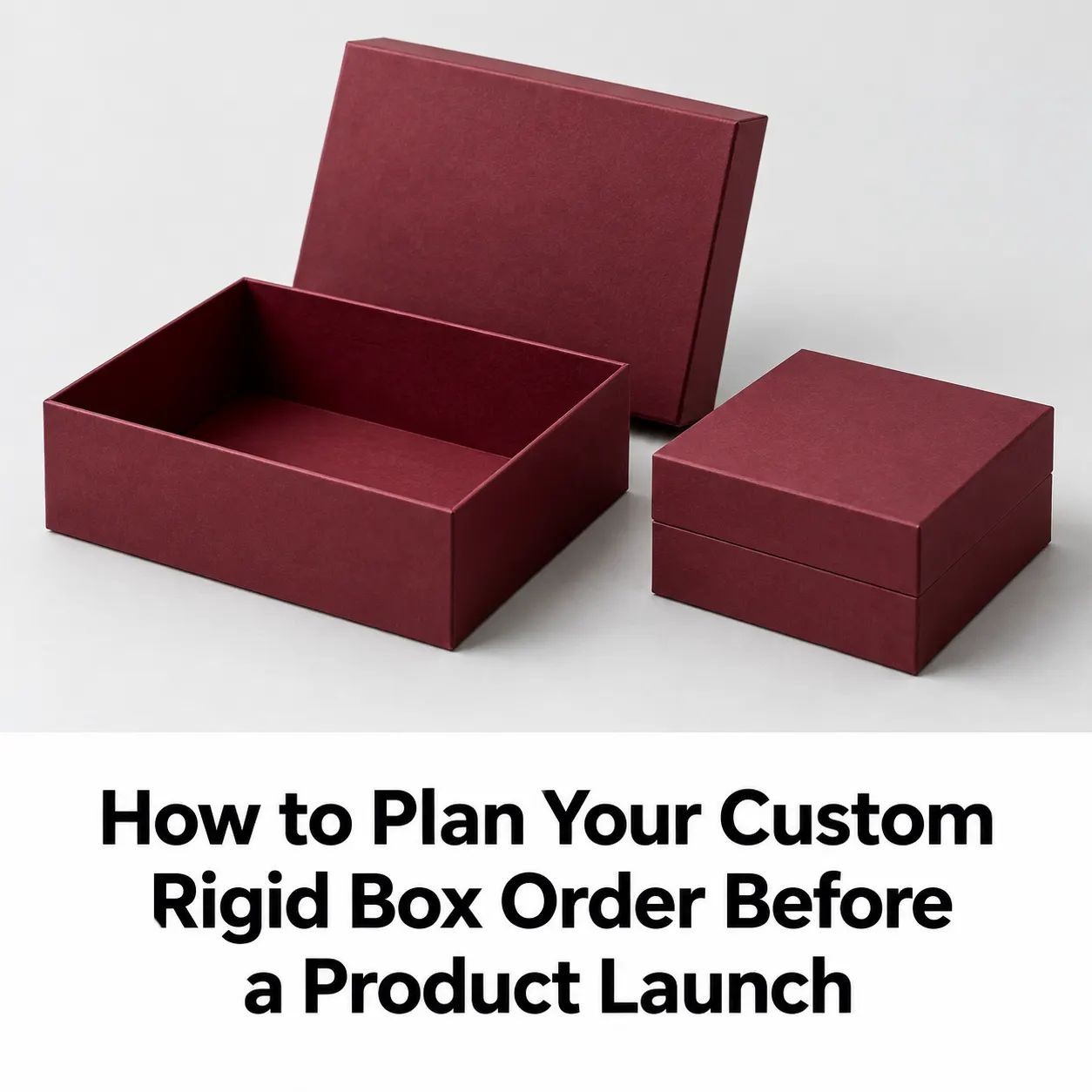
Keep at least one approved box from the original order as a comparison reference. Store it somewhere clean and dry, away from conditions that could affect its shape or appearance. Label it with the order number, approval date, and product version. For two-piece rigid boxes, keep both the lid and base together. Mixing components from different orders can create a misleading reference. The retained box is especially useful when reviewing texture, opening feel, panel alignment, and the relationship between the product and its packaging.
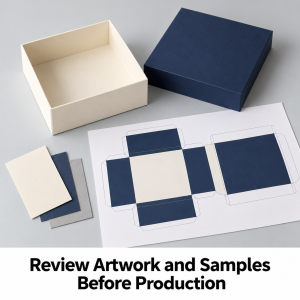
File confusion can cause a repeat order to look different even when nobody intended to redesign it. Use a clear filename that identifies the product, artwork version, and approval date. Keep the final approved file separate from drafts. Before submitting it, check the logo, product name, barcode if used, contact information, and any printed instructions. Make sure an older address or outdated product detail has not returned through a previous design file.
If the artwork is unchanged, say so explicitly. If anything has changed, list those changes rather than asking the supplier to discover them by comparing files.
A brand color should be described with its agreed production reference, rather than a screenshot or a color viewed on a phone. Keep a record of the approved printing requirements and finish. Explain whether the packaging uses matte lamination, gloss, foil, embossing, or another treatment. A decorative treatment can change the appearance of a color or logo, so the print and finish should be reviewed together. For magnetic closure rigid packaging, include interior and exterior artwork references if both areas are customized. Reconfirm the intended placement rather than assuming the outer lid file covers every panel. Ask the supplier what variation is acceptable and how the repeat order will be compared with the approved reference.
The insert deserves its own repeat-order check. Place the current product into the retained insert. Check whether it sits securely, whether important surfaces remain visible, and whether customers can remove it comfortably. Look for changes in accessories, protective wrapping, or product orientation. An item may technically fit while being difficult to lift out. When reordering rigid boxes with inserts, identify the insert version as clearly as the outer box artwork. A correct box paired with an outdated insert can still create a packing problem.
If you want to improve the packaging, make the change visible in the order brief. For example, you might move a logo, adjust an insert cavity, replace the wrapping paper, or change the box depth. Each change should be listed with its reason and approval requirement. Do not combine instructions such as “repeat exactly” and “make the lid slightly tighter” without clarifying which specification has changed. Create a new version record whenever the approved packaging changes. This helps prevent your next reorder from returning to an older design.
A previous quotation should not automatically be treated as the current price. The new quantity, materials, printing requirements, delivery destination, and order conditions may affect the quote. Ask for updated written pricing before confirming the order. Also confirm the production schedule and expected delivery date. Existing artwork may reduce preparation work, but a repeat order still needs manufacturing capacity and shipping time. Tell the supplier when your current stock is expected to run out. This gives the conversation a practical deadline instead of a vague request for quick delivery.

When the reorder arrives, compare representative boxes from different cartons with your retained sample and specification record. Check dimensions, artwork, finish, opening, insert fit, and visible damage. Test the boxes with the current product. For rigid drawer boxes, check how the drawer slides and whether the insert remains correctly positioned during opening. Document any issue with clear photographs, the order reference, and affected quantities. Keep the description specific so the supplier can understand what differs from the agreed packaging.
A well-maintained packaging record saves your team from rebuilding the brief each time stock runs low. Assign one person to maintain approved artwork, specifications, sample references, and order history. Give revised packaging a new version number and retire outdated files from active use. Before placing your next order, contact WOW Custom Boxes with the previous order reference, current quantity, approved specifications, and any requested changes. Clear records help everyone work toward the same result: packaging that continues to fit the product and represent the brand consistently.
Yes. The previous order number helps identify the original job. Also confirm the current quantity and whether any specifications have changed.
Yes. It is sensible to reconfirm the approved artwork version, even if the supplier retains the file. Ask whether a fresh file submission is required.
Yes. You can request a different quantity while retaining the approved design. Ask for updated pricing and confirm the minimum order of 100 boxes.
Photographs are useful references, but they do not fully describe dimensions, materials, finish, or fit. Keep written specifications and an approved physical sample where possible.
Yes. It may use the same box if its dimensions, weight, accessories, and fit remain suitable. Test the current product before confirming an unchanged reorder.