Knowing how to store custom rigid boxes helps you keep empty packaging clean, organized, and ready for use. A well-made box can still arrive at the packing table with marked surfaces, damaged corners, or missing components if it has been stored carelessly.
Packaging often arrives before the products it will hold. You may order boxes for an upcoming launch, keep extra stock for seasonal sales, or receive several designs together. During that waiting period, the boxes need a suitable storage space and a clear handling process.
This guide explains how to organize empty rigid packaging, avoid preventable storage damage, and check stock before your team begins packing.
Start by asking how your packaging will be delivered.
Will the boxes arrive assembled, nested, or flat where the construction allows? Will lids, bases, and inserts be packed together or separately? How many shipping cartons should you expect, and what are their dimensions?
These details affect the space you need. The dimensions of one retail box do not tell you the storage volume of the complete order.
When ordering custom rigid boxes, include storage requirements in your packaging brief. If space is limited, discuss suitable structures before approving the design.
The minimum order at WOW Custom Boxes is 100 boxes. Plan storage around your actual quantity, delivery format, and expected packing schedule.
Use an indoor space where packaging can remain clean and protected from water exposure.
Check for roof leaks, damp walls, nearby plumbing, and floors that may become wet during cleaning. Avoid placing cartons where an unnoticed leak could reach them.
Also consider what happens in the room during normal operations. A clean-looking corner may still receive dust from production work or moisture from equipment.
Keep empty packaging away from activities that could splash, stain, or contaminate it. If you package products with specific hygiene requirements, follow the applicable storage procedures for that operation.
Store packaging cartons on suitable shelving or pallets rather than directly on the floor.
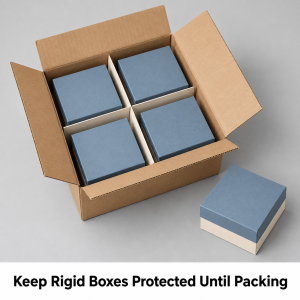
This makes the area easier to clean and reduces exposure to minor spills. It also helps your team inspect the stock without moving every carton.
Leave practical access around stored packaging. Boxes pushed tightly into an inaccessible corner are harder to check, count, and retrieve safely.
Choose shelving that supports the cartons without allowing them to overhang. Follow the storage equipment’s load limits and any handling instructions supplied with the packaging.
Avoid opening every carton immediately just to look at the boxes.
Inspect representative cartons when the order arrives, then keep unused stock protected where practical. The original shipping packaging can help keep surfaces separated and reduce unnecessary handling.
If a carton is opened, close it again after removing the required quantity. Keep any useful protective sheets or dividers in place.
Do not leave uncovered rigid boxes beside a busy packing station for days. Bring out the quantity your team expects to use, then return remaining stock to its designated storage position.
A rigid presentation box and its shipping carton serve different purposes. Do not assume that the firmness of the retail box makes every carton suitable for a high stack.
Follow any supplied stacking instructions. Place cartons on a stable surface and avoid stacks that lean, bulge, or become difficult to retrieve.
Heavy unrelated stock should not sit on top of packaging cartons. Tools, equipment, and product containers can create concentrated pressure that the carton was not intended to carry.
There is no single stacking height that suits every order. Carton construction, packed weight, storage conditions, and shelving arrangements all matter.
Separate components need clear organization.
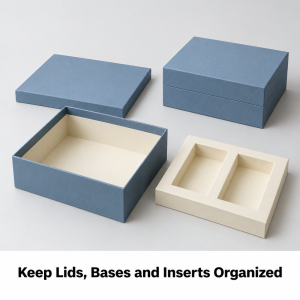
For two-piece lid rigid boxes, store matching lids and bases together or in clearly identified groups. Similar-looking sizes can become mixed when several product lines share the same color.
Label cartons with the product name, box size, artwork version, and order reference. If components are stored separately, use the same identification on each group.
Before starting a packing run, assemble a representative box. Check that the lid belongs to the correct base and that the completed package matches the intended product.
An outer box is not ready for packing if its insert cannot be found or belongs to an older product version.
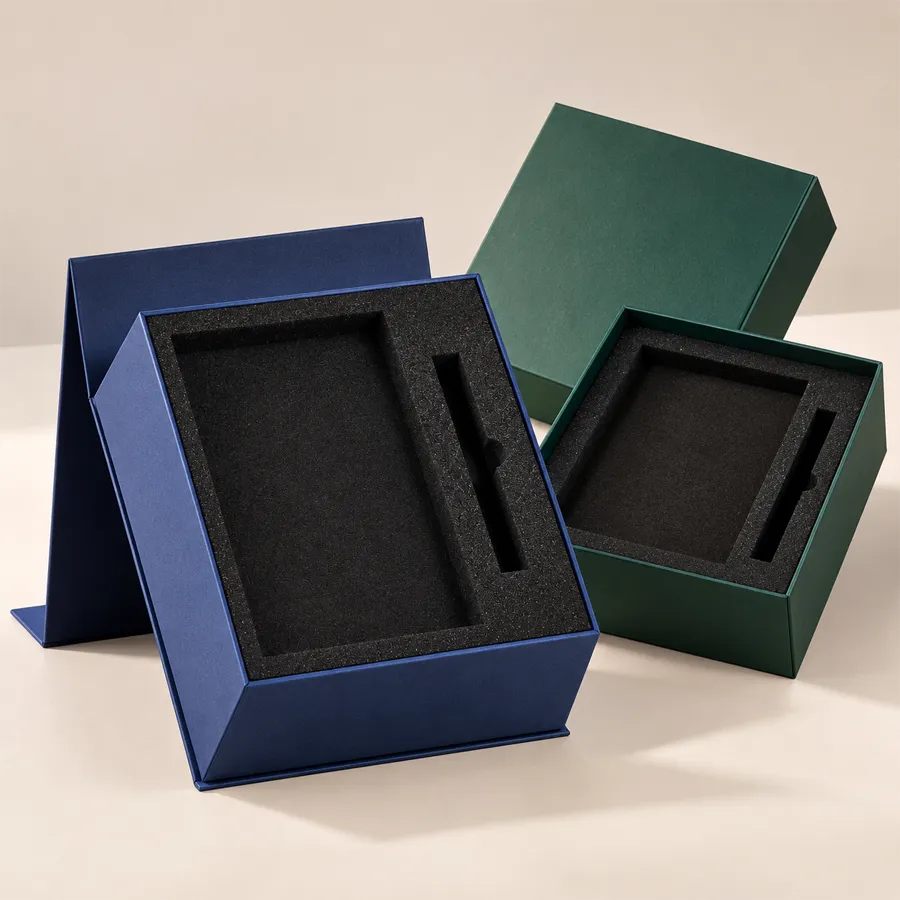
When storing rigid boxes with inserts, keep the insert specification linked to the outer box record. Identify the cavity layout and the product version it was designed to hold.
Do not bend or compress inserts simply to fit more stock into a smaller storage area. Preserve the supplied shape and follow any handling guidance.
If inserts arrive separately, count and inspect them as separate components. A shortage may otherwise remain unnoticed until your team begins packing.
Printed packaging should not become a general storage container for loose items.
Avoid placing sharp tools, loose hardware, or heavy products inside empty boxes while they wait for use. Keep the packaging dedicated to its intended purpose.
When moving stock, use clean hands and handle boxes without dragging them across rough surfaces. Do not assume that a matte or gloss finish makes the surface immune to marks.
If boxes are stored outside their shipping cartons, ask the supplier how they should be separated. Use suitable protective materials rather than choosing wrapping that might rub against or transfer onto the printed surface.
Your storage area should serve as stock storage, not a permanent display.
Keep packaging away from direct sunlight and locations where conditions change sharply throughout the day. A window-side shelf may be convenient, but it can expose one part of the stock to different conditions from the rest.
Ask the supplier for any material-specific storage recommendations. If your facility experiences difficult temperature or humidity conditions, describe those conditions before placing the order.
Avoid inventing a universal temperature or humidity target. The appropriate guidance depends on the actual board, wrapping material, adhesive, and finish.
Packaging with an opening mechanism needs careful handling.
For rigid drawer boxes, keep the drawer correctly positioned inside its sleeve when storing completed boxes. Avoid leaving drawers protruding where they can catch on nearby cartons or shelves.
Do not force a drawer closed if something is obstructing it. Inspect the box and identify the cause before continuing.
The same principle applies to other structures: preserve the intended assembled shape and avoid storage arrangements that twist or strain the components.
A spreadsheet or inventory system can help your team locate the correct packaging without repeatedly opening cartons.
| Record | Information to include |
|---|---|
| Product identification | Product name and packaging SKU |
| Packaging version | Approved artwork and specification reference |
| Order details | Supplier order number and receipt date |
| Quantity | Boxes and separate components received |
| Location | Shelf, pallet, or storage area |
| Stock movement | Quantity issued for packing |
| Condition | Any damaged or held stock |
Keep the record current when stock is received, moved, or used. A label on a carton is helpful, but it should agree with the inventory record.
If you find crushed corners, water exposure, surface marks, or missing components, identify the affected packaging clearly.
Keep it separate from stock that has passed your checks. This prevents damaged boxes from being included accidentally in a packing run.
Record the issue with photographs, the order reference, and the affected quantity. Describe the condition precisely rather than marking the entire delivery as defective without inspection.
When discussing an issue with WOW Custom Boxes, those details help identify the packaging and understand what needs reviewing.
A short check before packing can prevent your team from repeating a problem across many products.
Select a representative box from the stock you intend to use. Confirm the artwork version, opening function, insert arrangement, and fit with the current product.
Check whether anything has changed since the original order. A different product lid, accessory, or protective wrap may affect the fit even when the outer packaging remains unchanged.
Issue manageable quantities to the packing table. Keep unused boxes protected and avoid mixing different versions during the same run.
The best storage process starts before delivery.
Share any space limitations, handling conditions, and expected storage period when requesting your packaging. Ask how the boxes and components will be packed and whether specific care instructions apply.
You can contact the packaging team with your box specifications and storage questions. Keep the agreed guidance alongside your order record so the people receiving and packing the boxes can access it.
Clean storage, clear identification, and careful handling make it easier to use the packaging you ordered without preventable damage or component mix-ups.
Yes. Keeping unused boxes in suitable original shipping packaging can reduce unnecessary handling. Inspect the delivery and retain useful protective materials.
Yes. A clean, dry indoor storage area is the appropriate starting point. Follow any additional guidance for the materials used in your packaging.
Use suitable shelving or pallets where practical. This helps protect stock from minor spills and makes the storage area easier to clean and inspect.
No. Either finish can still be affected by careless handling or unsuitable storage. Review the actual materials and follow the supplier’s recommendations.
Yes. If they are supplied or stored separately, identify matching components clearly. Test a representative assembled box before packing.
Yes. Separate inserts should be counted and linked to the correct outer box and product version. This helps prevent shortages and mix-ups.
Only use arrangements suitable for the shipping cartons, packed weight, and storage equipment. Follow supplied stacking guidance instead of assuming one height suits every order.
Yes. Confirm its condition, artwork version, opening function, and fit with the current product before beginning the packing run.
Yes. A suitable collapsible construction may help, but delivery format and assembly requirements need to be confirmed before ordering.
The minimum order at WOW Custom Boxes is 100 boxes. Confirm the delivery format and carton dimensions when planning space for your order.